Cook Islands, Tonga, Minerva Reef, Aotearoa/New Zealand
August – November 2024
Written by Alene and Bruce in Vanuatu & New Caledonia — Aug-Oct 2026
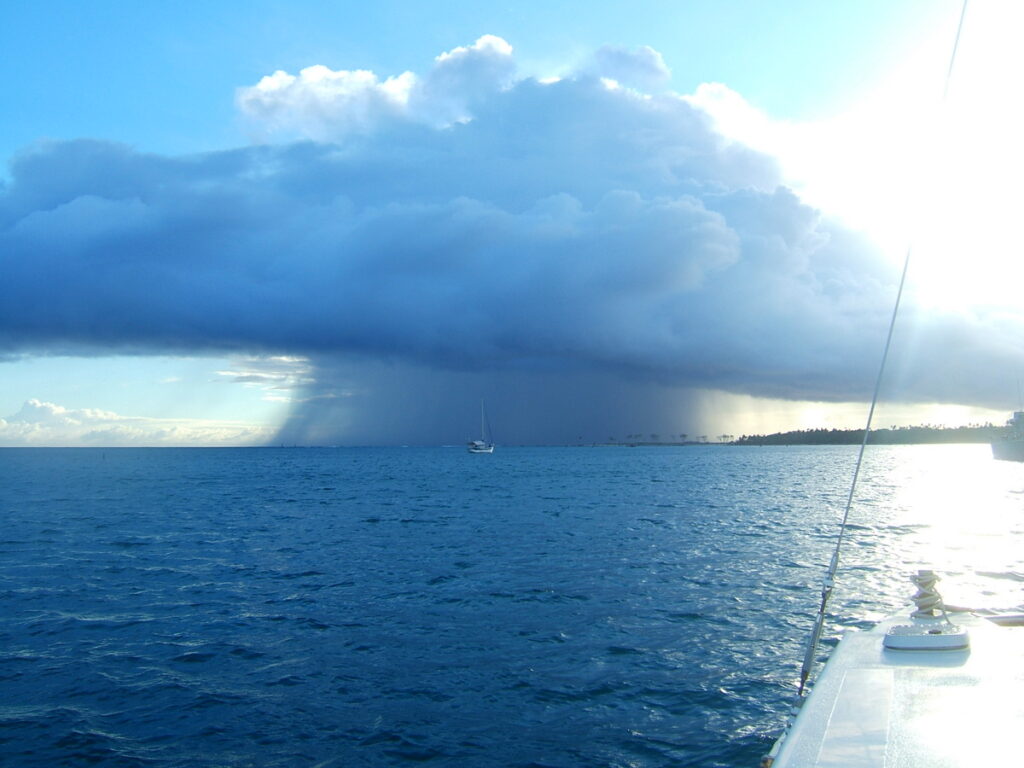
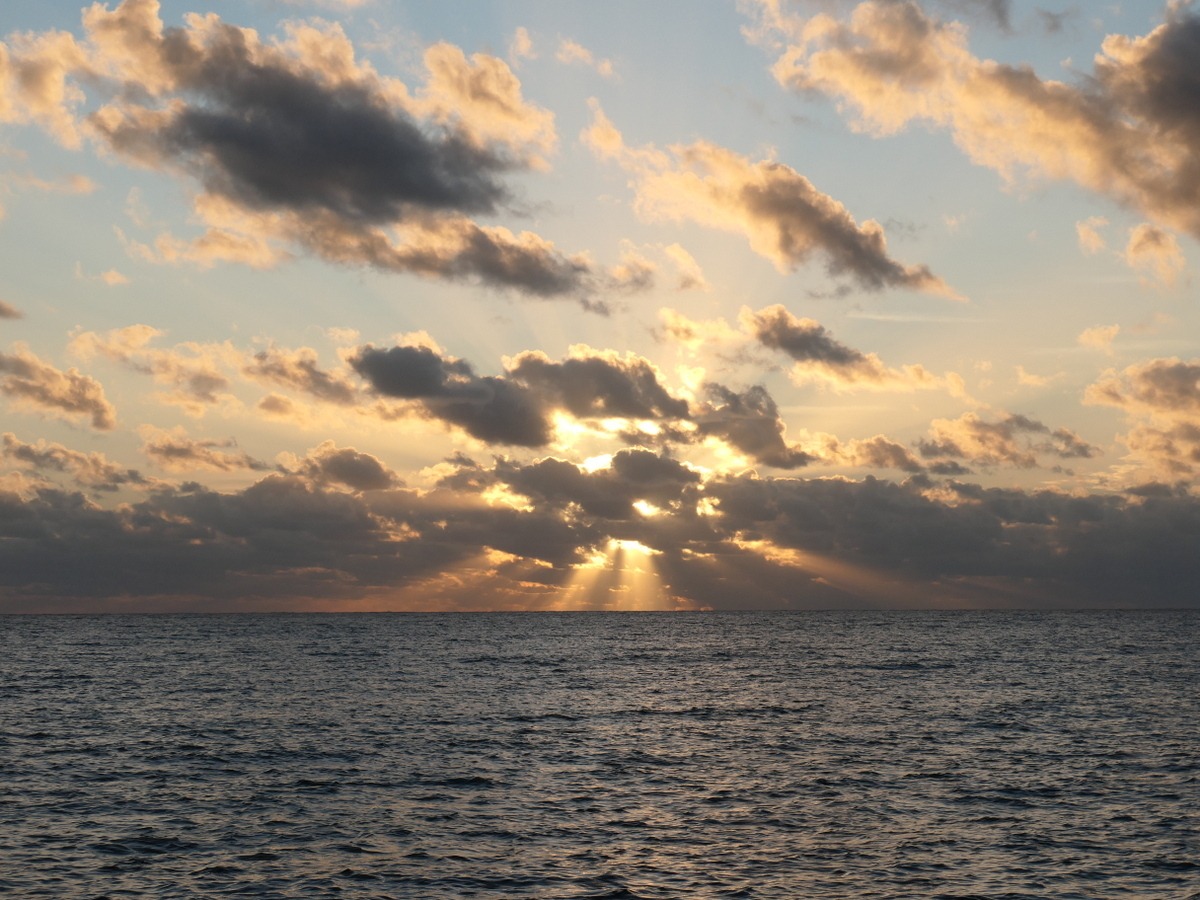
Many think we live a carefree life — sailing wherever and whenever we please. However, where we go — and when — is dictated by two elements completely beyond our control: hurricanes and visas. That’s true for month to month and year to year planning. But when it comes to our day to day lives, there is only one definite ruler of our universe: the weather. Whether we go or stay, sail east or west, visit this island or that, is determined by the weather.
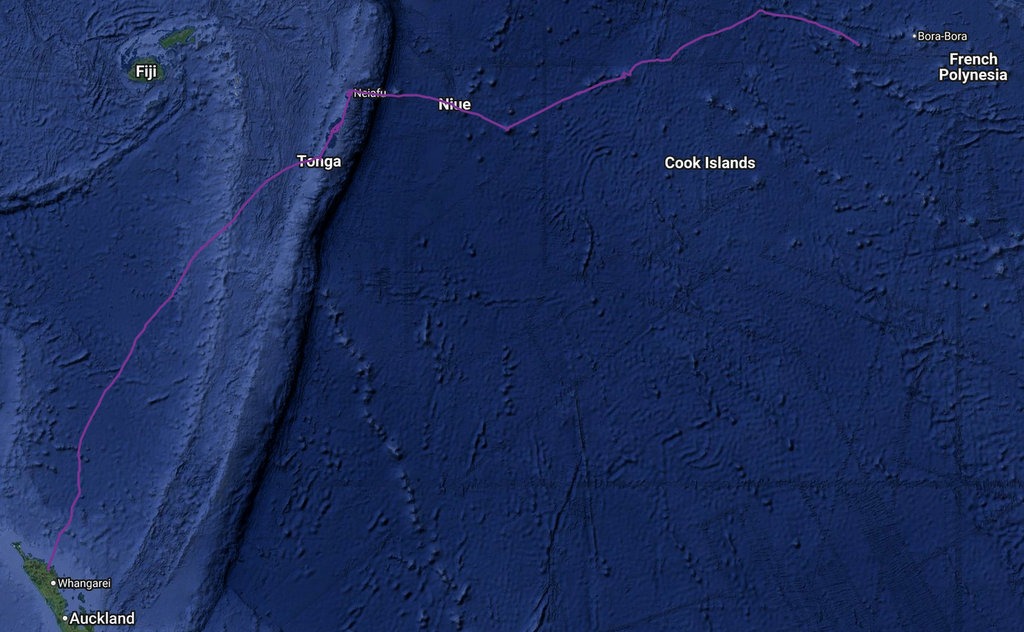
When crossing the 2,500 nautical miles of Pacific Ocean from French Polynesia to New Zealand in 2024, the weather changed our course, schedule, and plans many times. Sometimes for the better, sometimes for the worse. We think about the weather a lot. Some might say we’re obsessed by it… and they might not be wrong.
Twenty-one years ago when we first left Mexico, we received weather via our HAM radio and a Pactor modem. This allowed us to receive GRIB files that displayed lines and arrows for atmospheric pressure, wind, and sea conditions. These files were based on NOAA’s GFS model and were fairly accurate for a couple of days out. The only issue: using the HAM radio required a lot of patience to connect to shore stations and wait to download the files at a speed — on a good day — of an old dial-up modem (if any of you remember those). We used this system for years… until 2017.
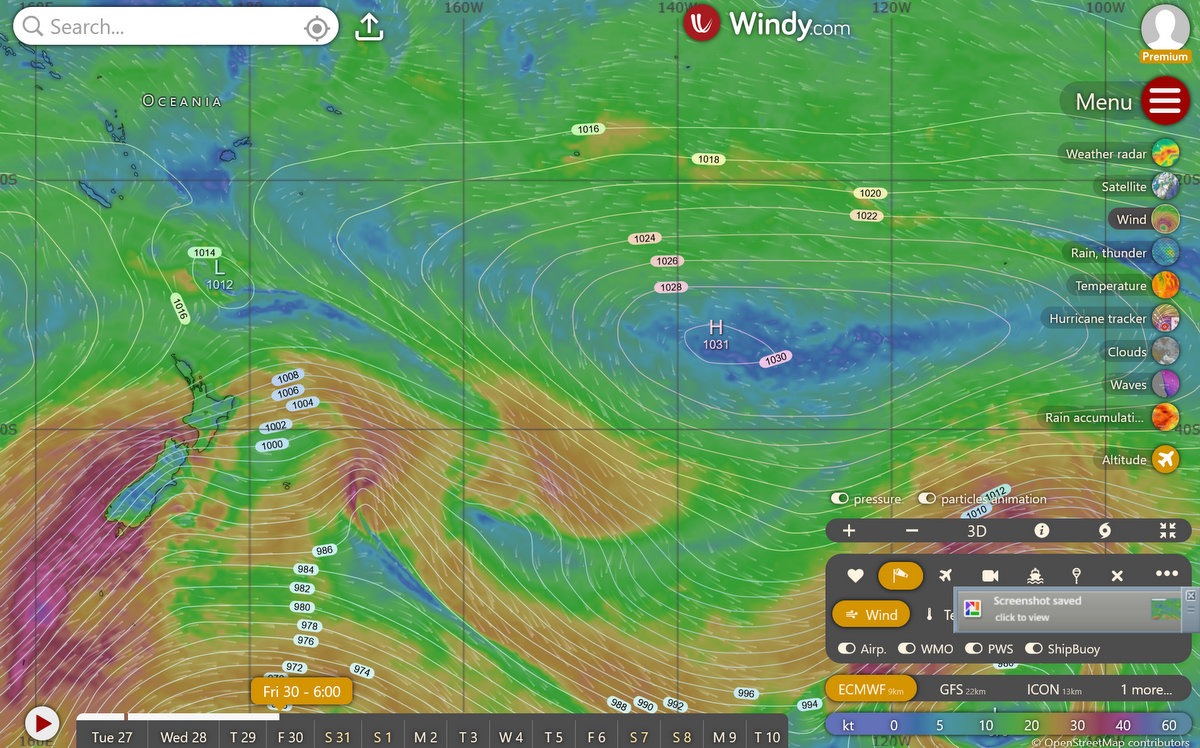
Now, when we have internet available through a mobile network, we use several tools, including the excellent weather site Windy. (Take a look; it’s interesting and the graphics are beautiful in a weather-y sort of way.) All weather forecasting products these days use various models created by NOAA, Europe, and private companies. These global models are useful for comparison but can be very confusing when they don’t agree.
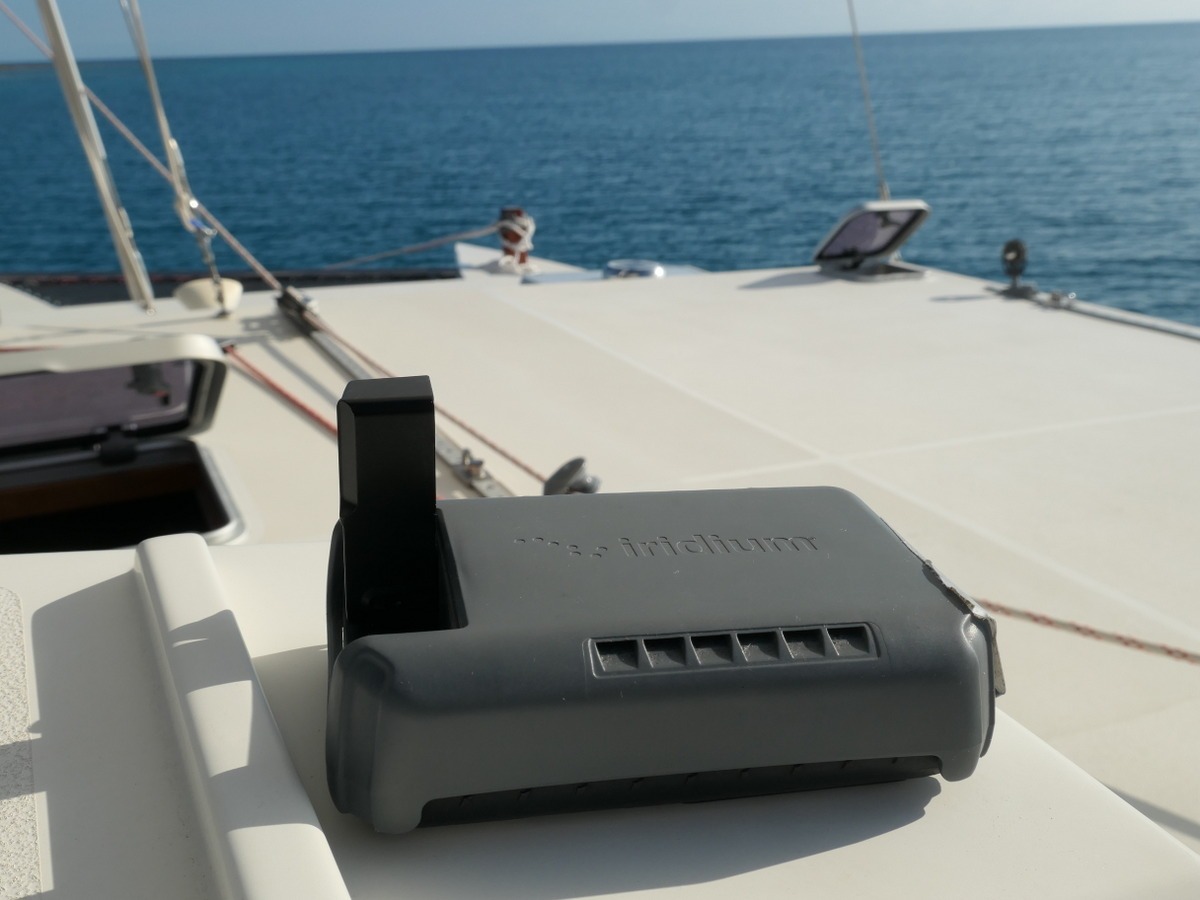
Out in the open ocean without mobile service, we use an Iridium Go — a satellite device that lets us receive GRIB files and text-based emails. We purchased the Iridium Go when crossing the North Pacific in 2017 as we wanted multiple systems for receiving weather in an area known for potentially dangerous conditions. The Go is slow, but it’s easier and a touch faster than the HAM radio.
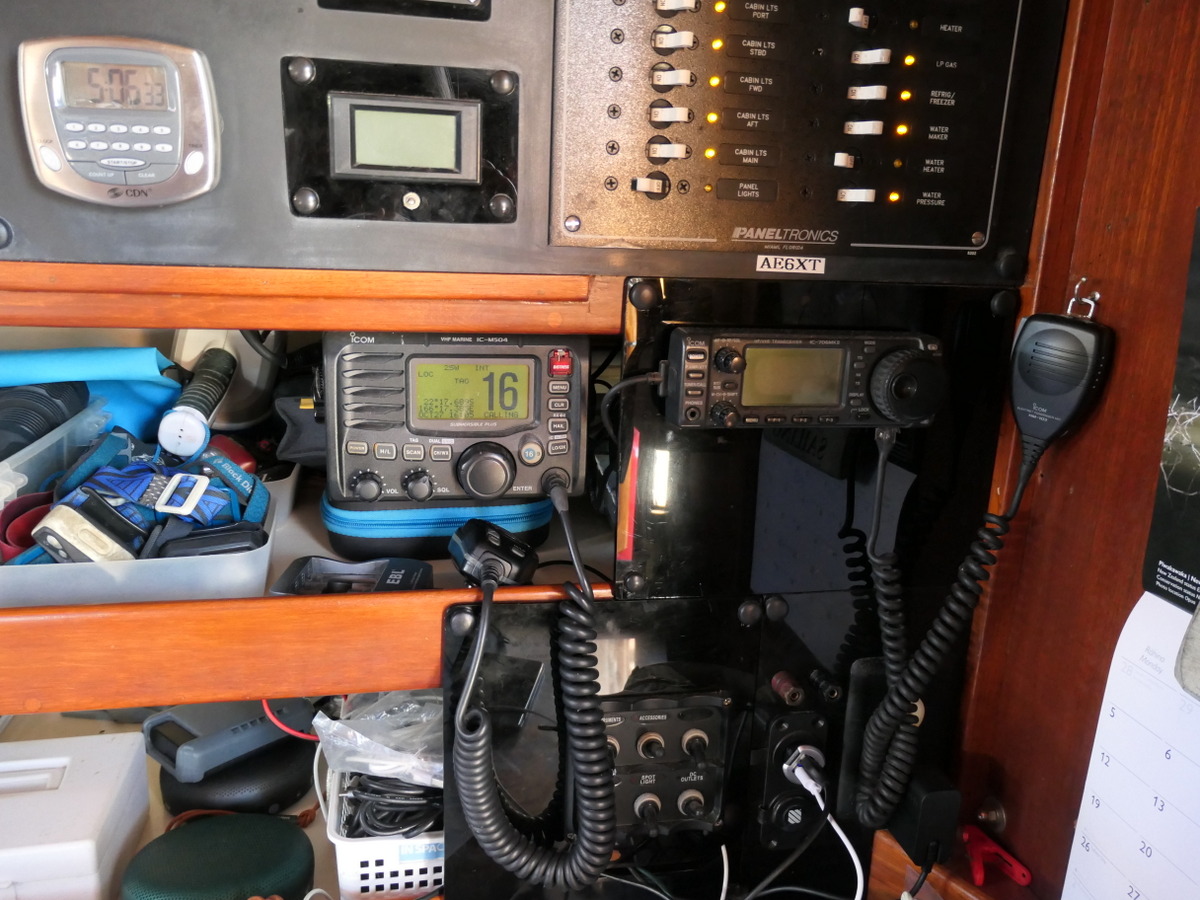
Most sailors are now using Starlink which provides a very high-speed connection even in the middle of the ocean. However, we choose not to support that system for several reasons. Unlike most of the world, we enjoy being disconnected; it is liberating, and that’s something few people remember these days. As long as we can get reliable weather forecasts and send text emails, we’re happy. It also does our souls good to not give money to Elon Musk, the founder of Starlink, who is a morally corrupt individual responsible for the death of tens of thousands of children in Africa (due to his DOGE cuts to US Aid).
So we use old and slow technology to get our forecasts. The important part is that it still works, and it allows us to make decisions and respond to the ever-changing conditions we sail in.
Westward Ho to Suwarrow…
No… Palmerston Atoll
We left the island of Maupiha’a in French Polynesia in August 2024 intending to make landfall at Suwarrow, a remote atoll about 570 nautical miles to the northwest. This Cook Island atoll was made famous by Tom Neale in his 1966 book: An Island to Oneself, The Story of Six Years on a Desert Island. The book is a good read and a powerful testament to the achievement of one man’s dream. There is no permanent population on Suwarrow; just national park rangers who live there part-time.
You may notice I said, “intending to make landfall …”. Considering the theme of this update, you can probably guess what happened. Yes, weather intervened.
We received an email from friends saying that the ranger at Suwarrow was only allowing boats to stay a few days. We were concerned that if we were forced to leave with the currently forecasted winds, it would be very difficult to reach our next destination. So, mid-ocean, we jibed south and sailed to Palmerston Atoll, another of the Cook Islands, this one with about 30 inhabitants.
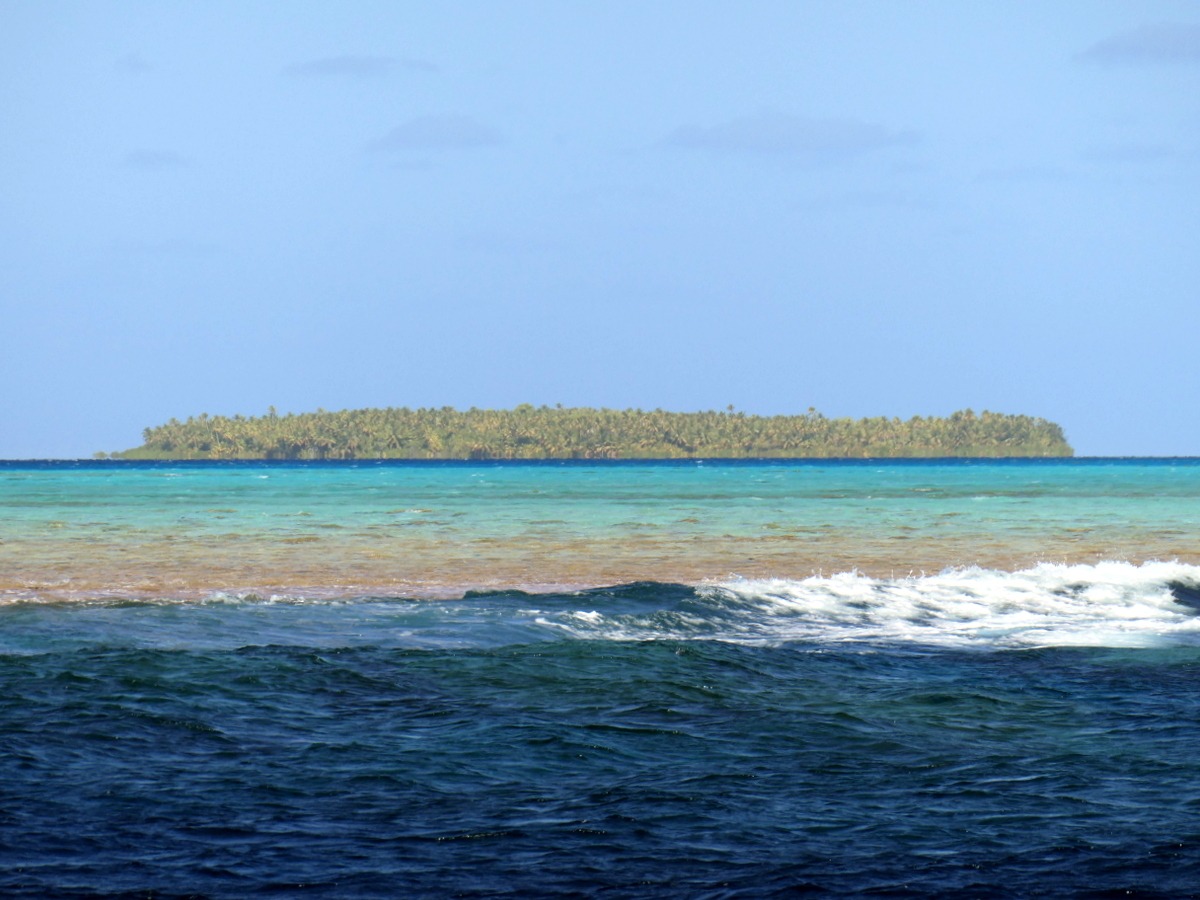
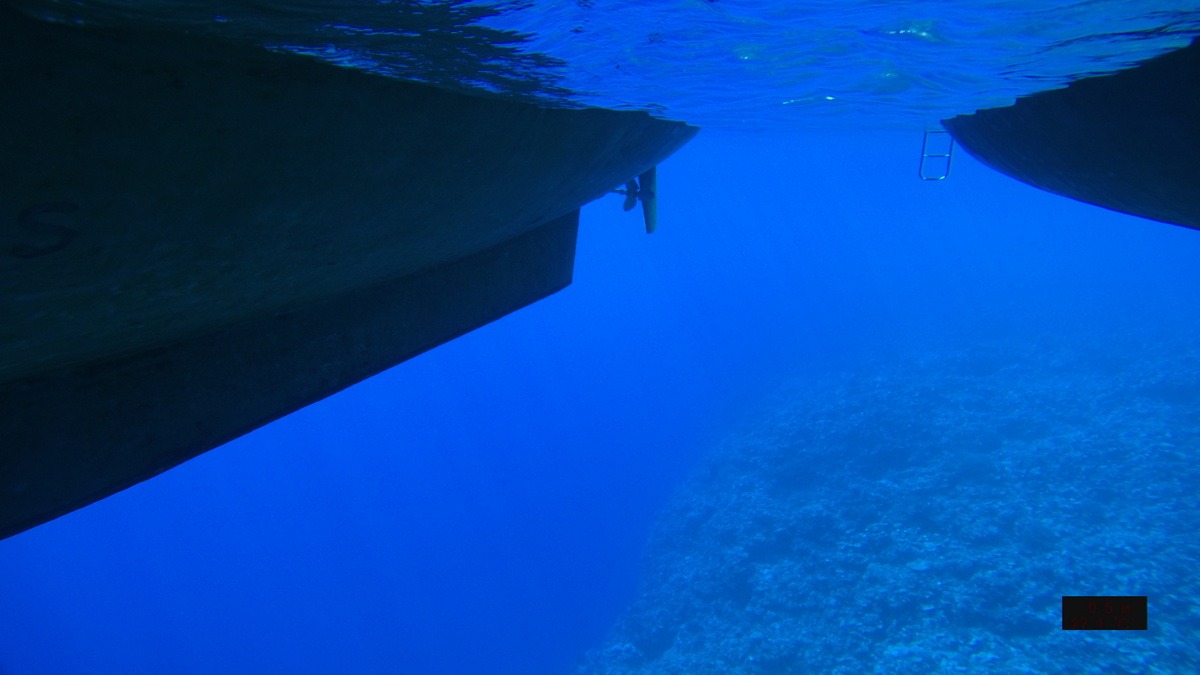
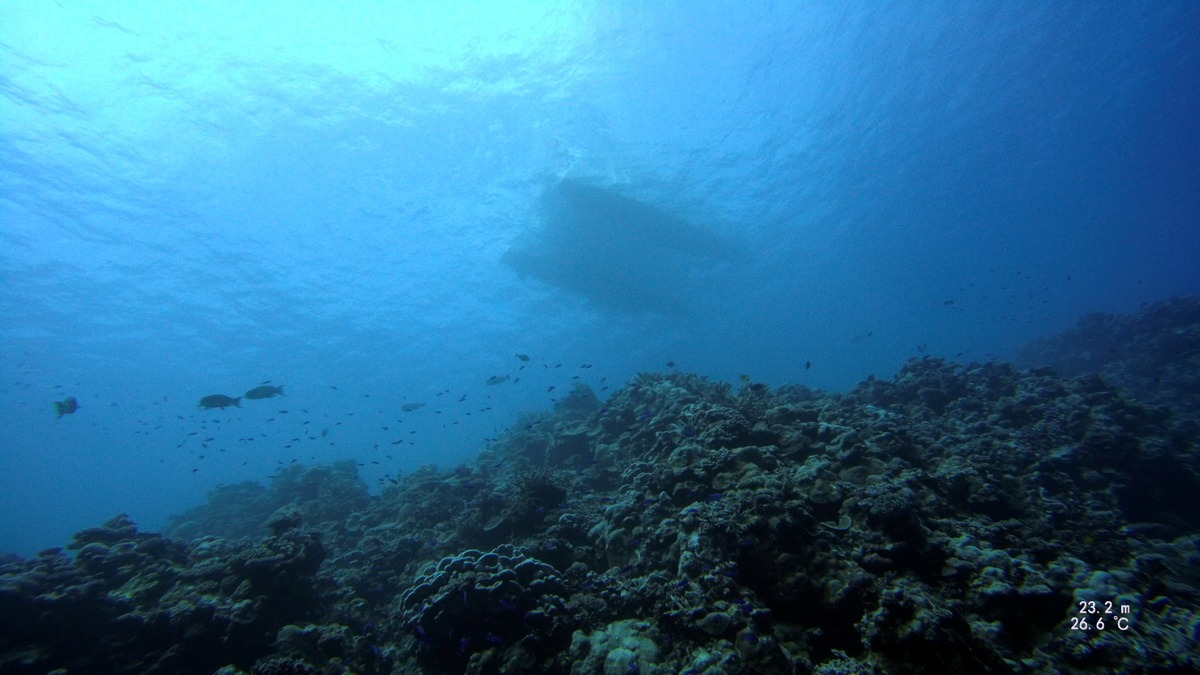
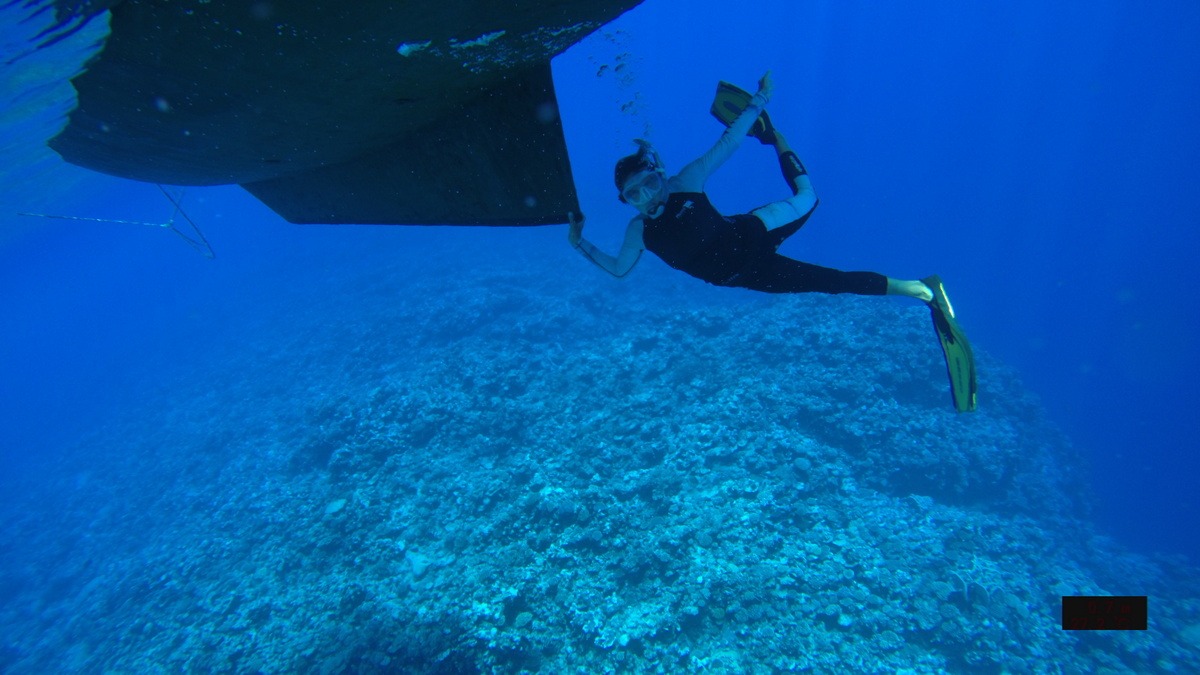
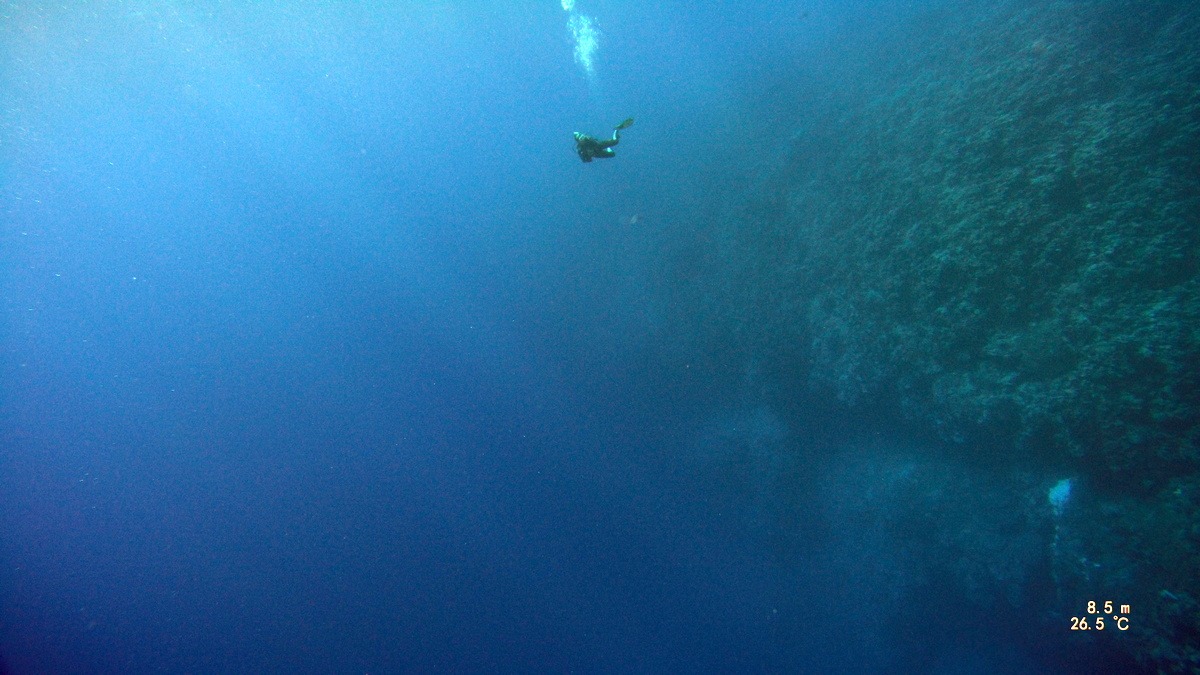
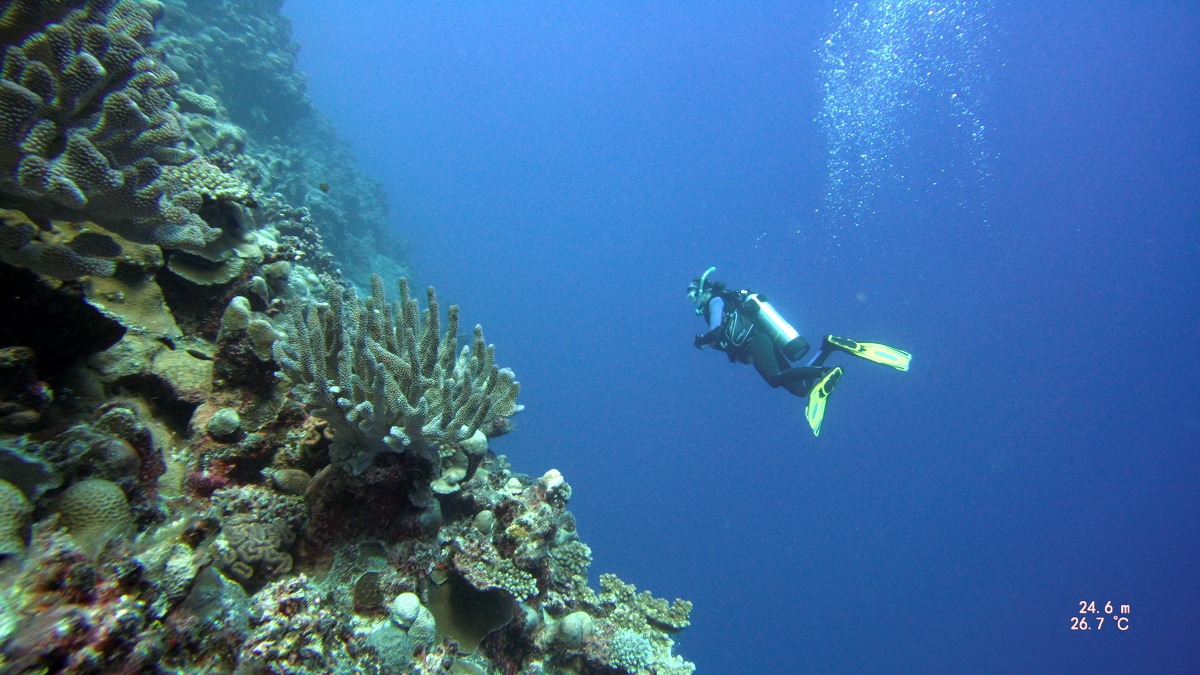
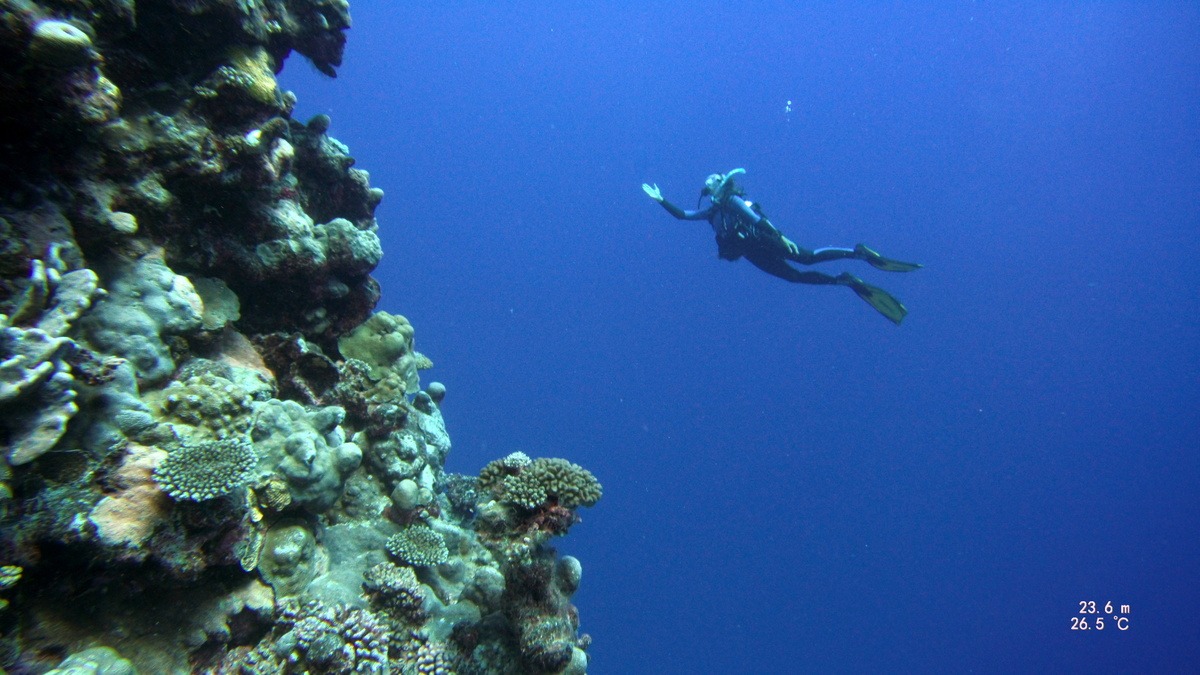
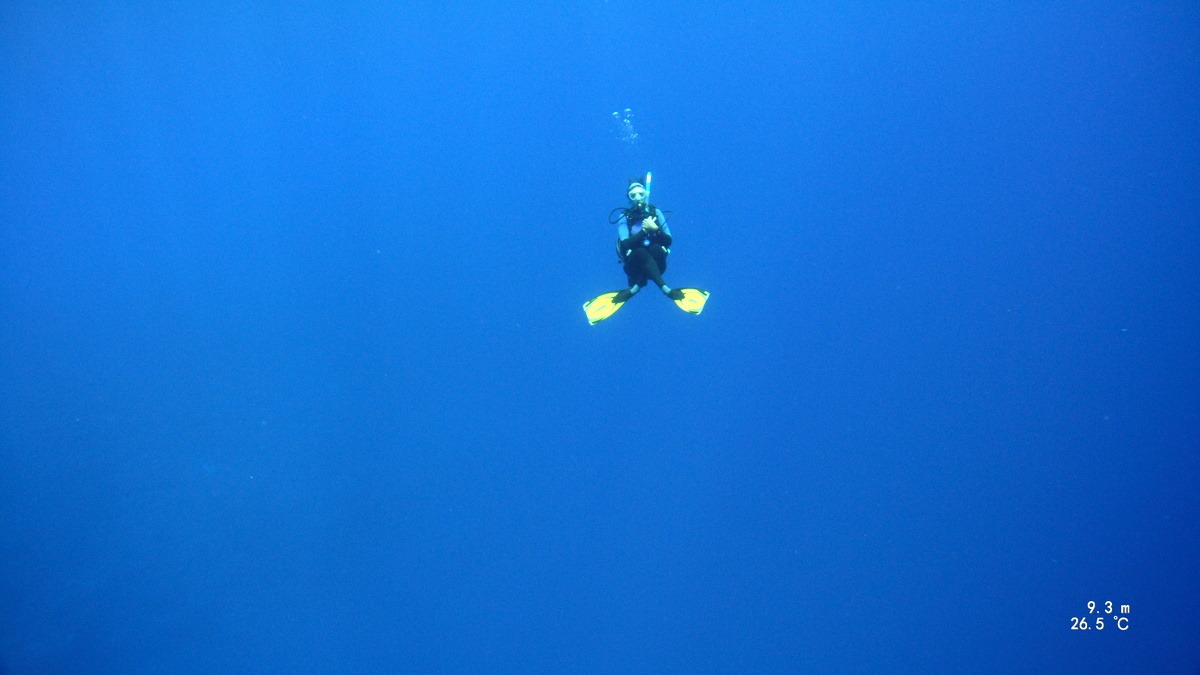
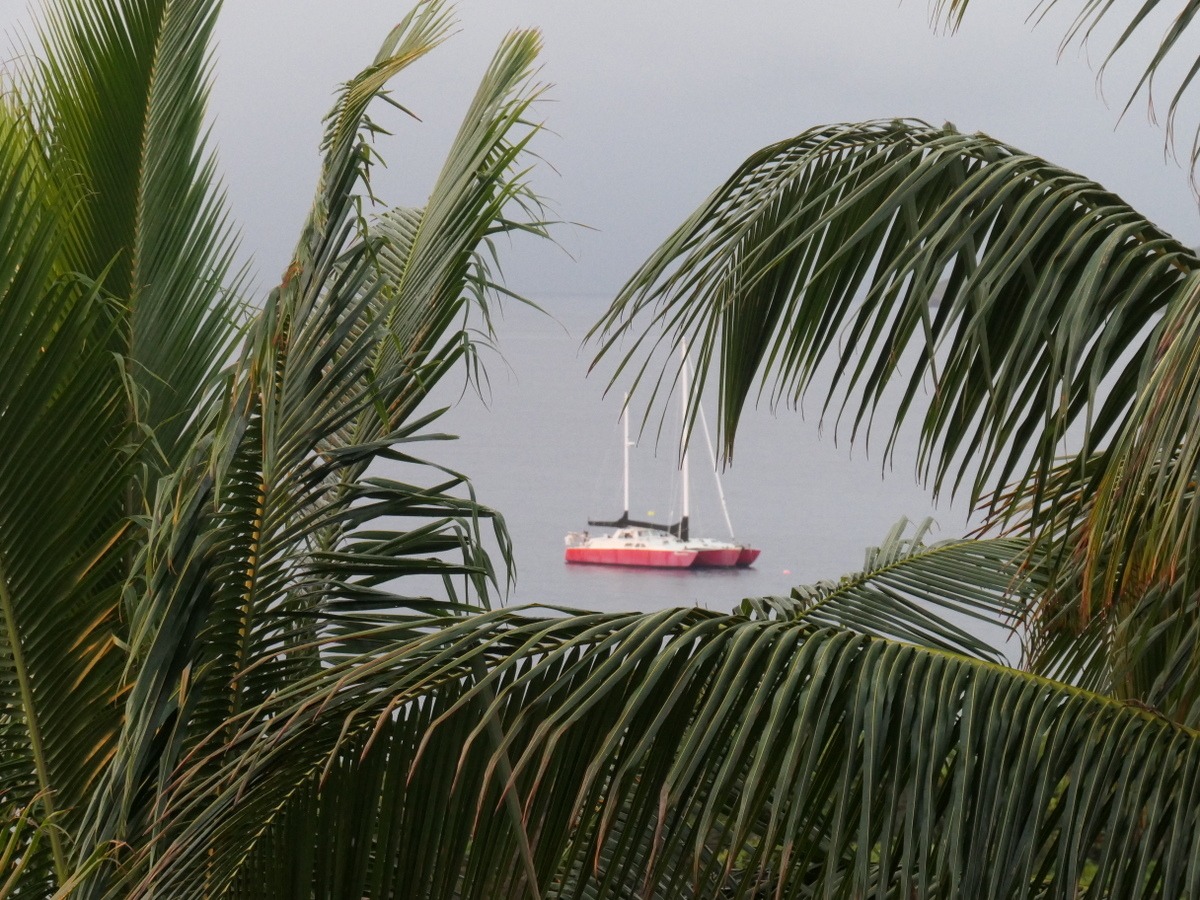
Palmerston is a low atoll with very little land. There are two passes into the lagoon, but both only big enough for small local boats. Visiting sailboats must anchor outside the reef on the coral shelf. We were guided to a good spot by two locals in an aluminum skiff. We used five pearl buoys to float our chain in order to keep it above the coral. The water was remarkably blue and clear — probably 150’ (45 m) visibility. We anchored in 30’ (9m), but the stern hung over the edge of the reef that dropped straight down with no bottom visible. We could dive the wall by just jumping off the back of the boat!
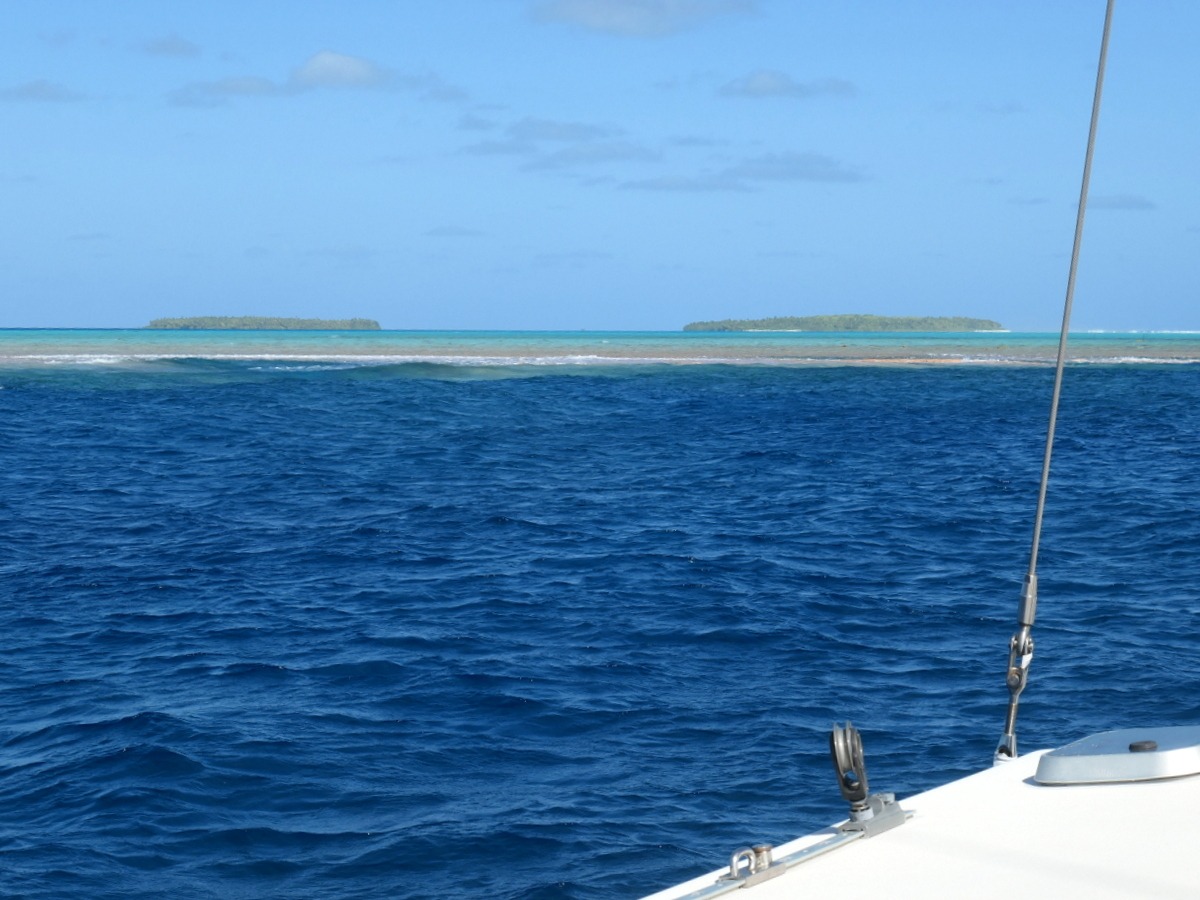
The once-every-month-or-two supply ship had just anchored when we arrived and there were lots of little boats going to and fro, taking supplies from the ship to the village. One of the small boats stopped by to have a look at Migration as they had never seen a trimaran before. Though we invited them aboard, they declined. Palmerston no longer has the necessary officials for checking in boats so we were not allowed to go ashore, and no one was allowed to visit.
Luckily there was another local population we could spend time with: WHALES! On our approach, we’d seen several whale blows. Later that afternoon, we heard a blow very close by. We grabbed our snorkeling gear and jumped in. The whale had descended just 250’ (76m) away. We found him floating languidly near the coral wall about 60’ (18m) down. We watched for a while — he was not singing, but seemed to be listening to the many other whale voices that floated through the water.
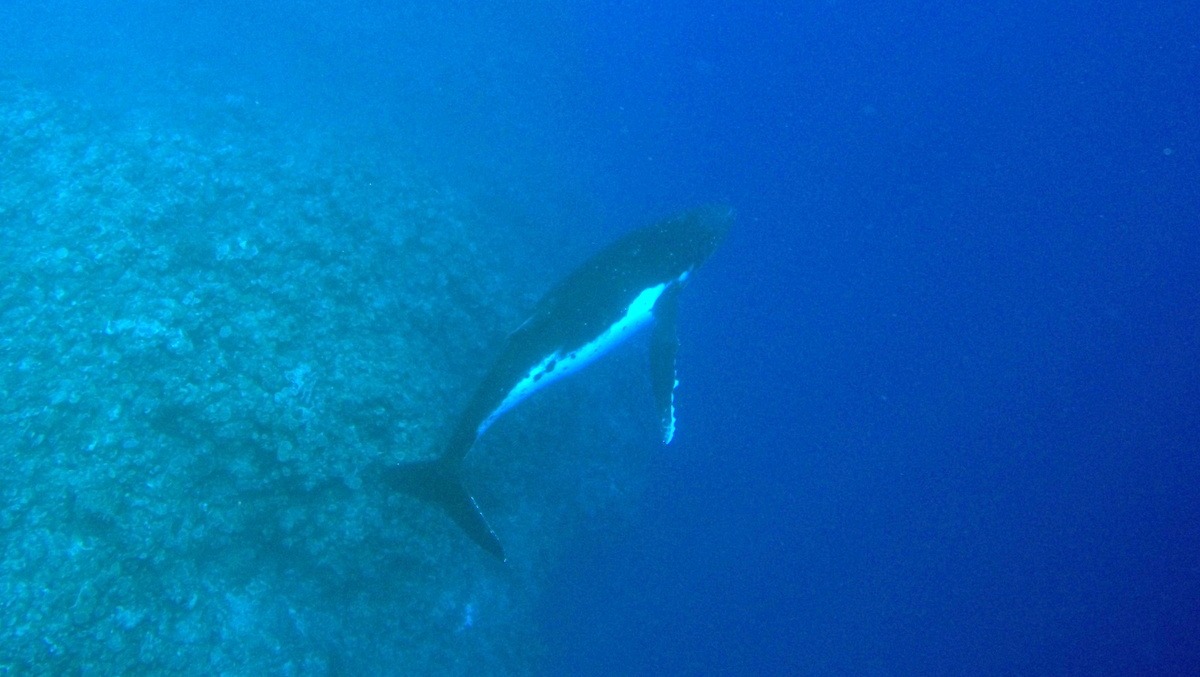
Eventually Bruce free dove down, whereupon the whale rolled over and swam directly toward us for a closer look, passing very near and looking at us eye to eye before surfacing for a breath. He then headed slowly off into the blue. So majestic. We both feel so lucky that we get to see such beauty up close.
That night we saw another incredible phenomenon. After it got dark, the ocean, as far as we could see, was lit up by bioluminescence, but a type we’ve not seen before. It was like old-style flashbulbs popping — as though we were looking at a concert arena underwater with thousands of people taking photos at random intervals. The blobs of bioluminescence were everywhere — close to us and also far away — all an eerie color of green. We looked at the surface of the water with a flashlight, but nothing was to be seen. The natural world never fails to startle and amaze us.
As we lay in bed marveling at what we had seen, we heard whale song through the hull. Ahhhh. Icing on the cake..
Diving the Reef Wall at Palmerston
The Sharks of Beveridge Reef
And then the weather… after only 2 days at Palmerston it was clear we had to leave. You can only anchor on the outside of an atoll in calm conditions and it was forecasted to get rough. Unfortunately, the wind direction wasn’t optimal for the direction we wanted to go so we had a pretty bouncy 300 NM passage to Beveridge Reef. But, as is often the case, it was worth it in the end. This was our second visit to Beveridge, the first being in 2009. Then and now, we found it to be an incredible experience.
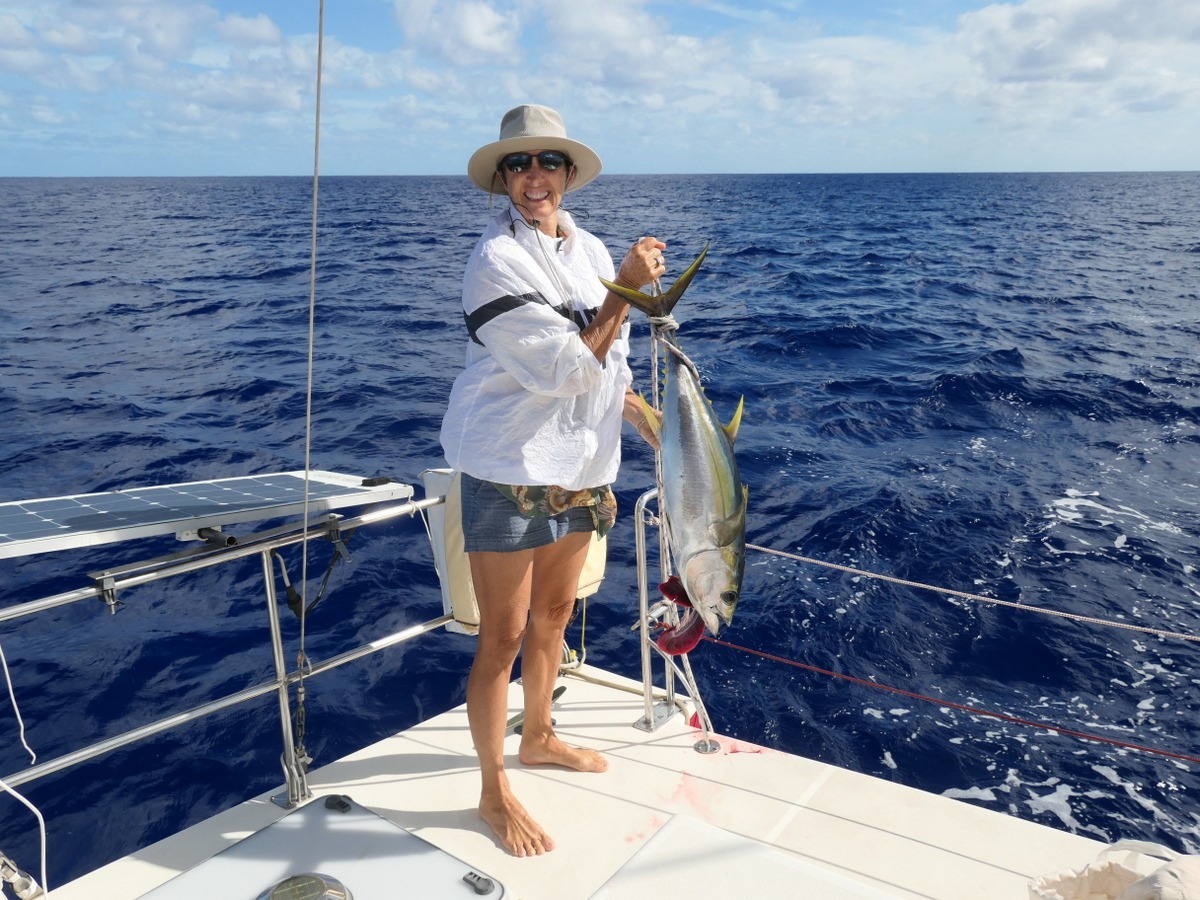
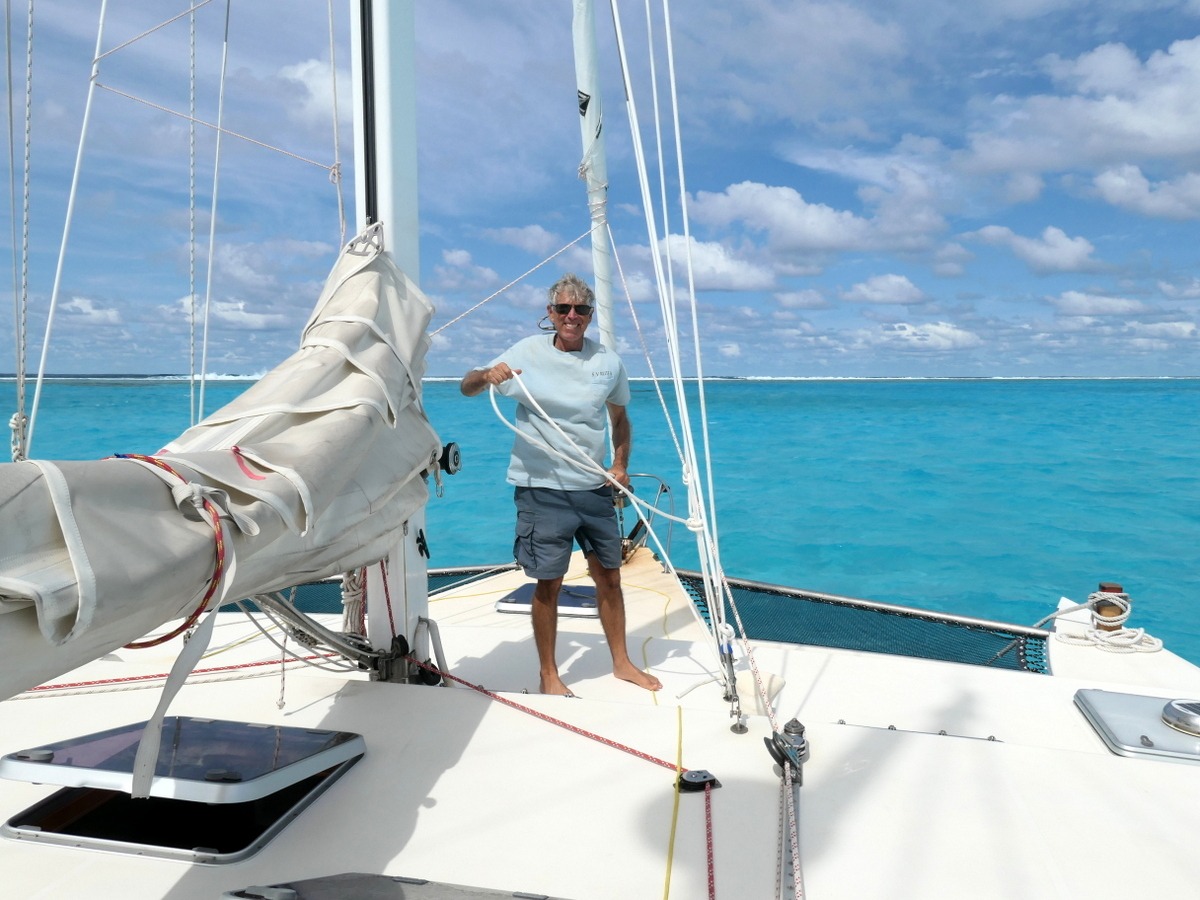
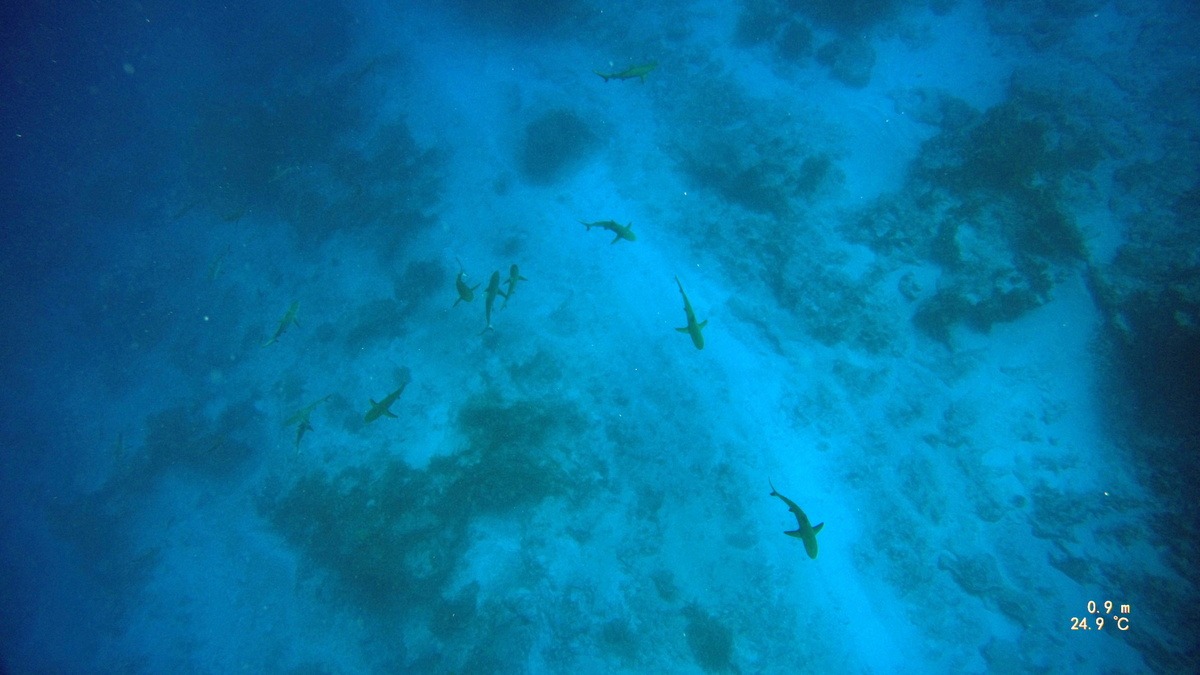
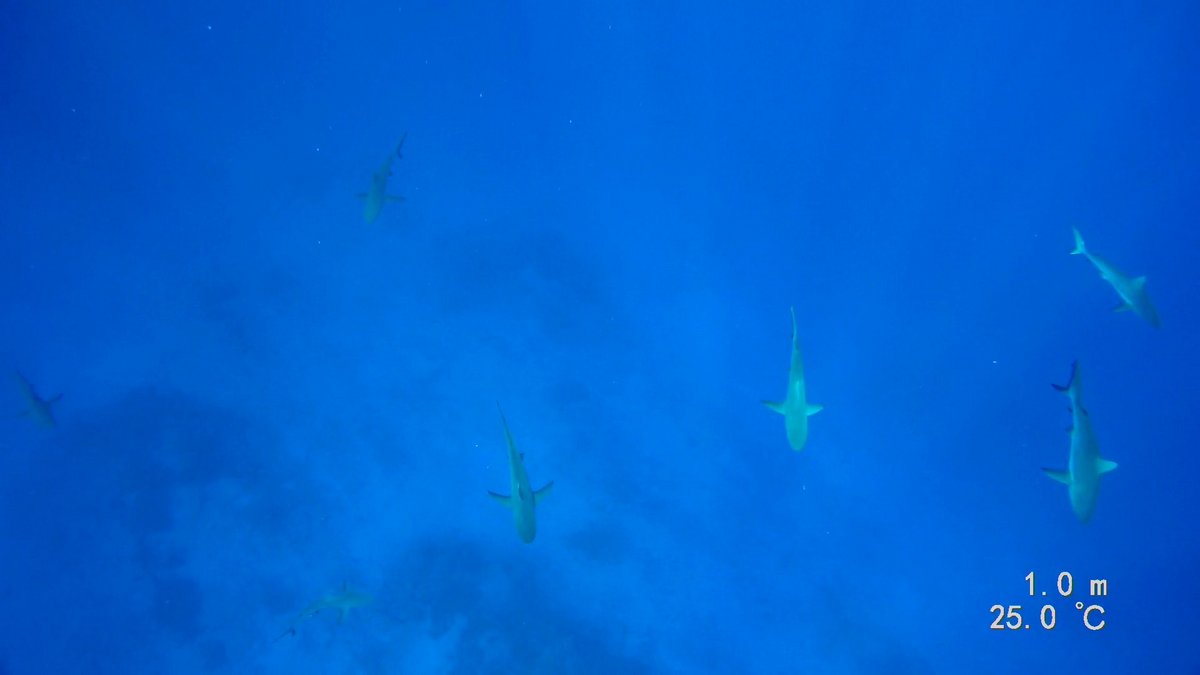
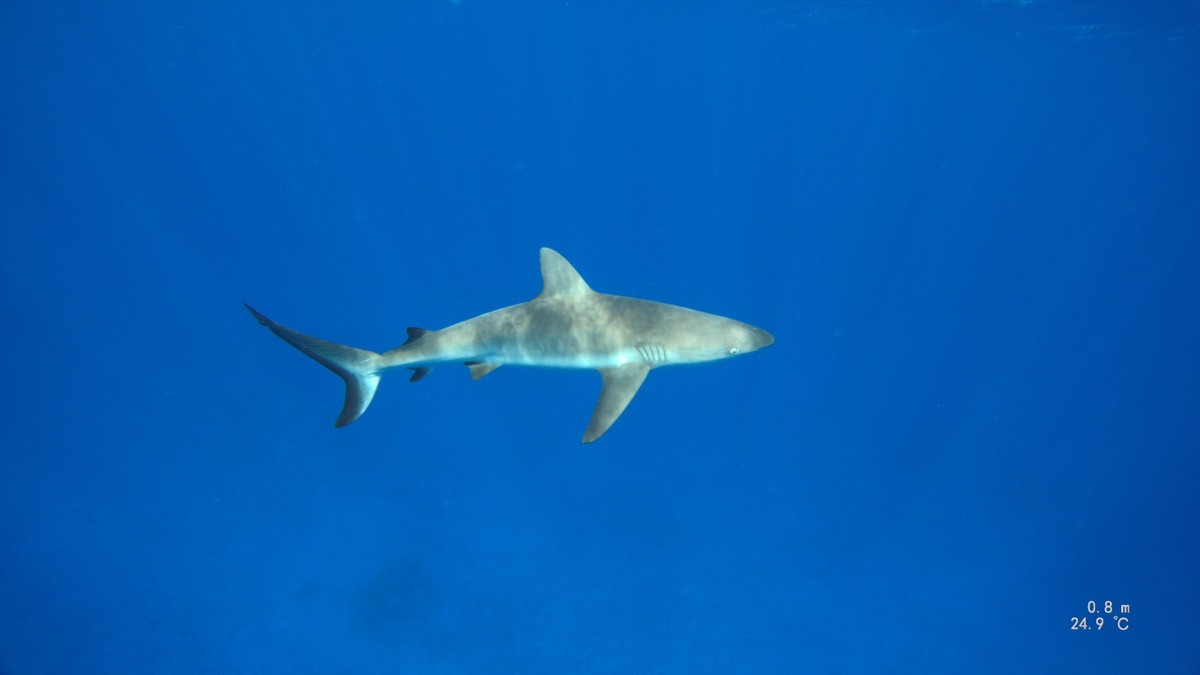
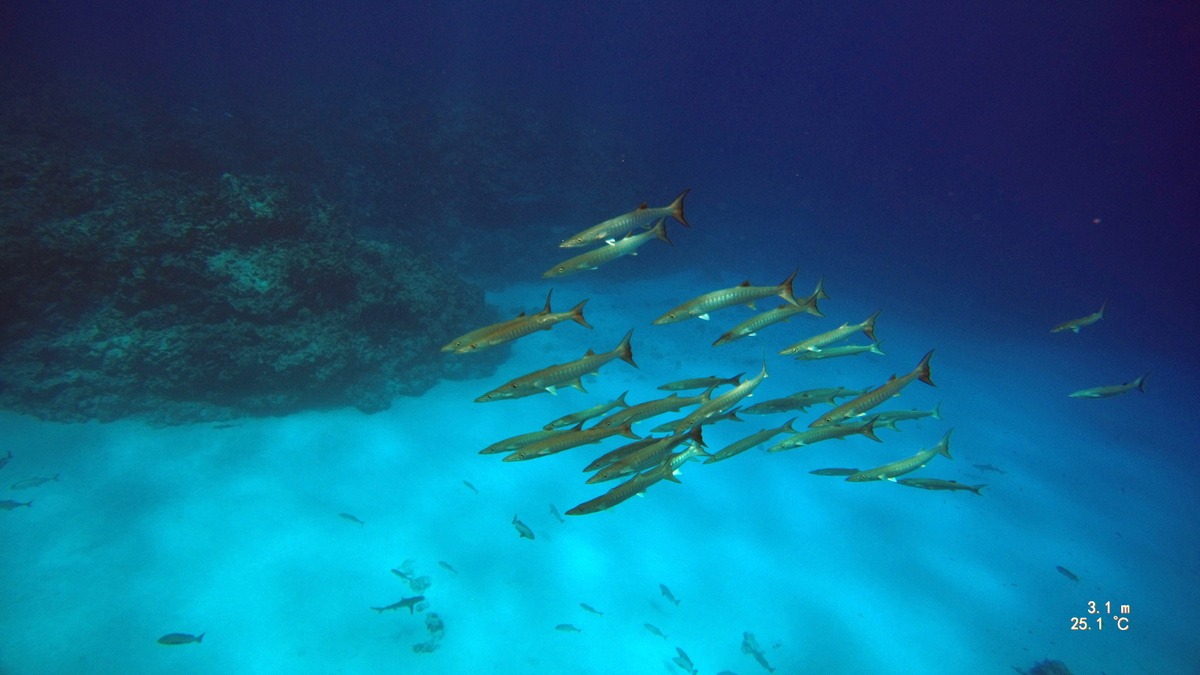
What does one do at a sunken atoll with no visible land? Go snorkeling in the pass, of course, because such clear water is irresistible. We headed off with snorkelers from the few other boats anchored nearby. Same as in 2009, we found a healthy marine ecosystem of fish and sharks. It’s fantastic seeing sharks circling on the sand bottom 100’ (30m) below. Some of the sharks were curious and came up to investigate, so we got a nice close look. And there was whale song, too! We dinghied out and rode the current back through the pass four times. Just gorgeous.
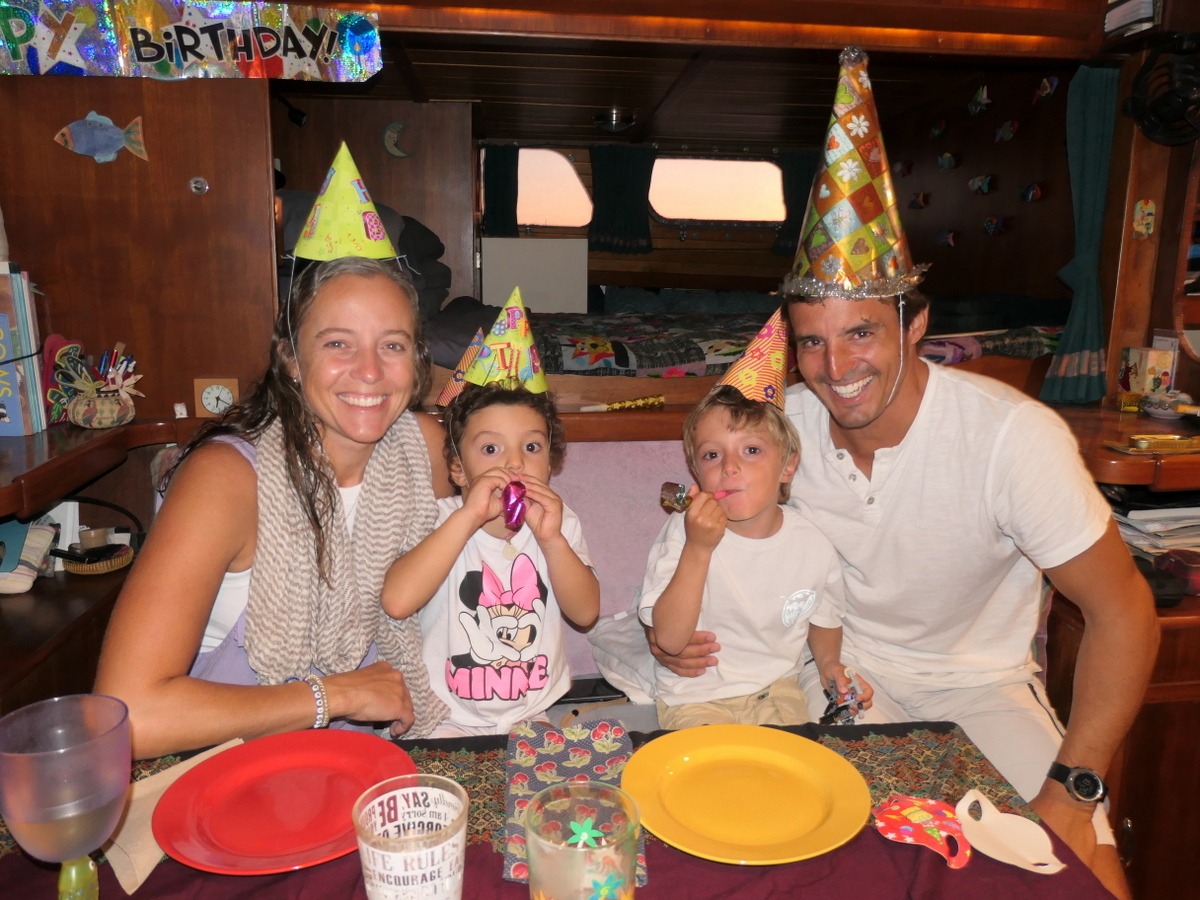
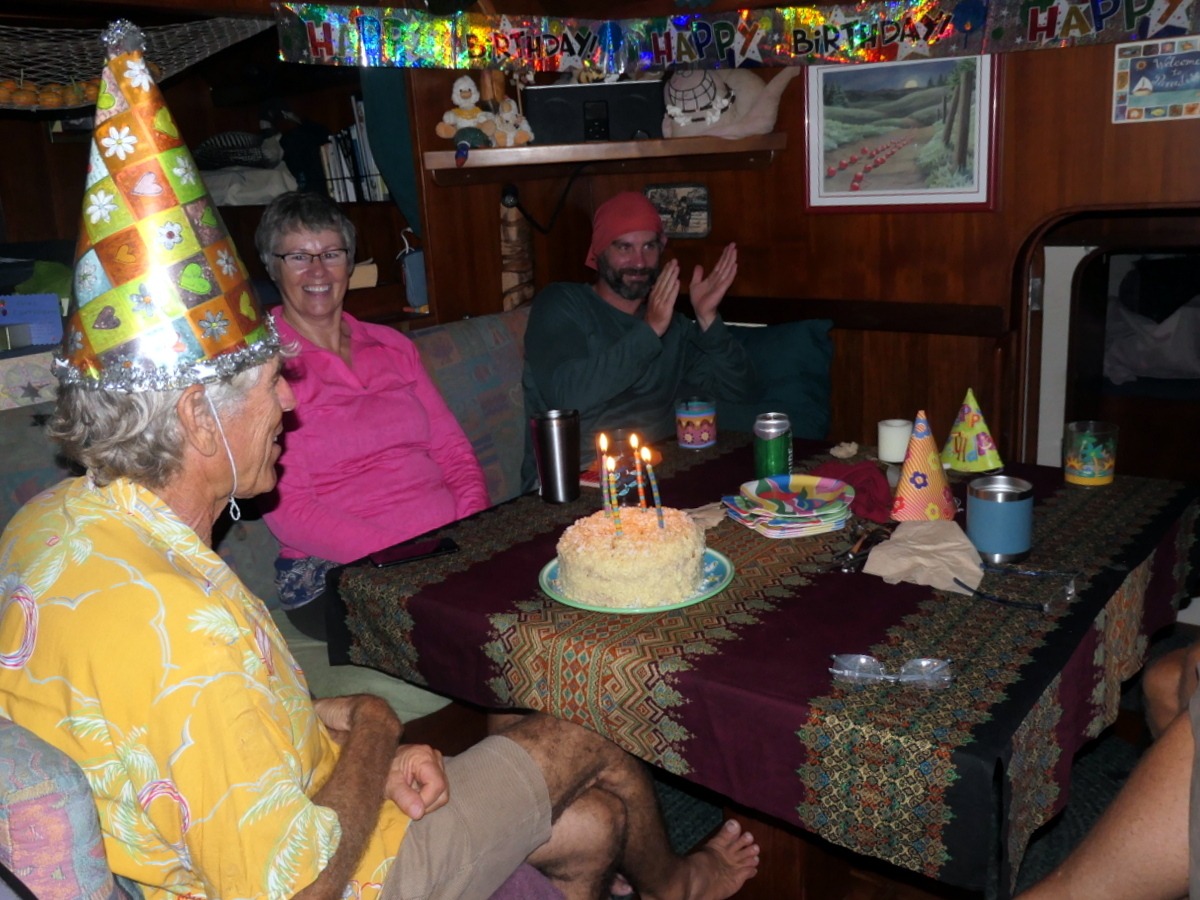
One element of our life that we love is that we are continuously surprised by many of the sailors we meet. After snorkeling, we had a birthday party aboard Migration with a Portuguese family that we’d met in Maupiha’a. The father, Francisco Lufinha (who was turning 41), holds the world record for the longest continuous kite board voyage… 304 nautical miles in 28 hours and 53 minutes! Crazy.
And then… the weather. We’d hoped to stay for several days; however, a sudden change in the forecast called for a 10-14’ (3-4m) swell and strong winds in only 2 days. Since protection at Beveridge is dependent on a low-lying reef, we decided it would be prudent to raise the anchor and be on our way.
We’d been planning on stopping at Niue for months. We spent over five weeks there during our visits in 2009 and 2010 and had become lifetime members of the Niue Yacht Club. There are no safe anchorages so one must rely on the moorings. A new reservation system had been implemented requiring advance online registration. But, because of the weather, it’s often difficult to know one’s exact arrival date. This new web-based system also required internet access, whereas in the past it was simply first-come, first-served.
Luckily, we are friends with the commodore of the little yacht club and, via email, he helped us with our reservation. But before things were settled, we were really worried about being caught out at sea in poor conditions with no place to shelter, or even being forced to bypass Niue completely.
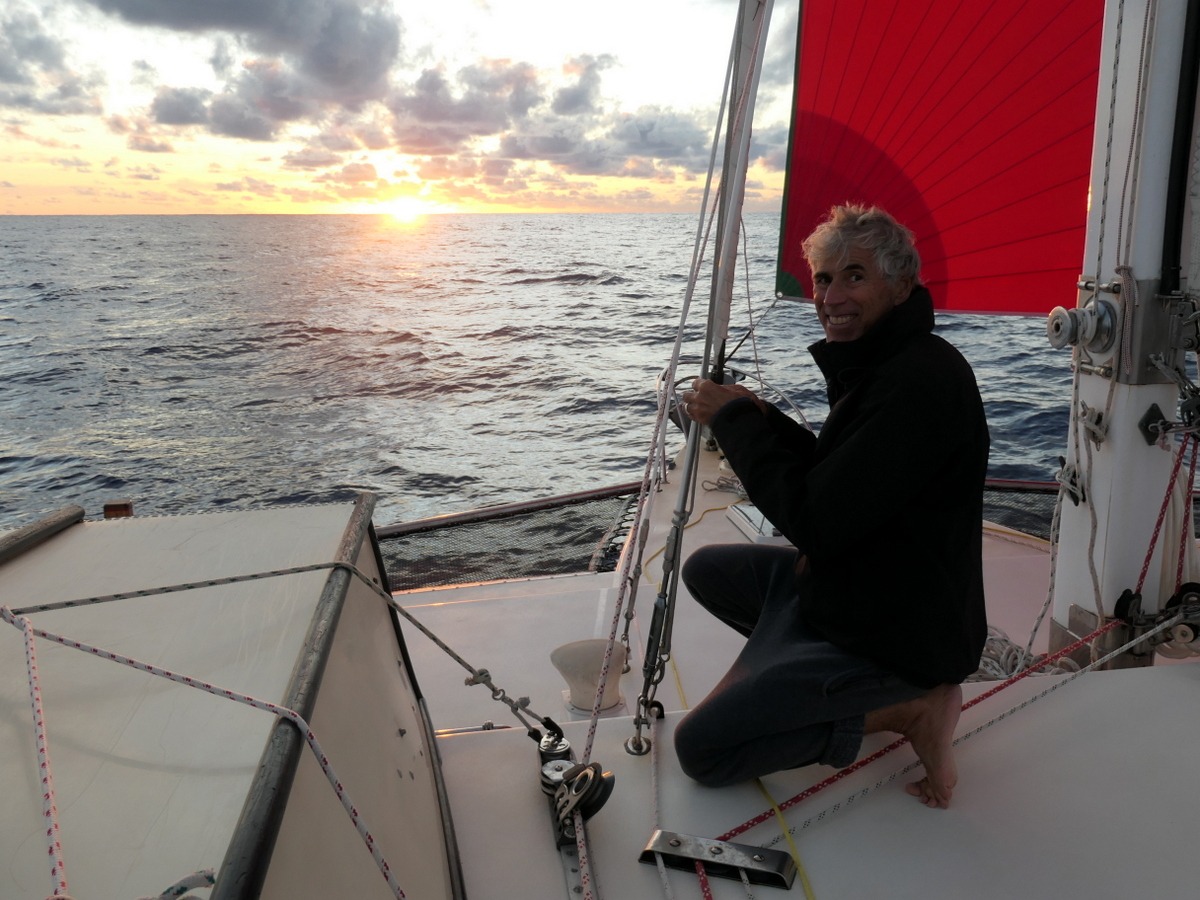
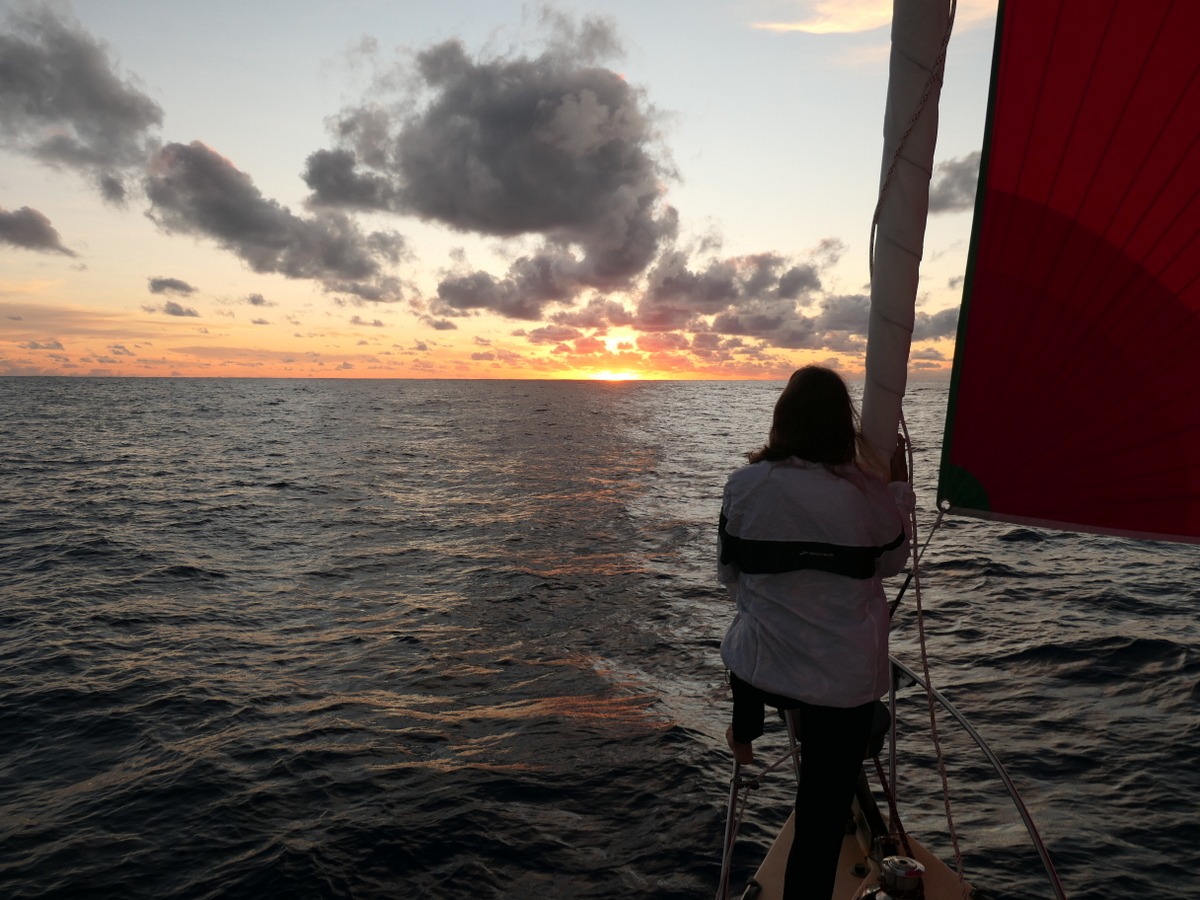
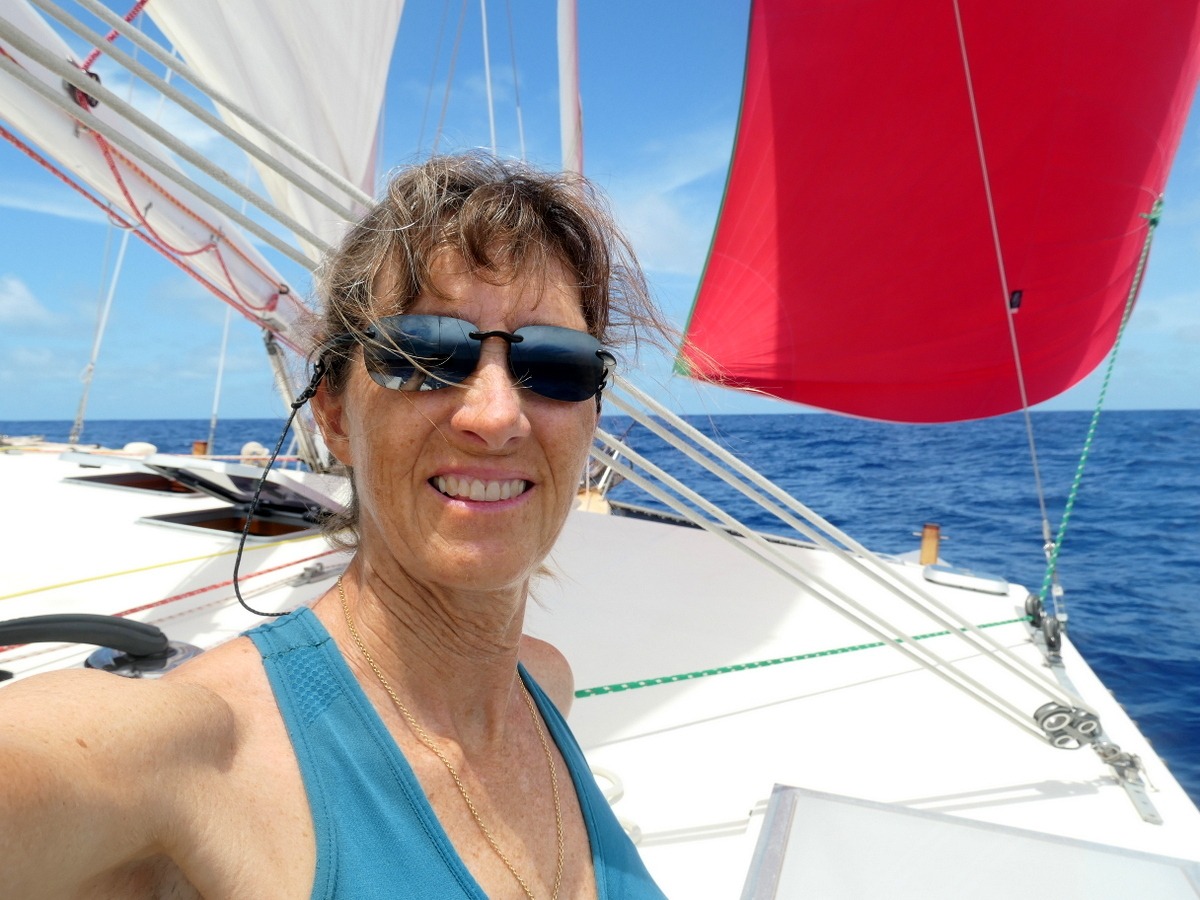
With the unstable weather system, the first night of our sail was plagued with flukey winds — changing directions by 70 degrees and speed from 3 to 13 knots. Management of the boat and sails was difficult, especially with the spinnaker up. But the next day the wind stabilized and we had a good downwind run under our spinny.
No Time in Niue (new-ay)
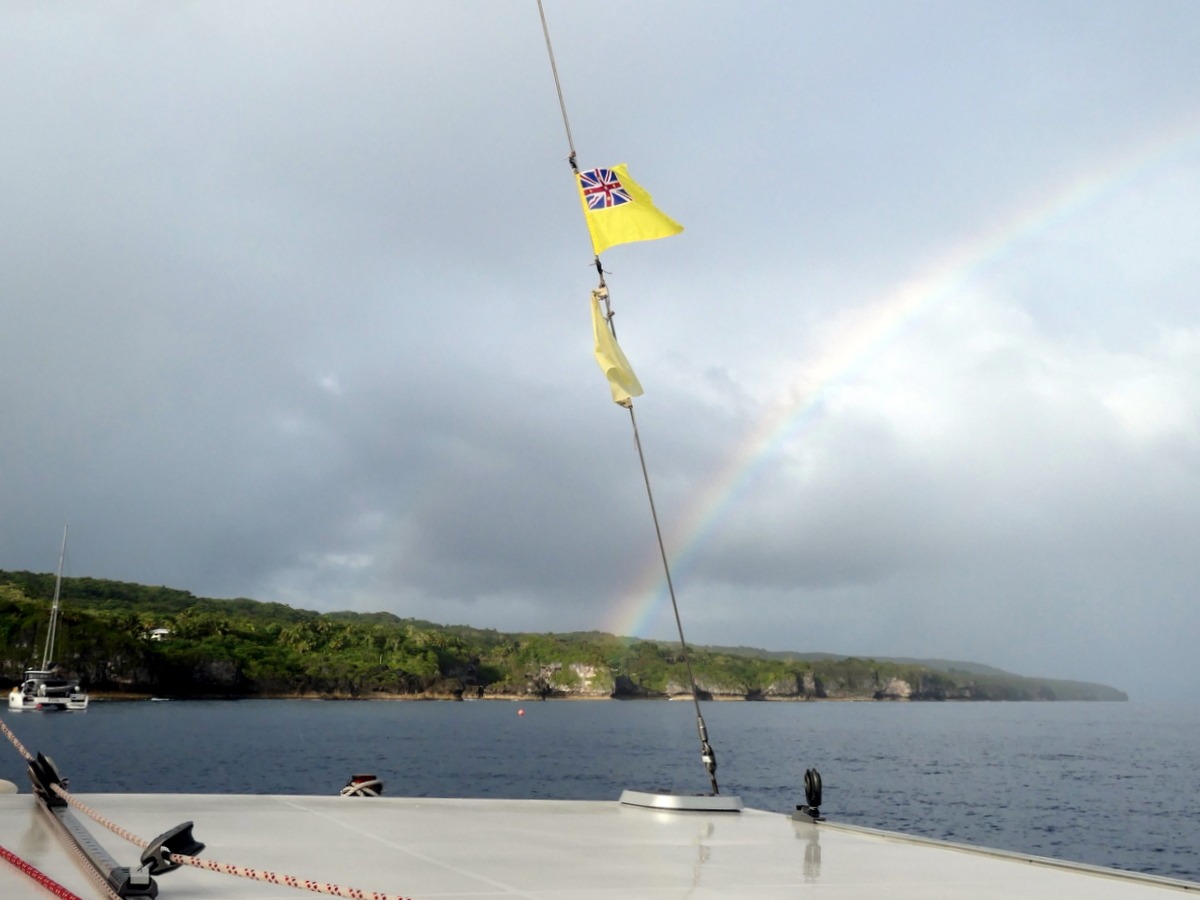
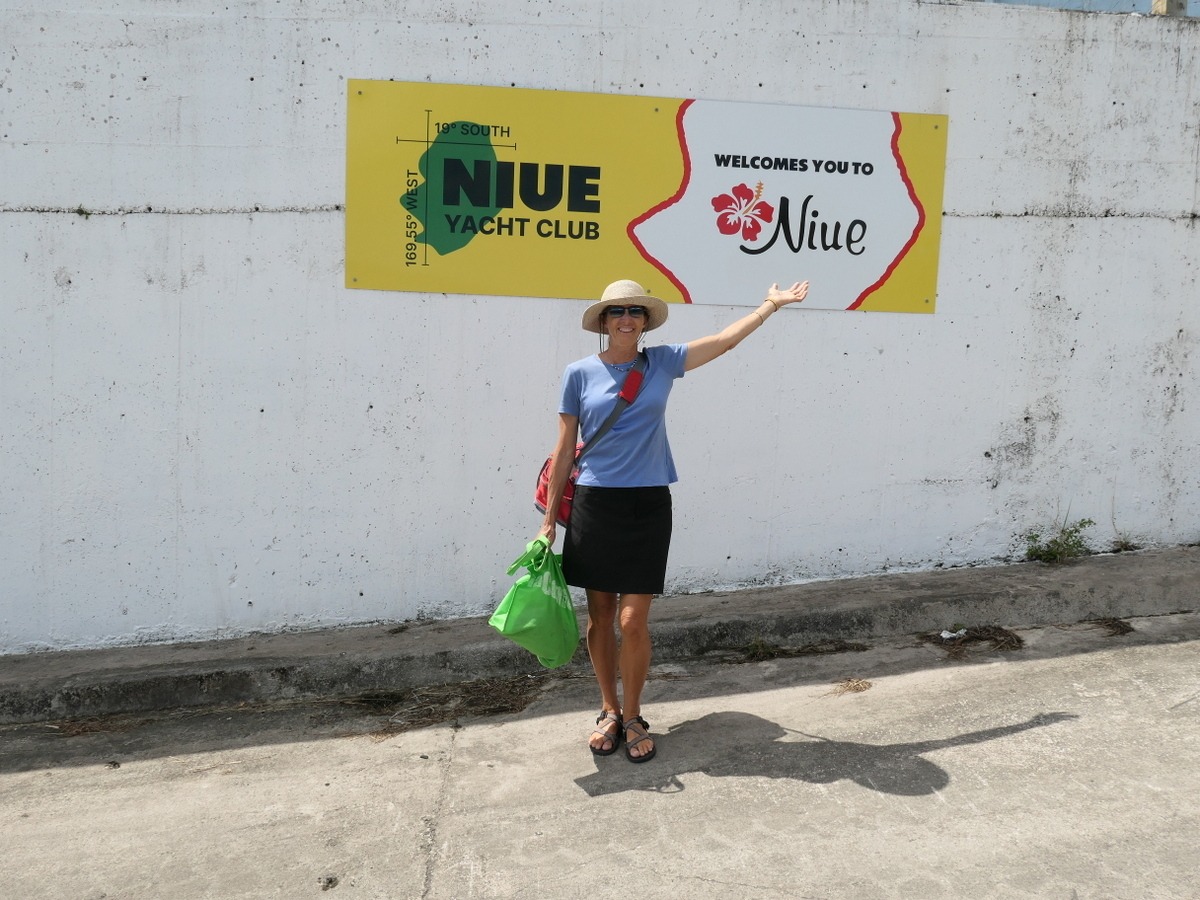
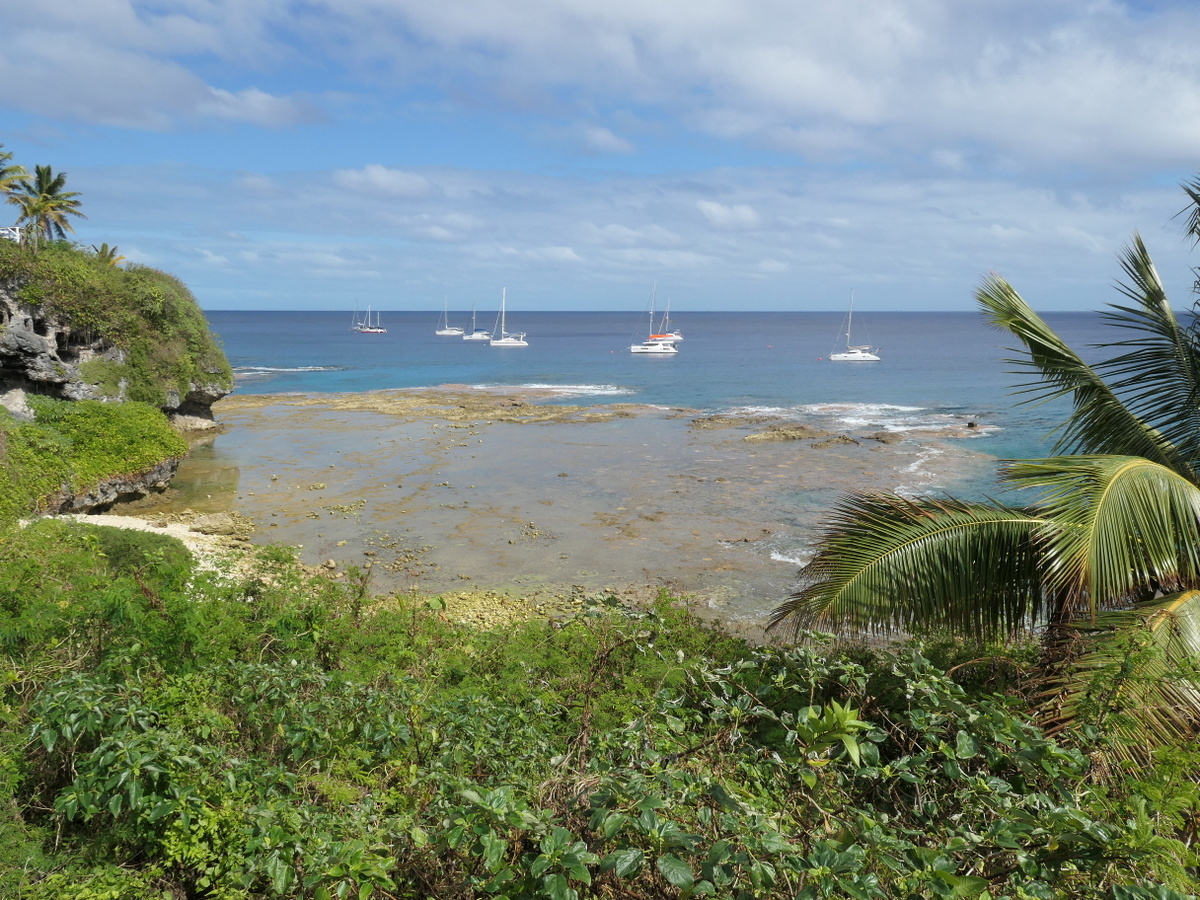
A wonderful thing about Niue is that from July through September whales come to raise their young… and they’ll often be right next to the boats on the moorings. We arrived at the height of the season, so there were plenty of whales around but only in the distance; they didn’t come near the boats as they had in the past. Perhaps the increasing number of visiting sailboats and local whale-watching boats keeps them at a distance. We missed being startled by a blow right next to Migration. However, each time we got in the water to snorkel, we heard whale song, and also heard it at night through the hulls — a simply magical experience we never tire of.
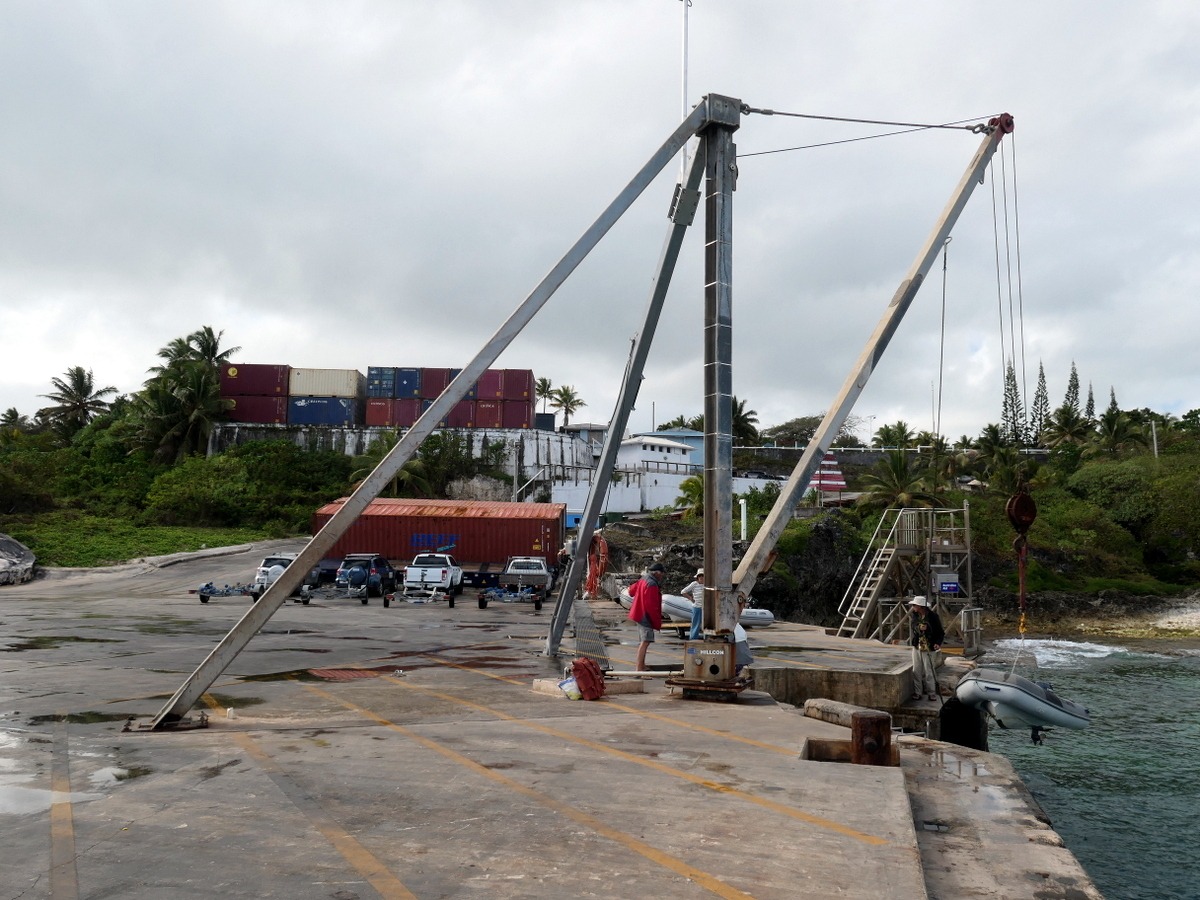
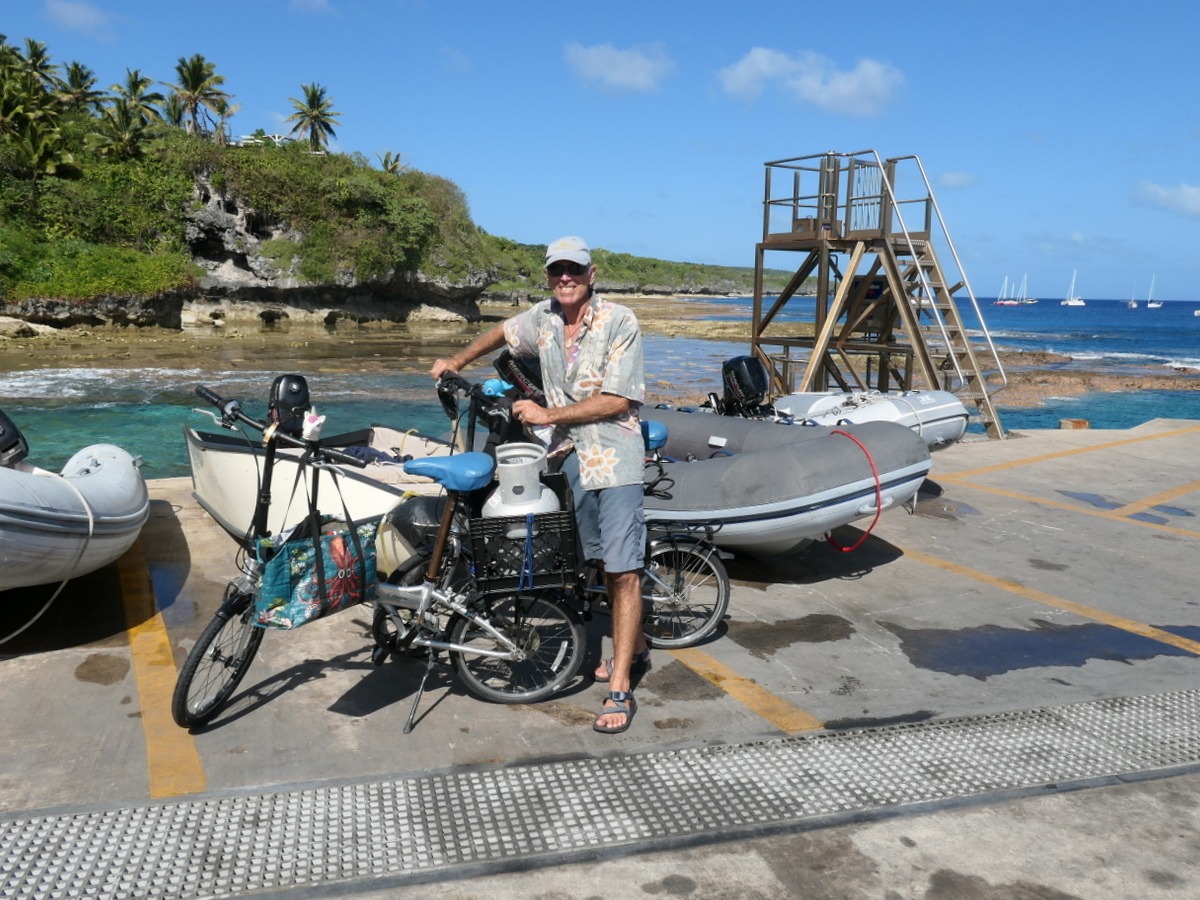
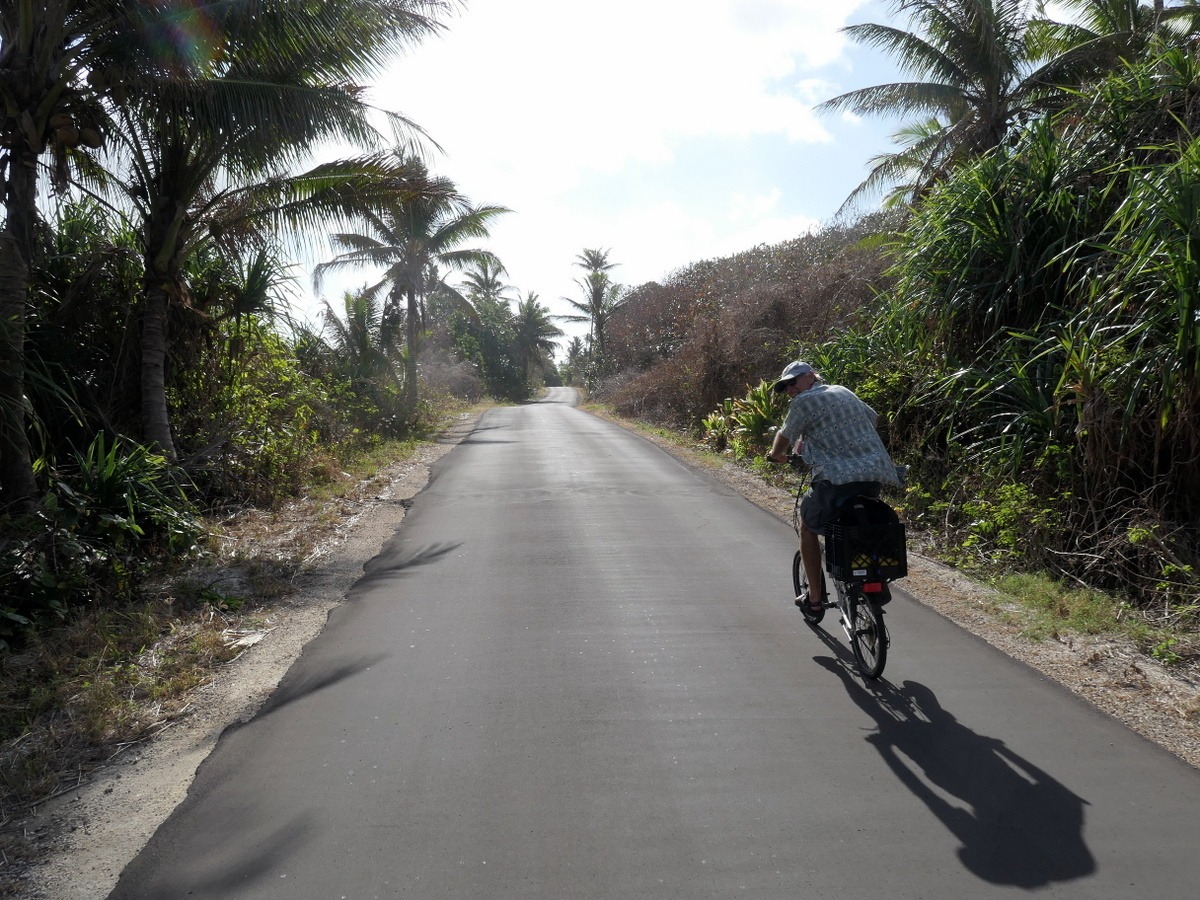
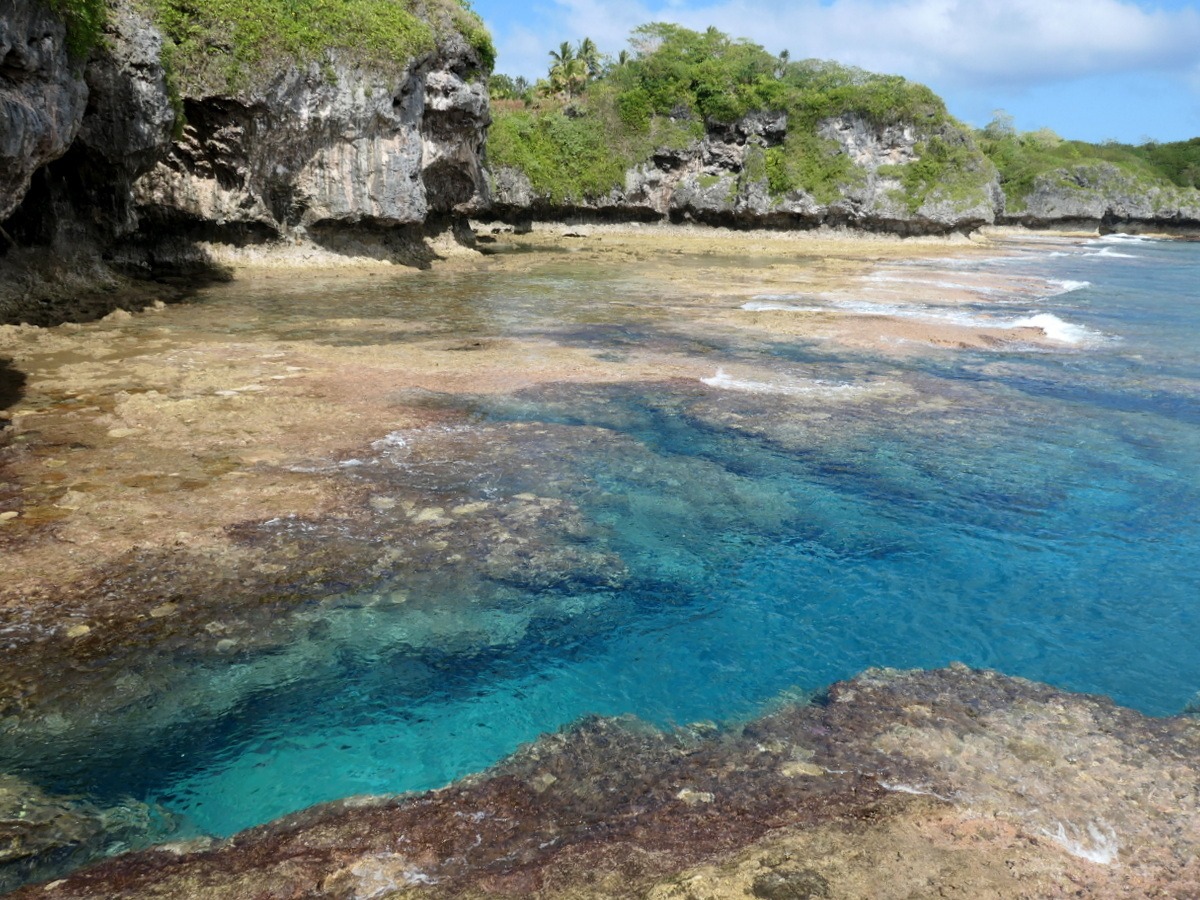
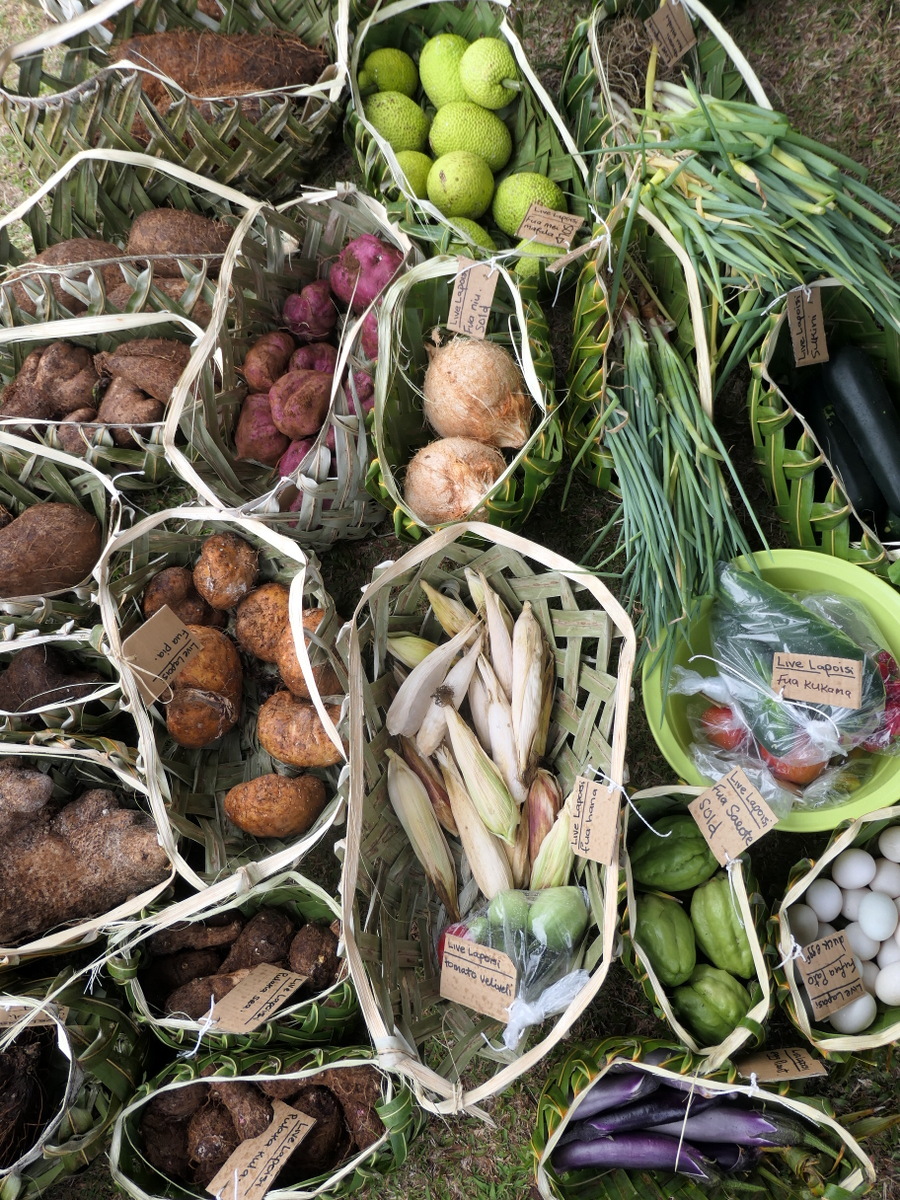
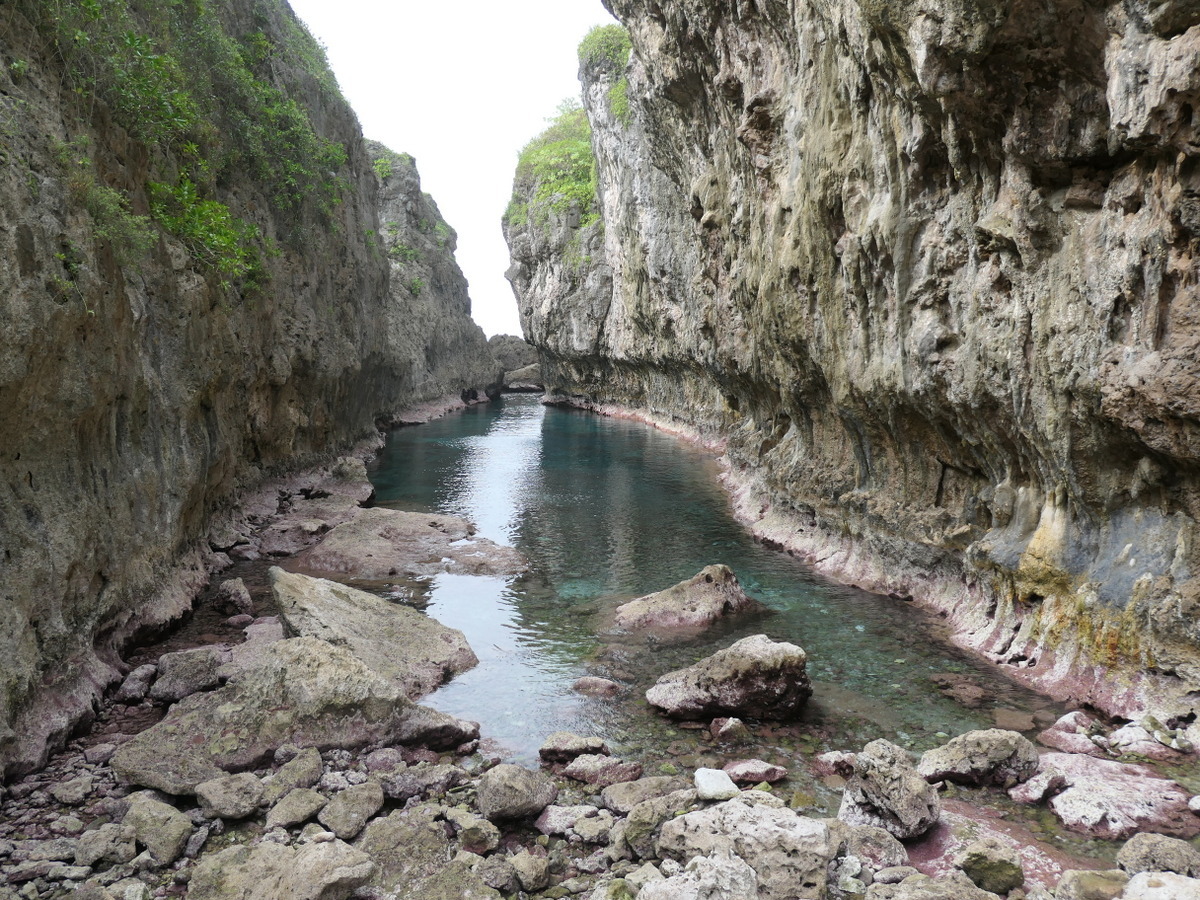
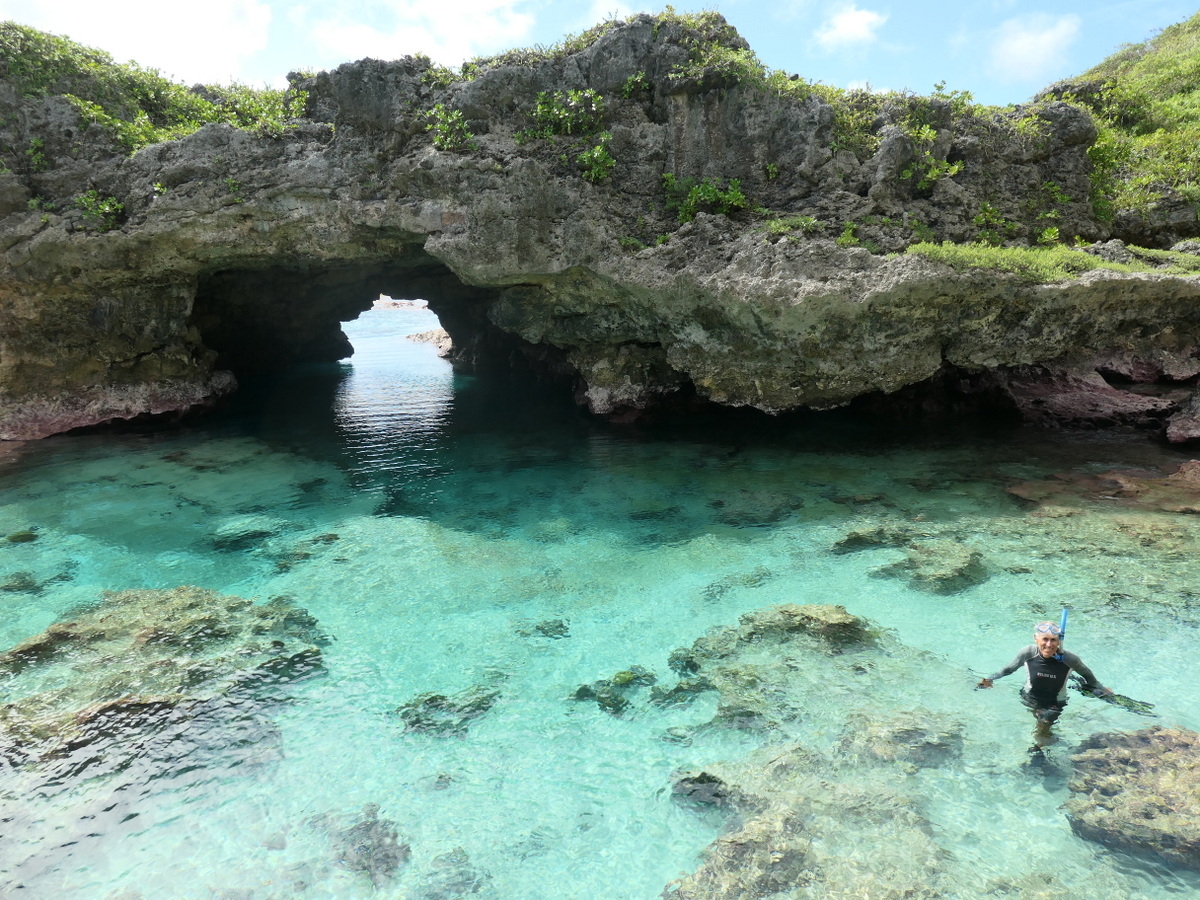
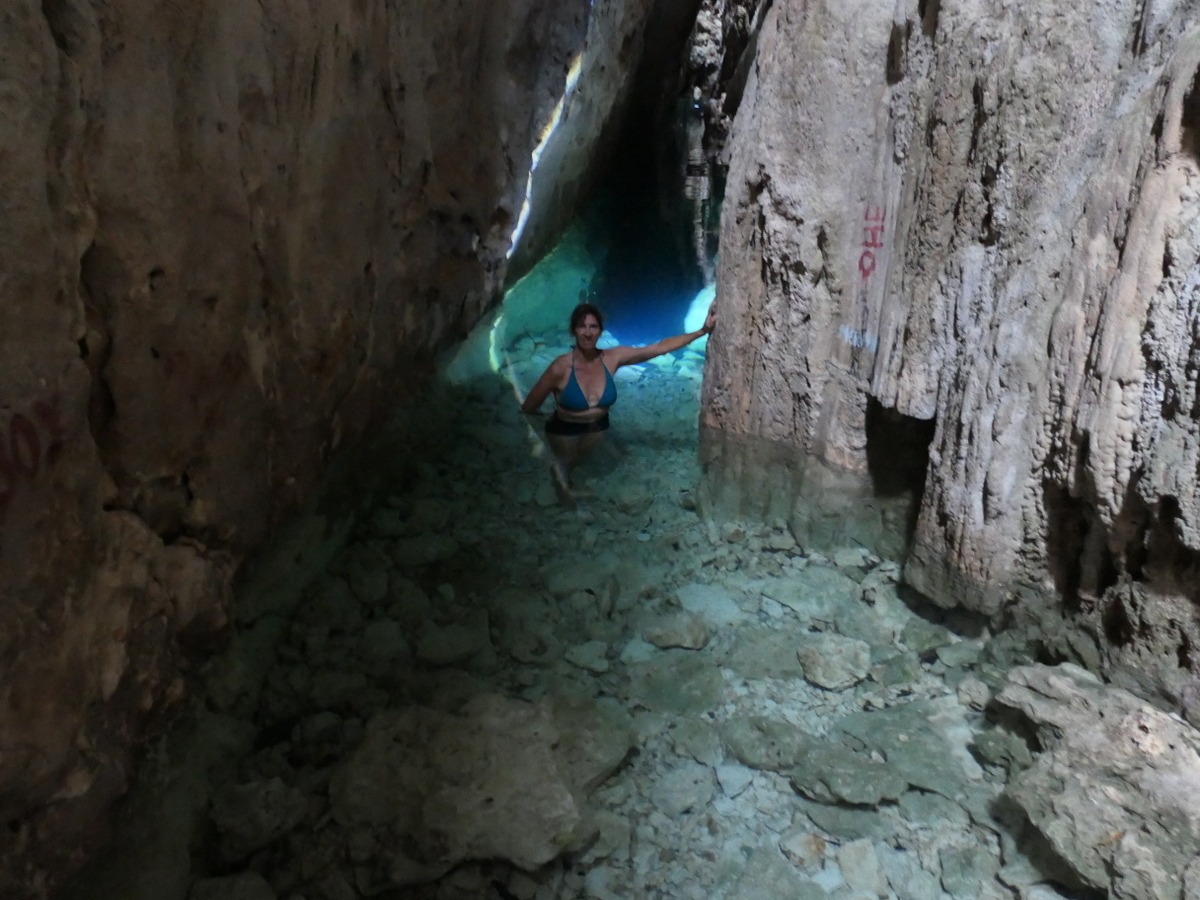
With tall cliffs all around and very few beaches, getting ashore is a bit of an adventure. We still had the dinghy bridle we made in 2009 which we attach to a crane to lift the dinghy onto the wharf. We also offloaded our bicycles — it’s a great way of getting around the island to visit the caves, caverns, snorkeling spots, and volcanic features.
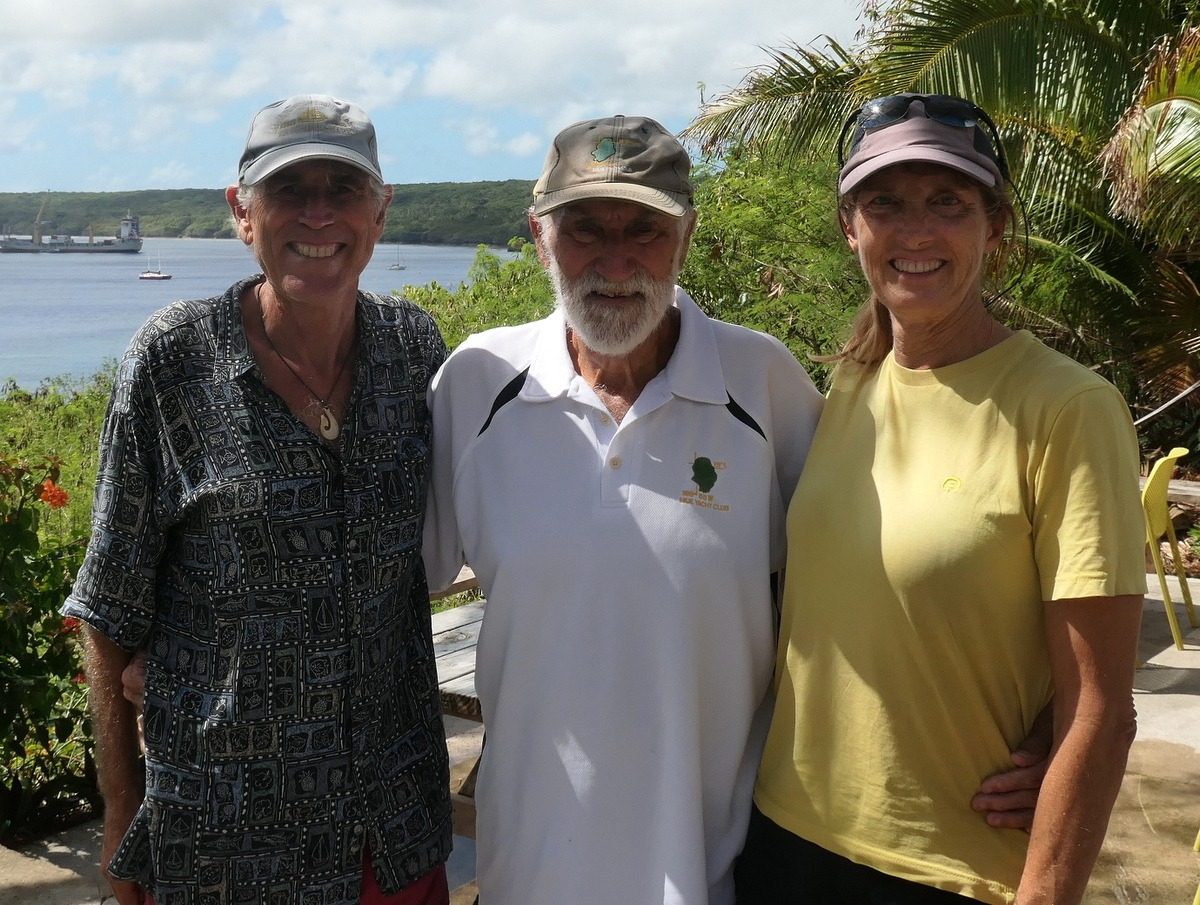
Once ashore, it was great to reconnect with Keith, the commodore of the yacht club. Since few boats return to Niue, it was a very special reunion. We also brought our tablet loaded with photos from previous visits. The ladies at the weaving cooperative and the tourist office were very pleased to see photos of themselves from 15 years ago, as well as relatives who had passed away.
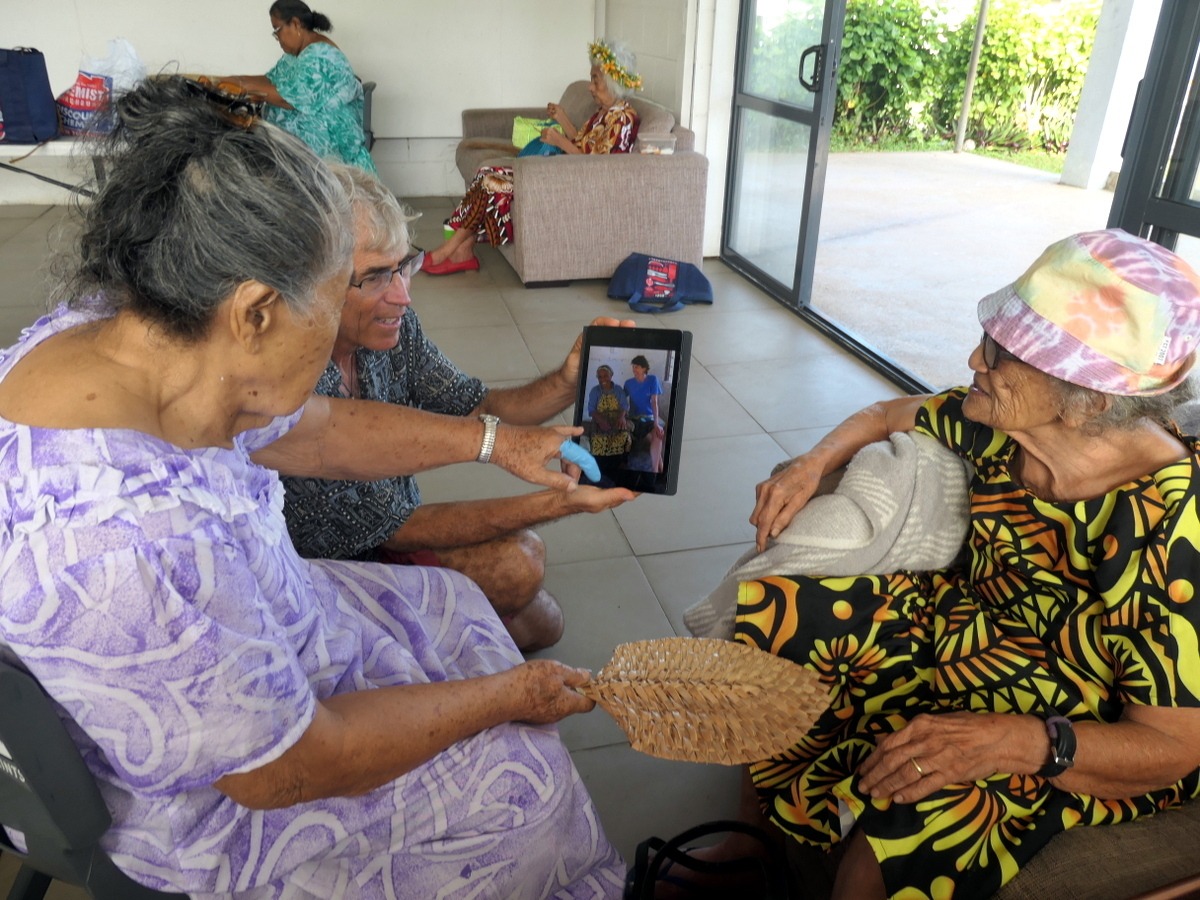
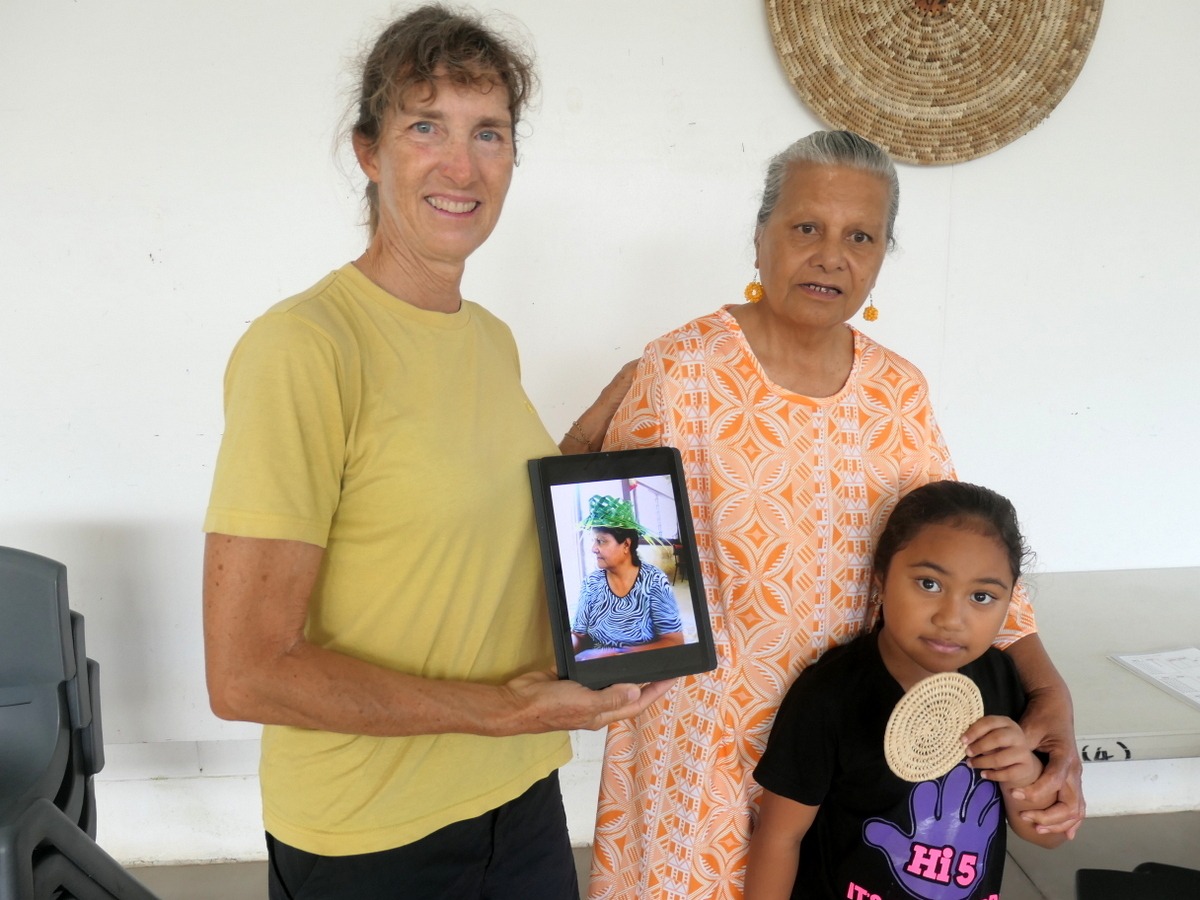
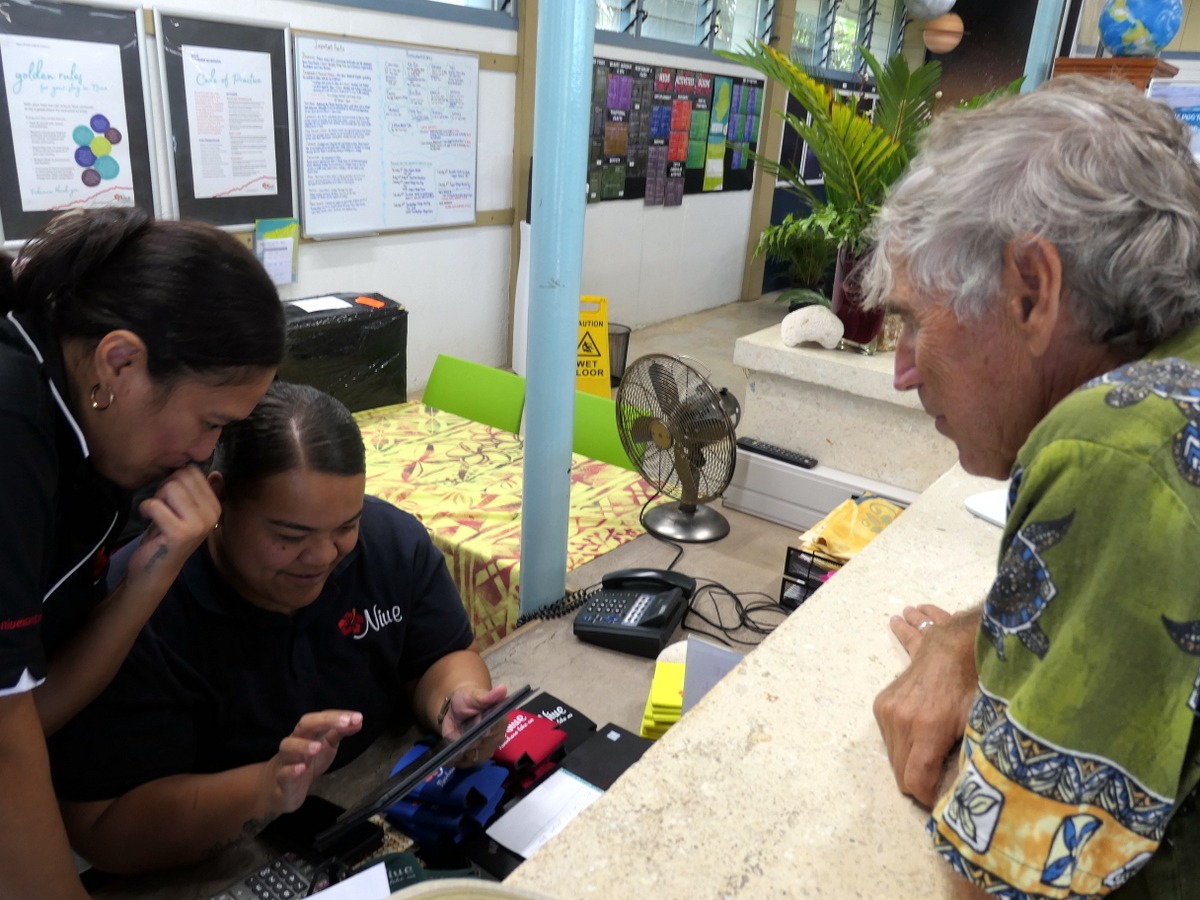
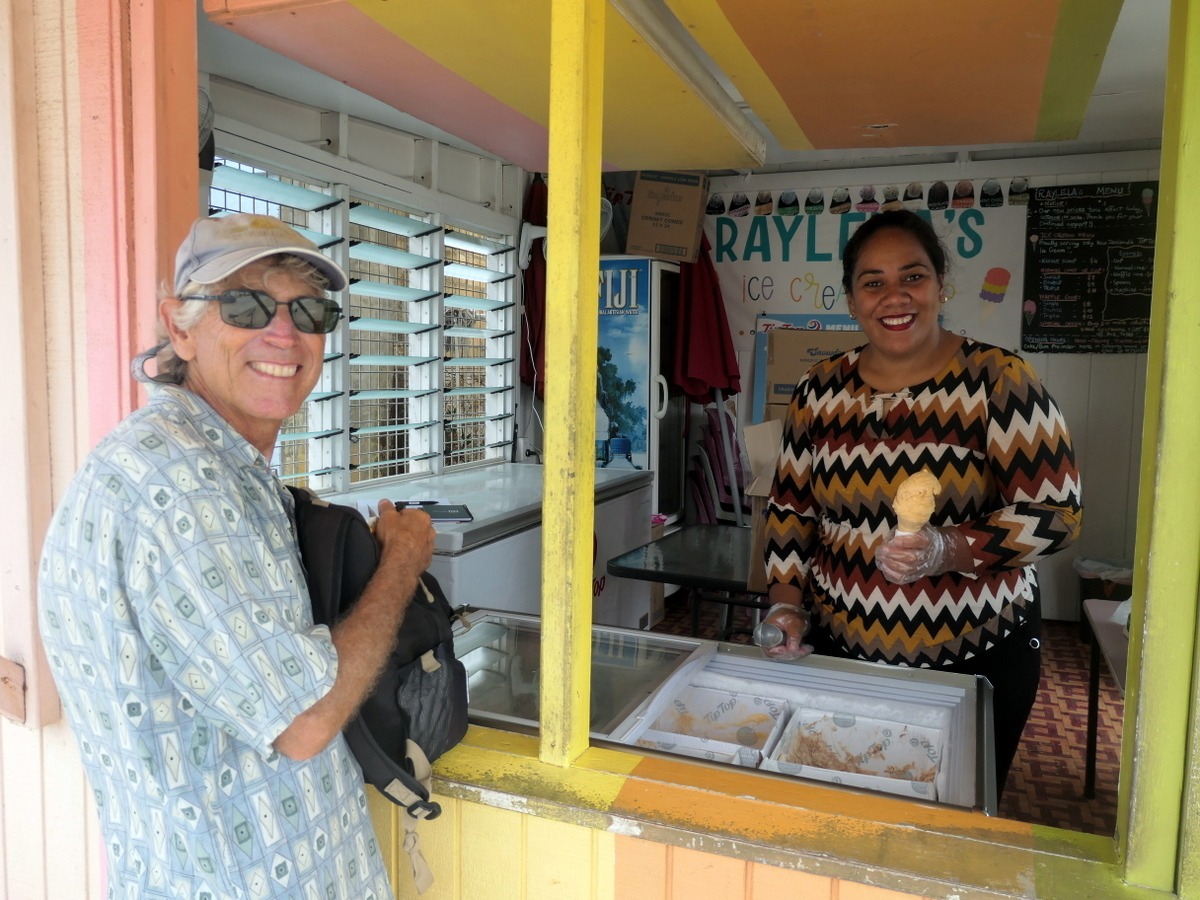
15 years ago we found Niueans to be super friendly and they have not changed. We really enjoyed meeting Feti who keeps a logbook of visiting yachties. It was cool to see names of boats we knew from years ago.
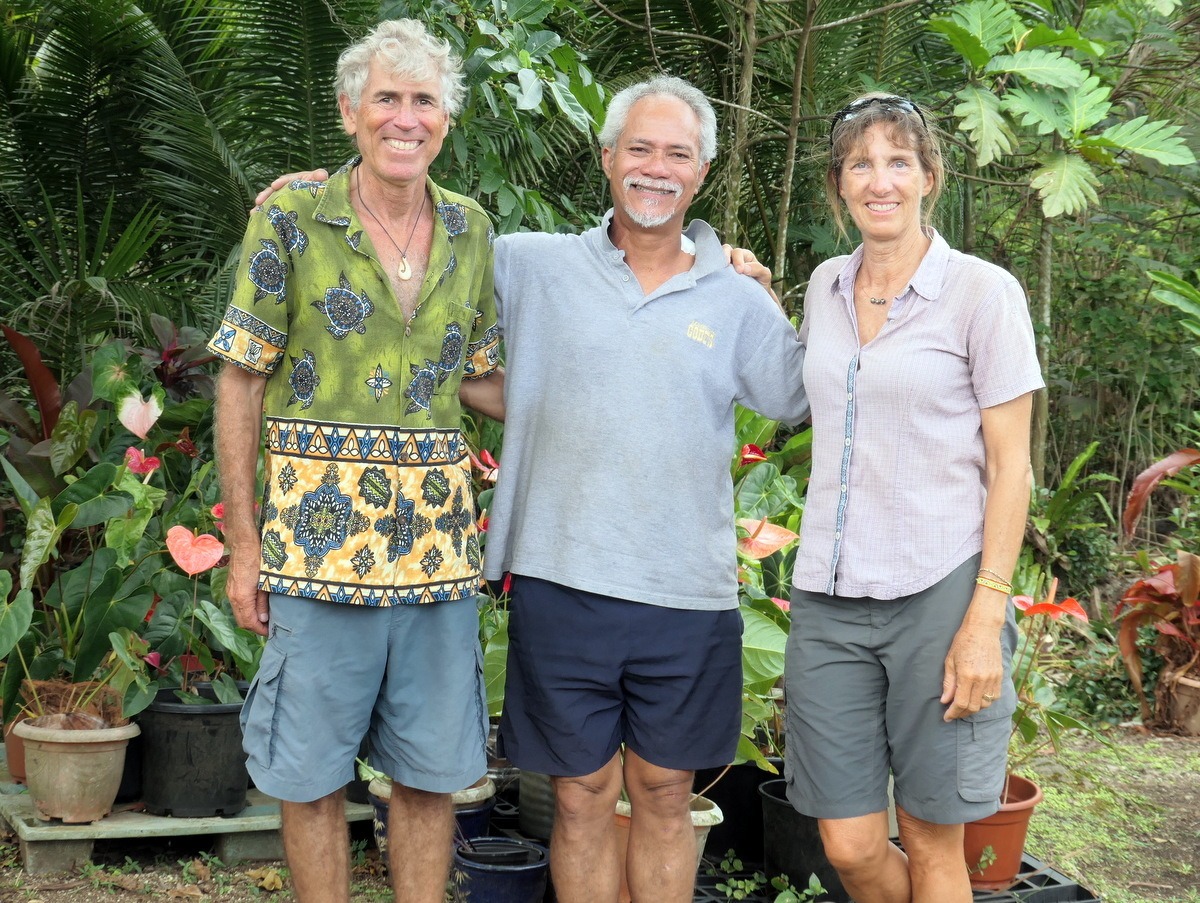
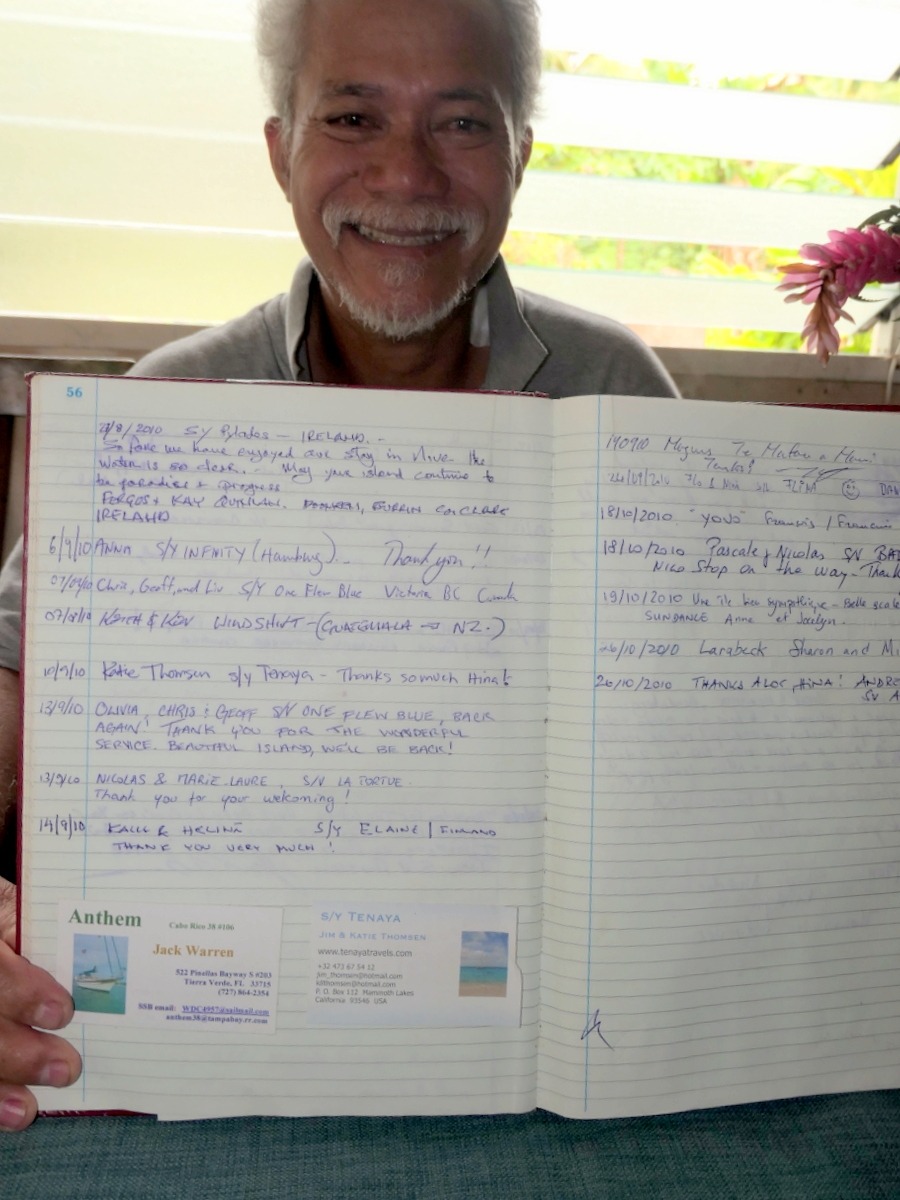
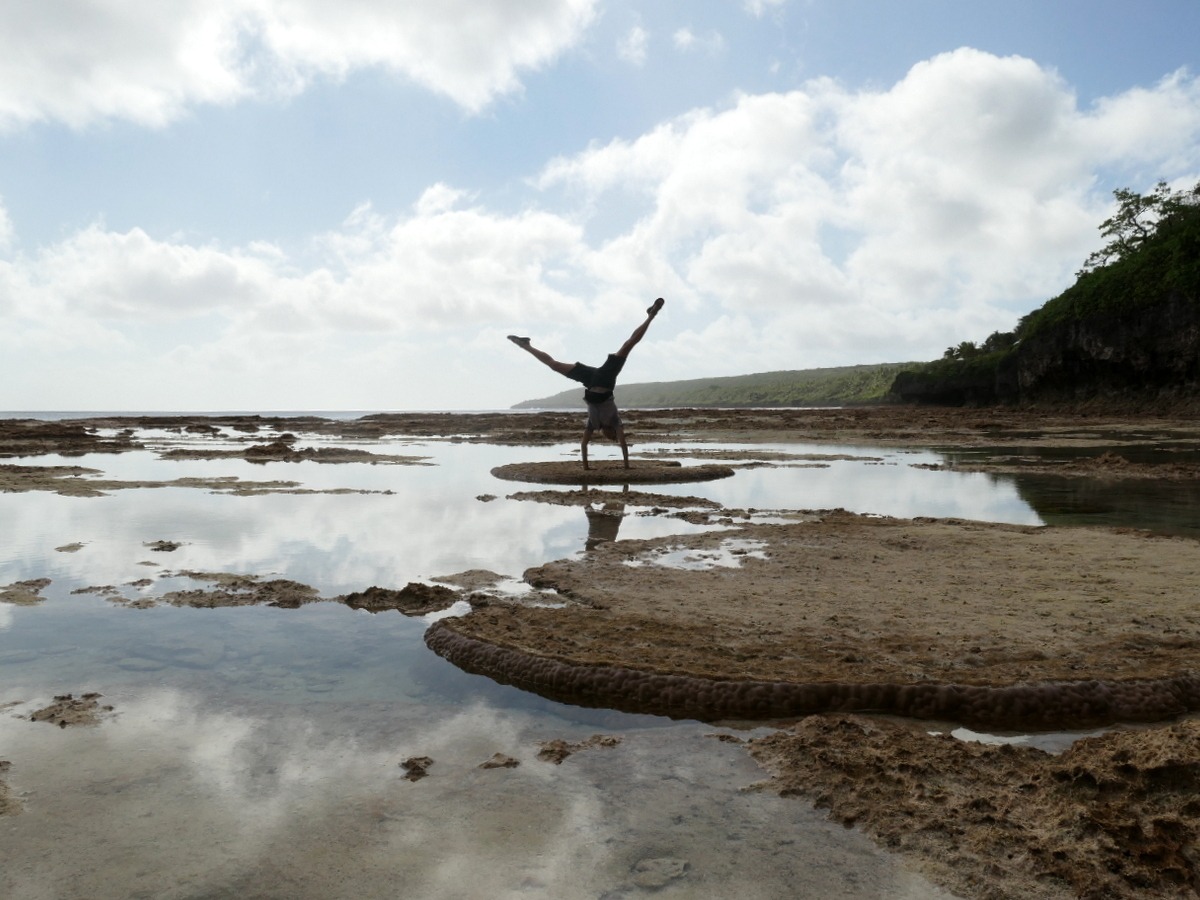
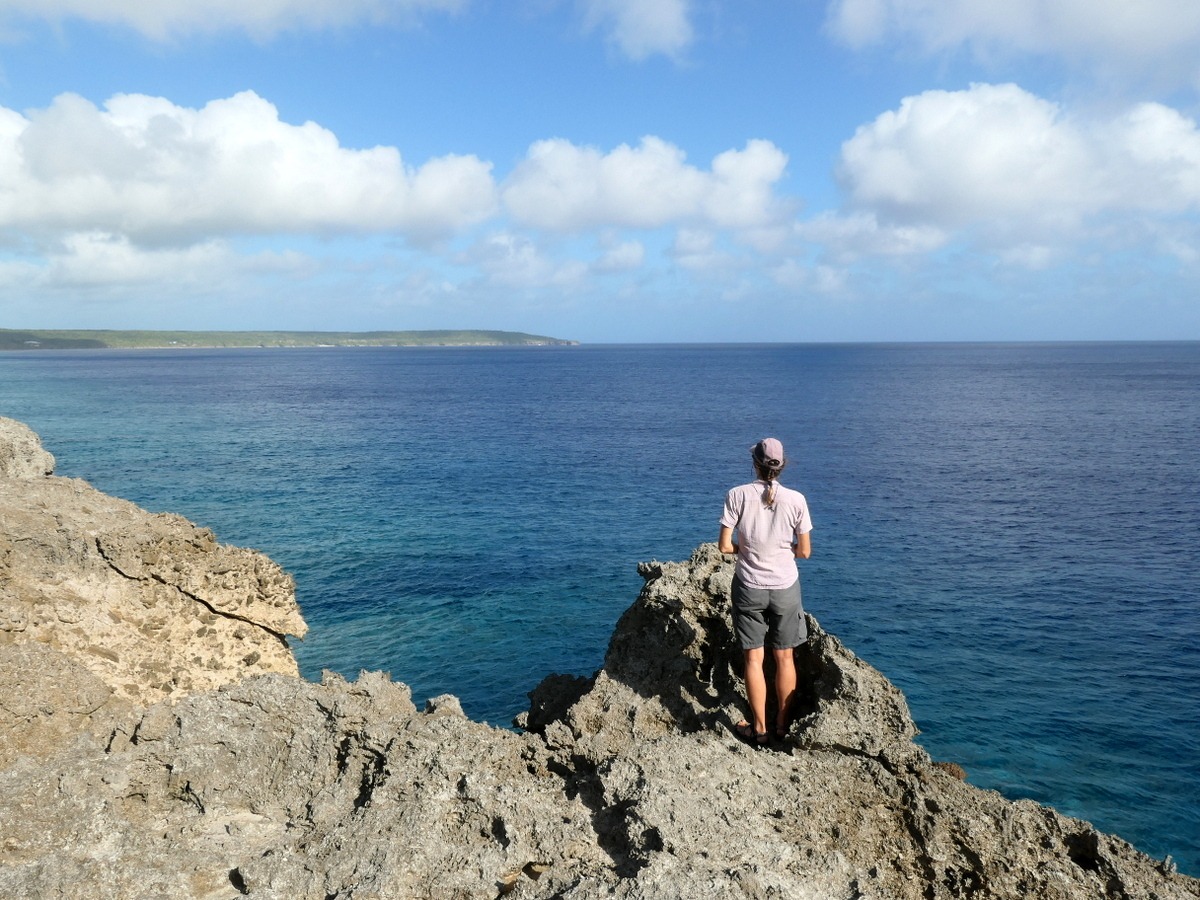
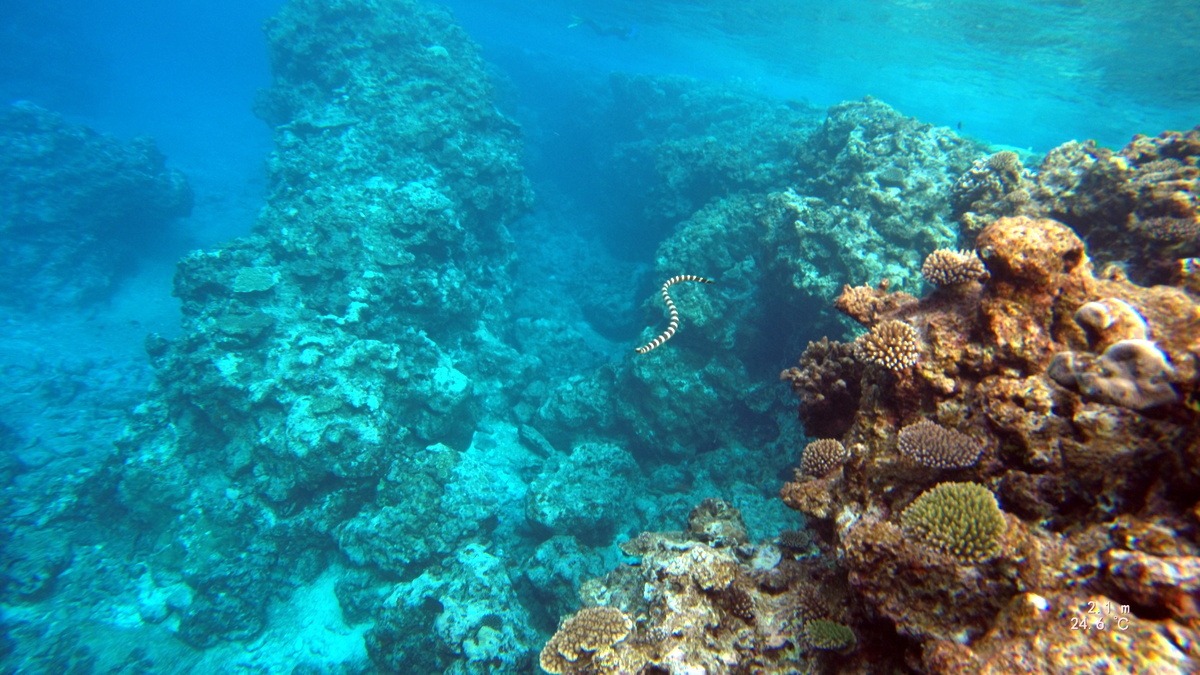
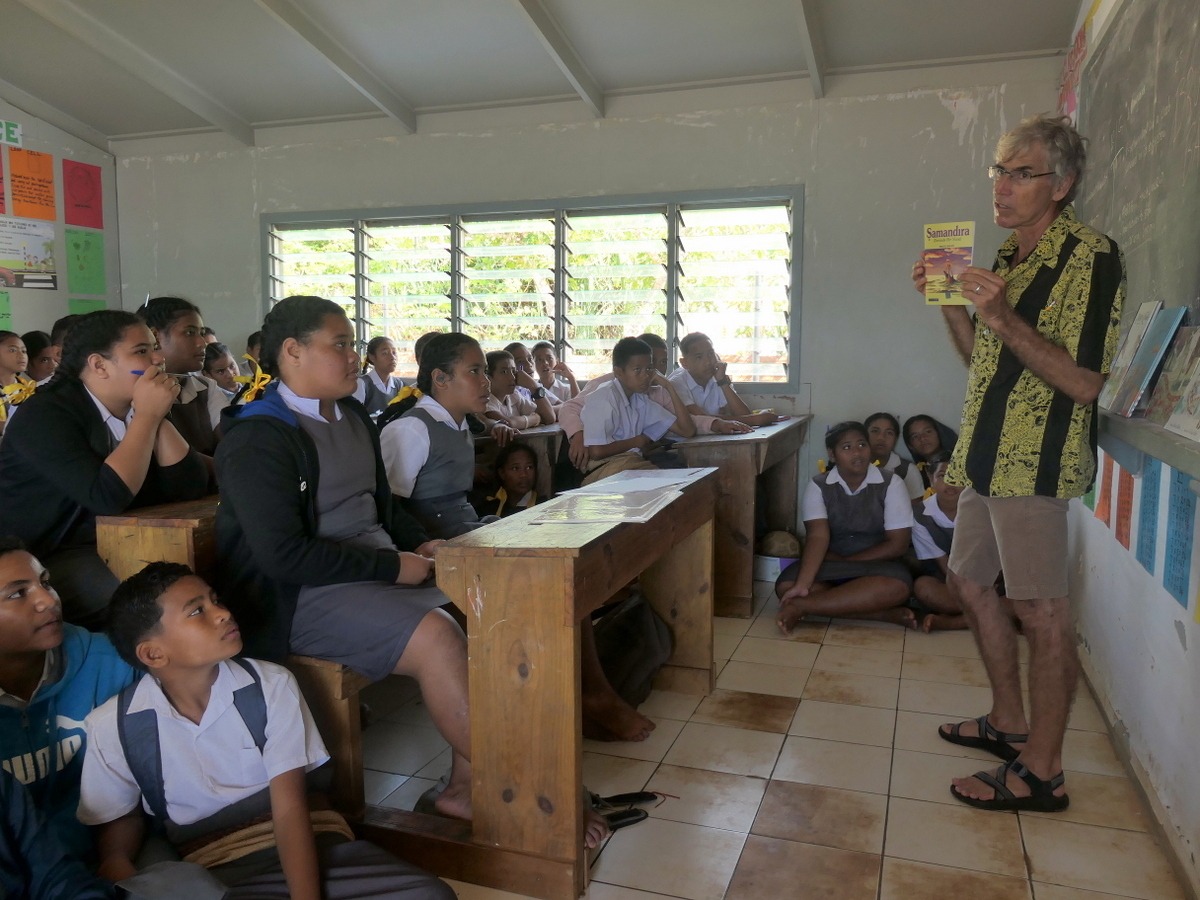
We had hoped to stay at least 3 weeks, but sadly, we had to leave after only a week because… yes, weather again. A system was expected to blow through with high winds from the west leaving us exposed with our stern to the reefs and sheer cliffs of the island. Though Bruce couldn’t schedule school presentations as he had in 2009 and 2010, we made the most of our time; exploring, snorkeling, biking, and hiking every day. We visited our favorite sites, and found a few new ones as well.
Exploring the Island
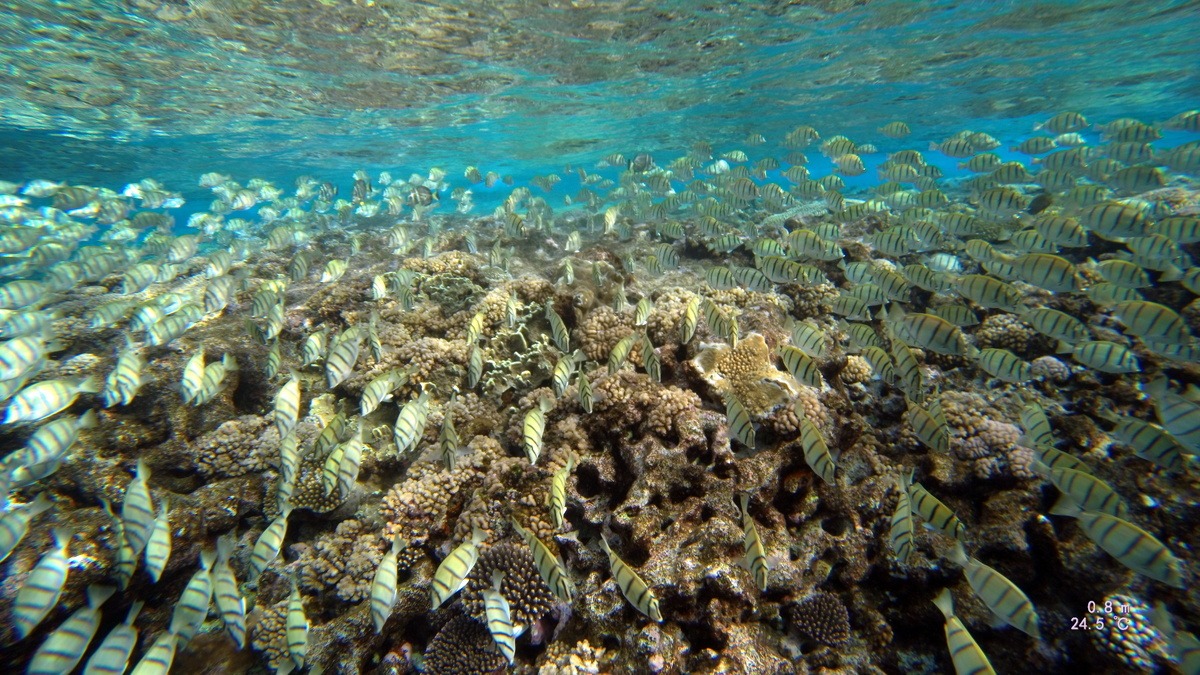
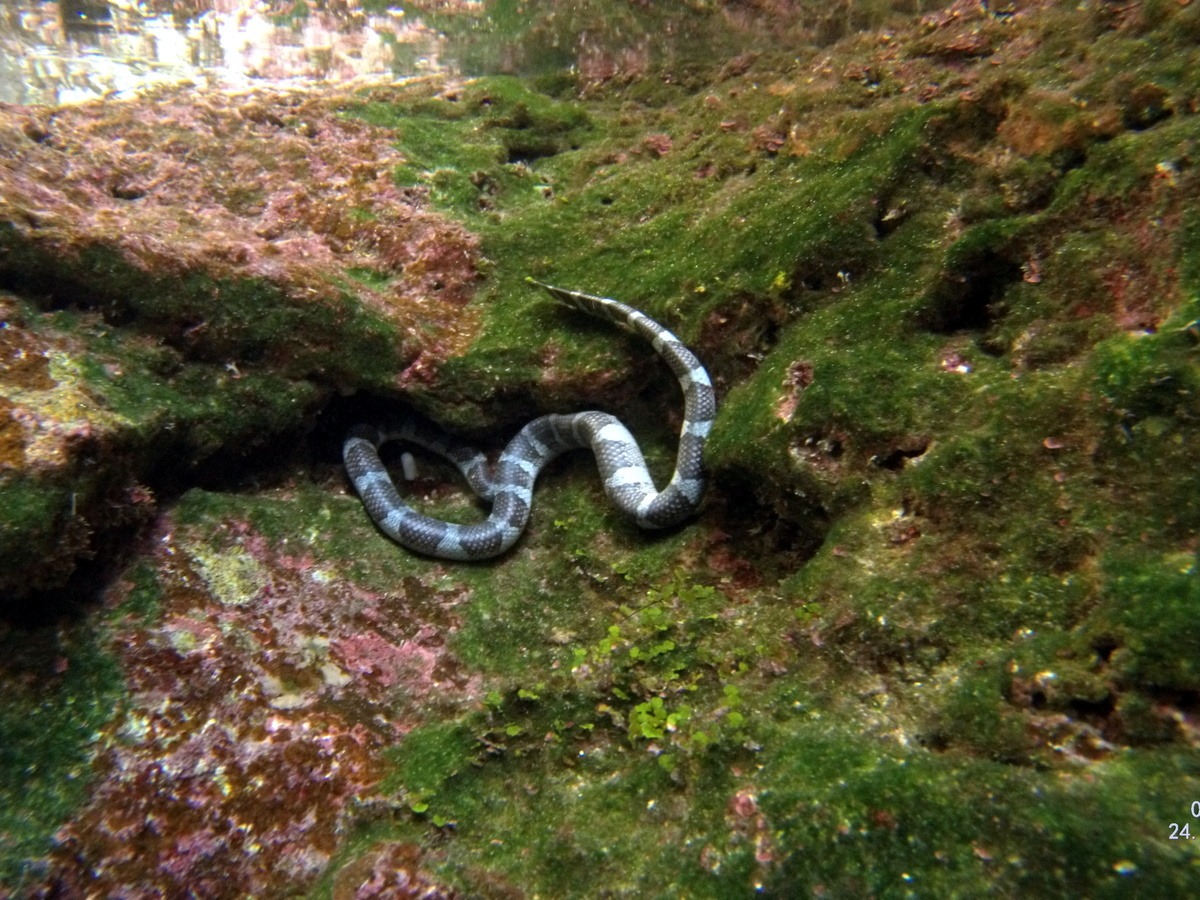
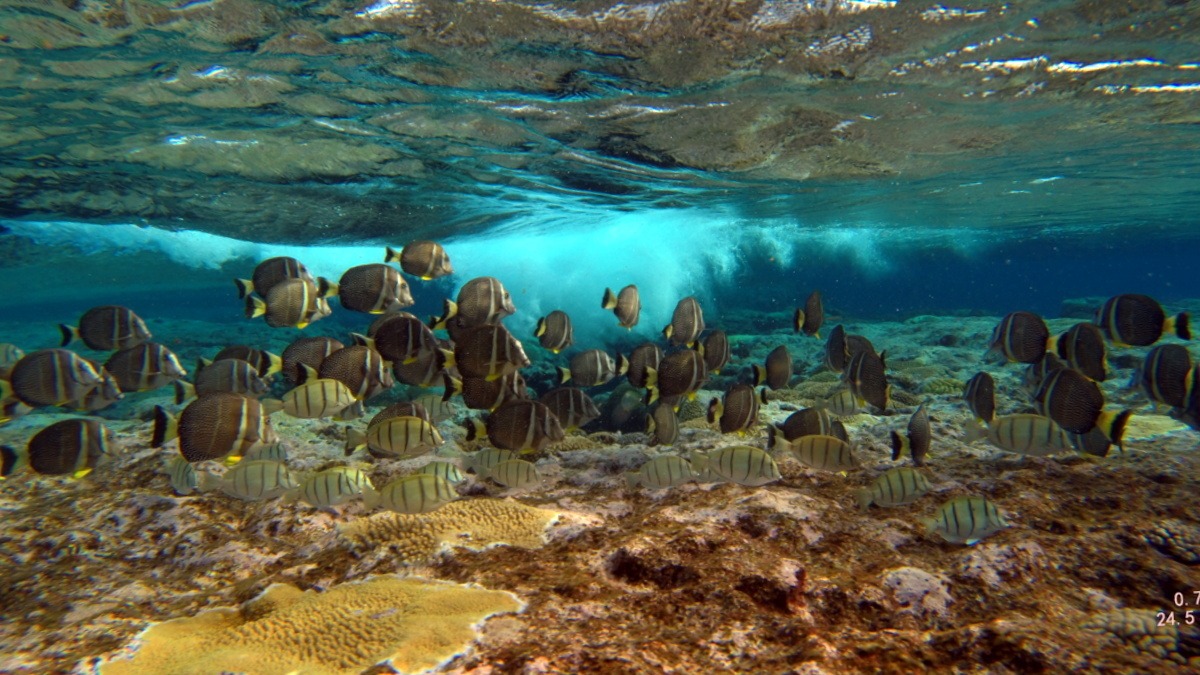
Snorkeling!
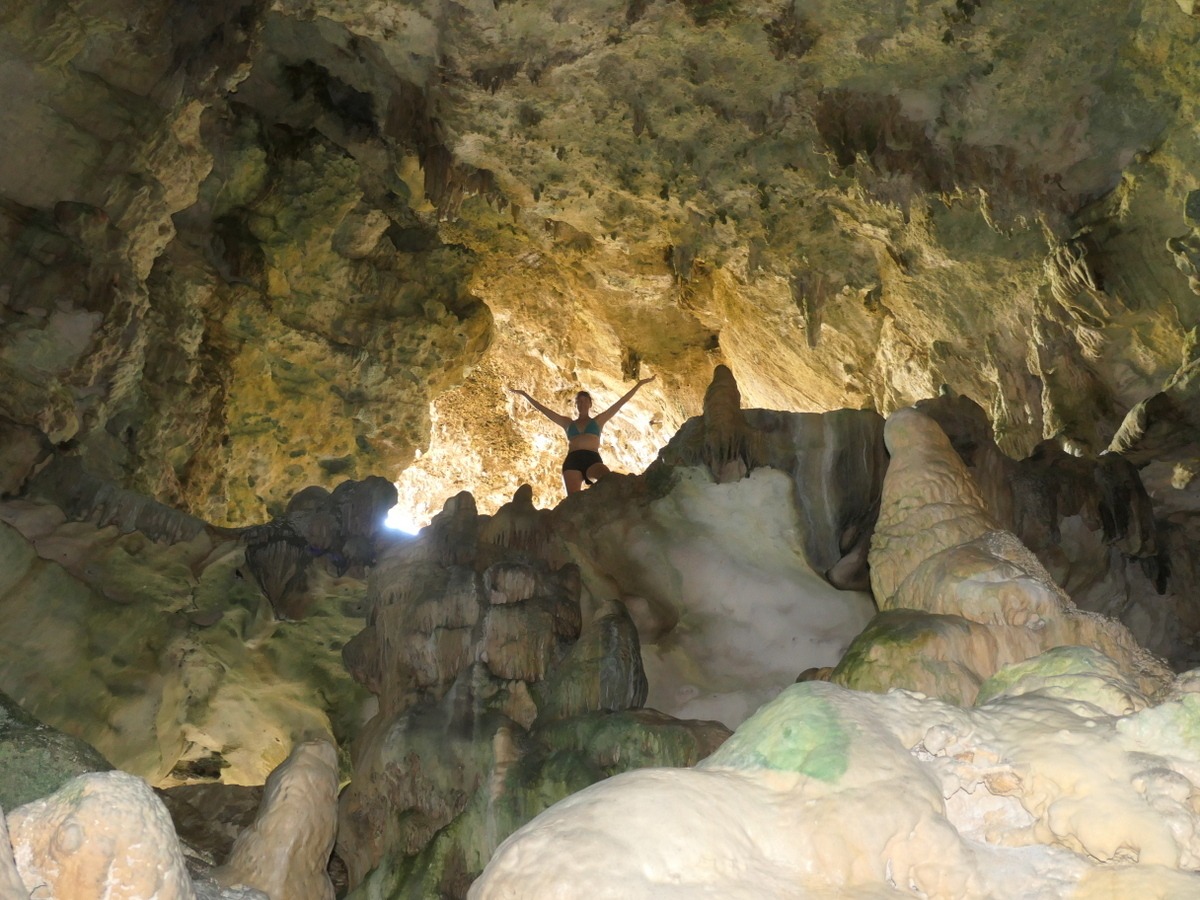
Caves!
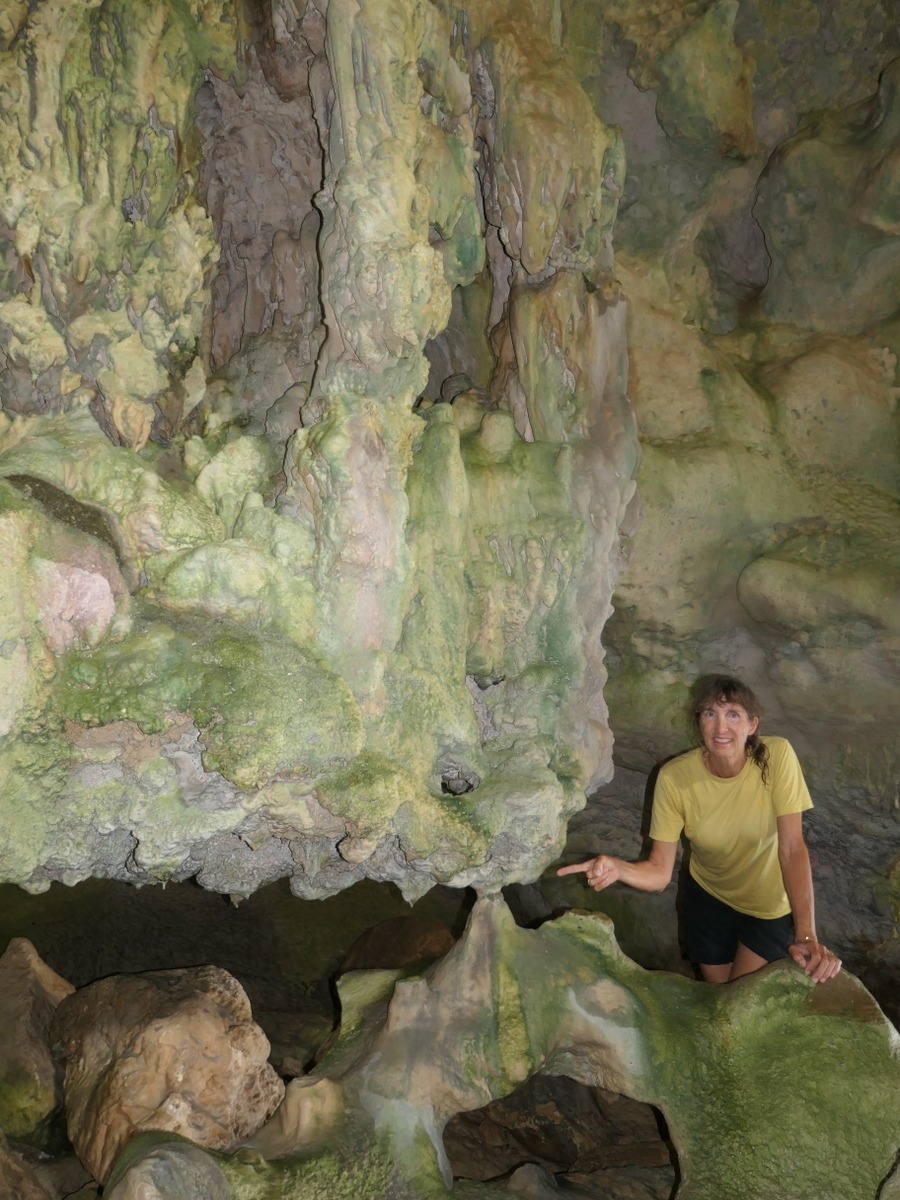
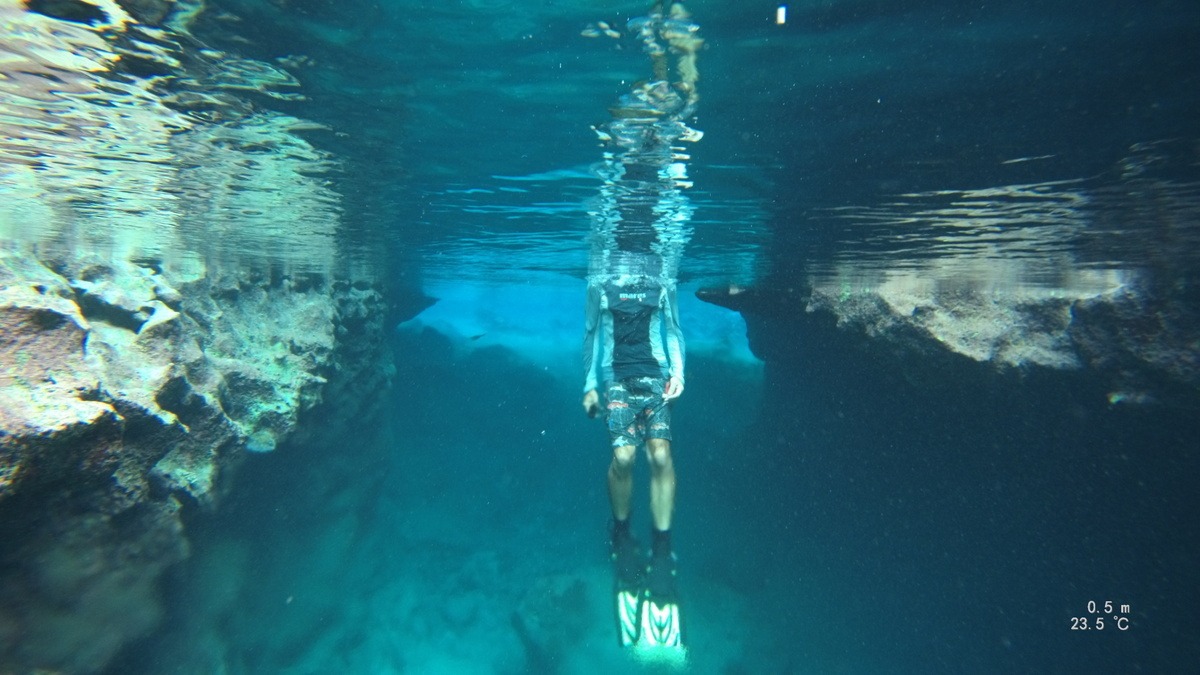
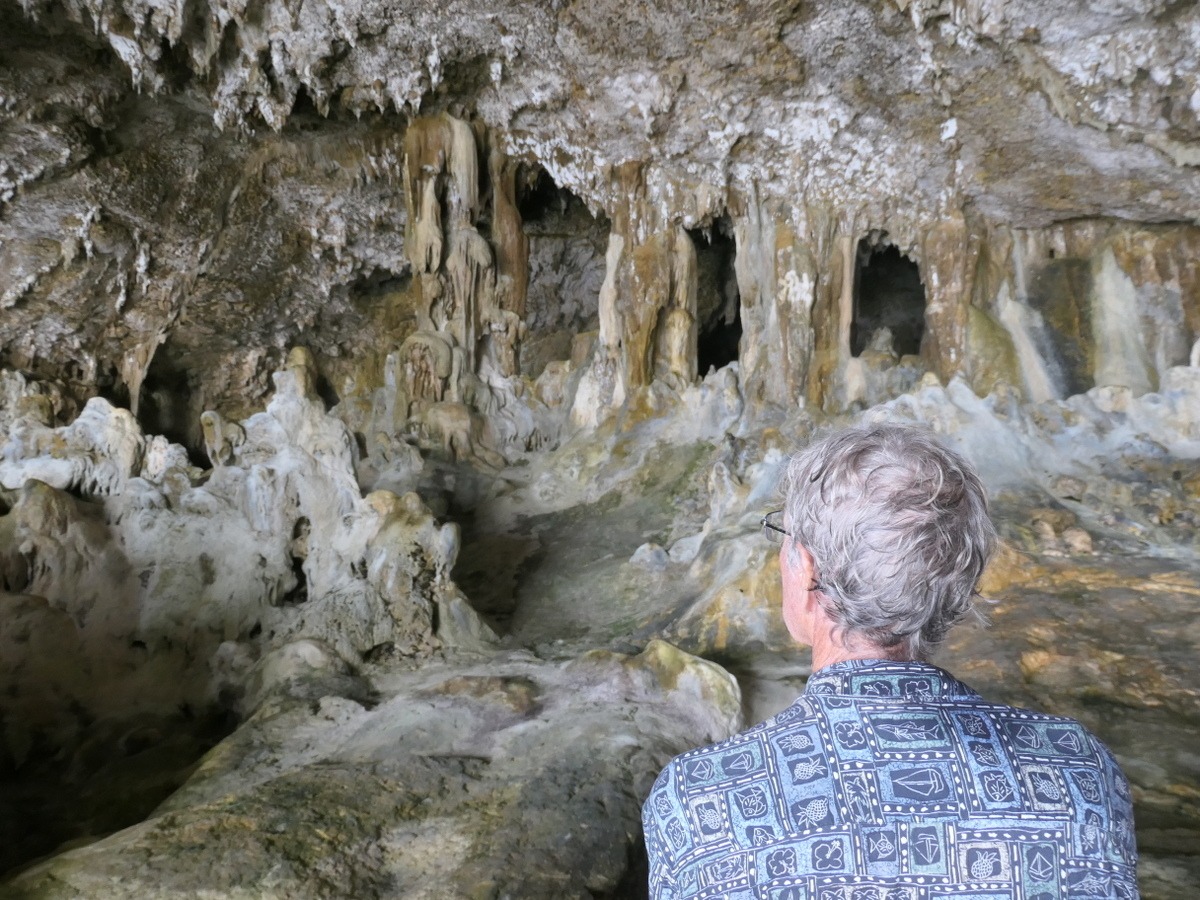
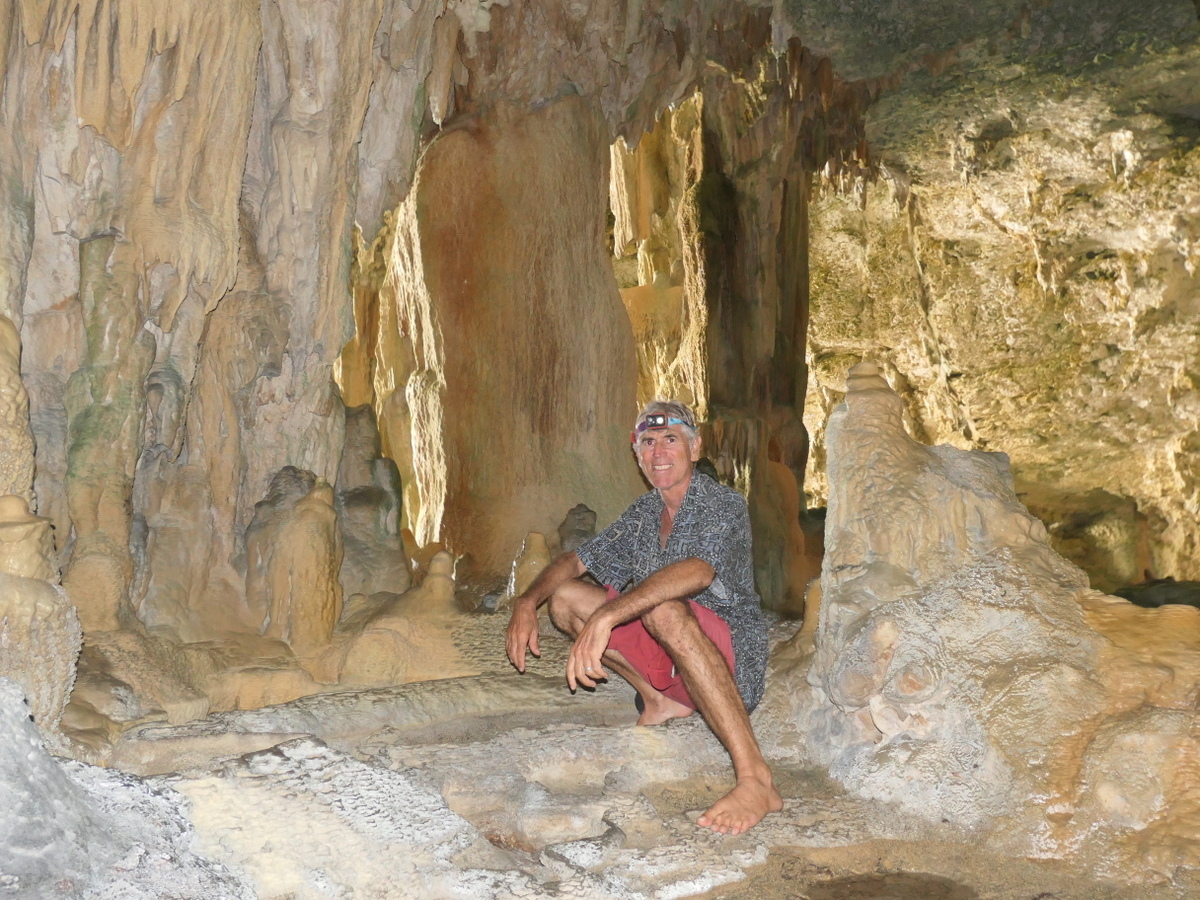
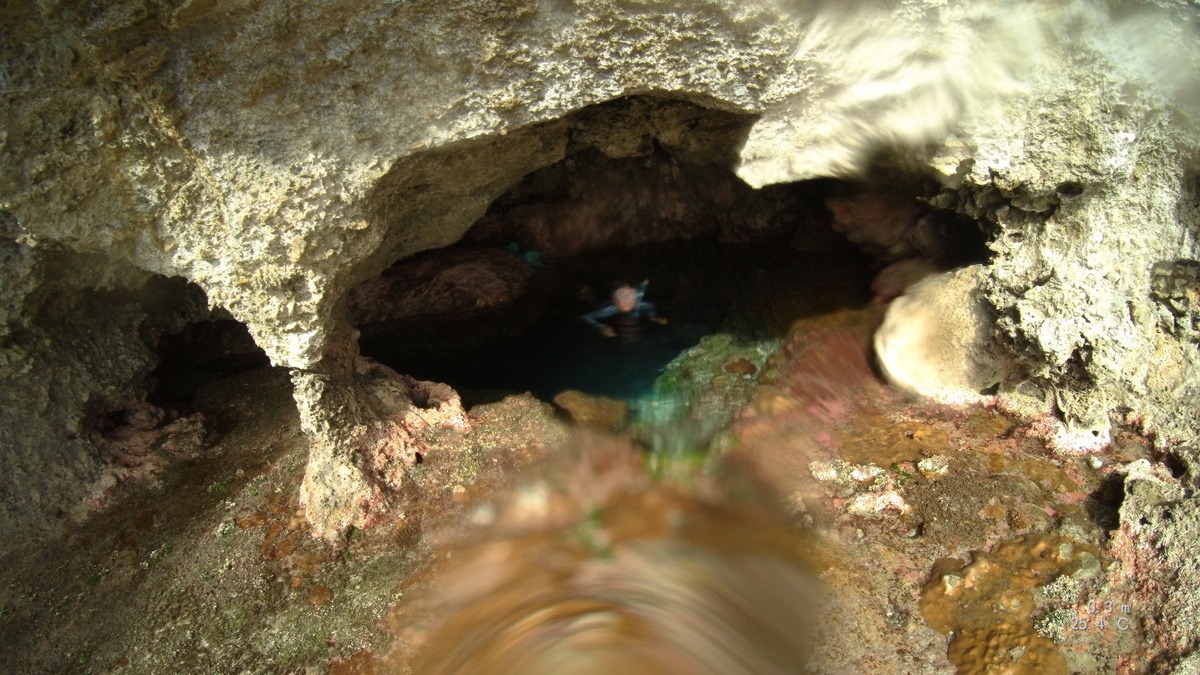
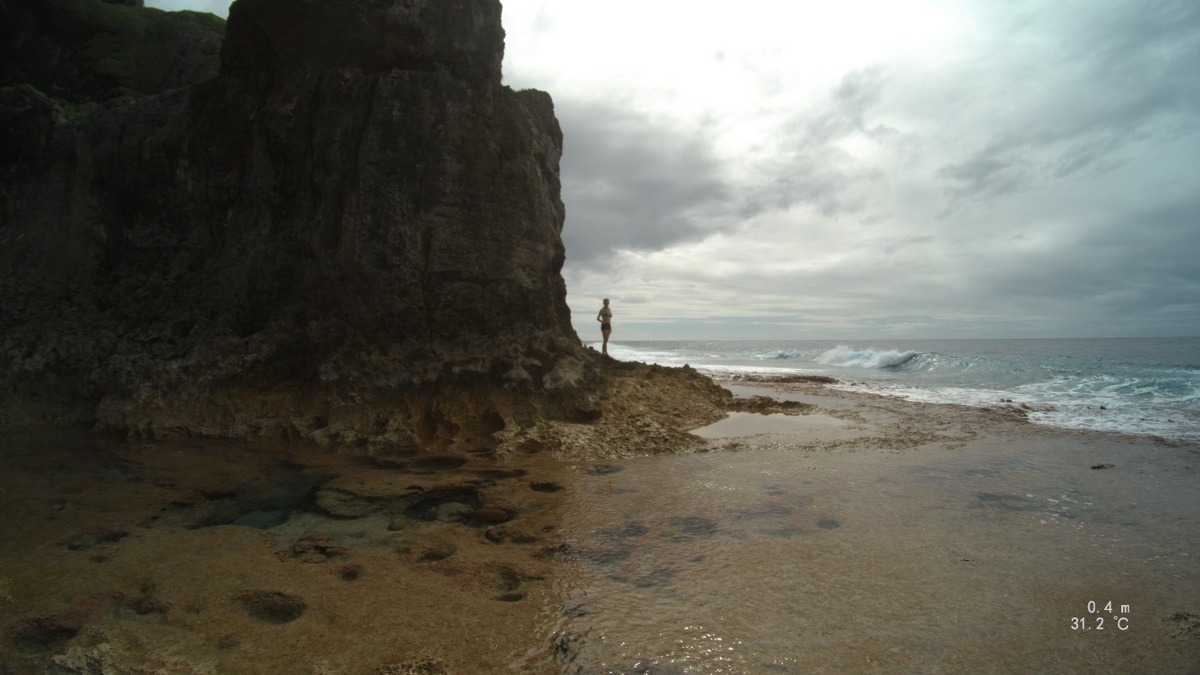
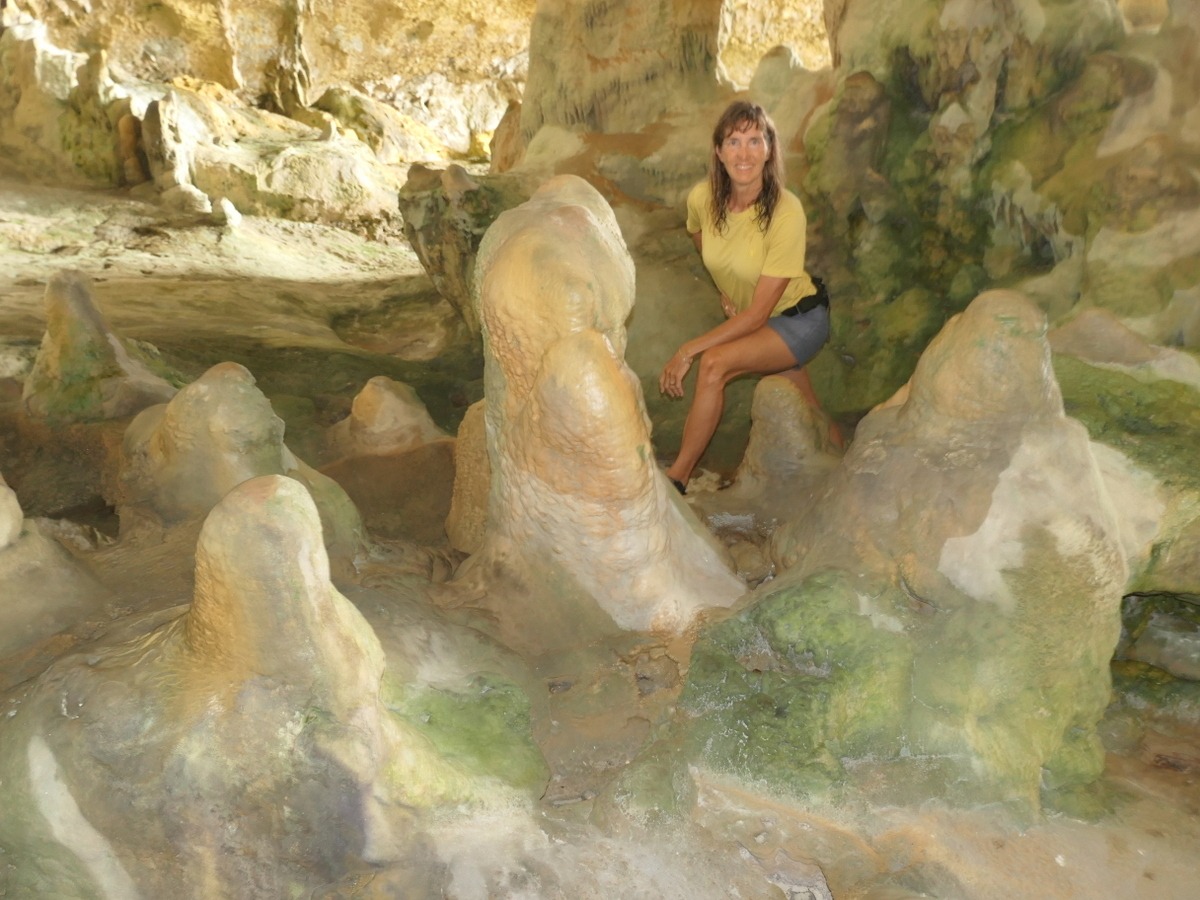
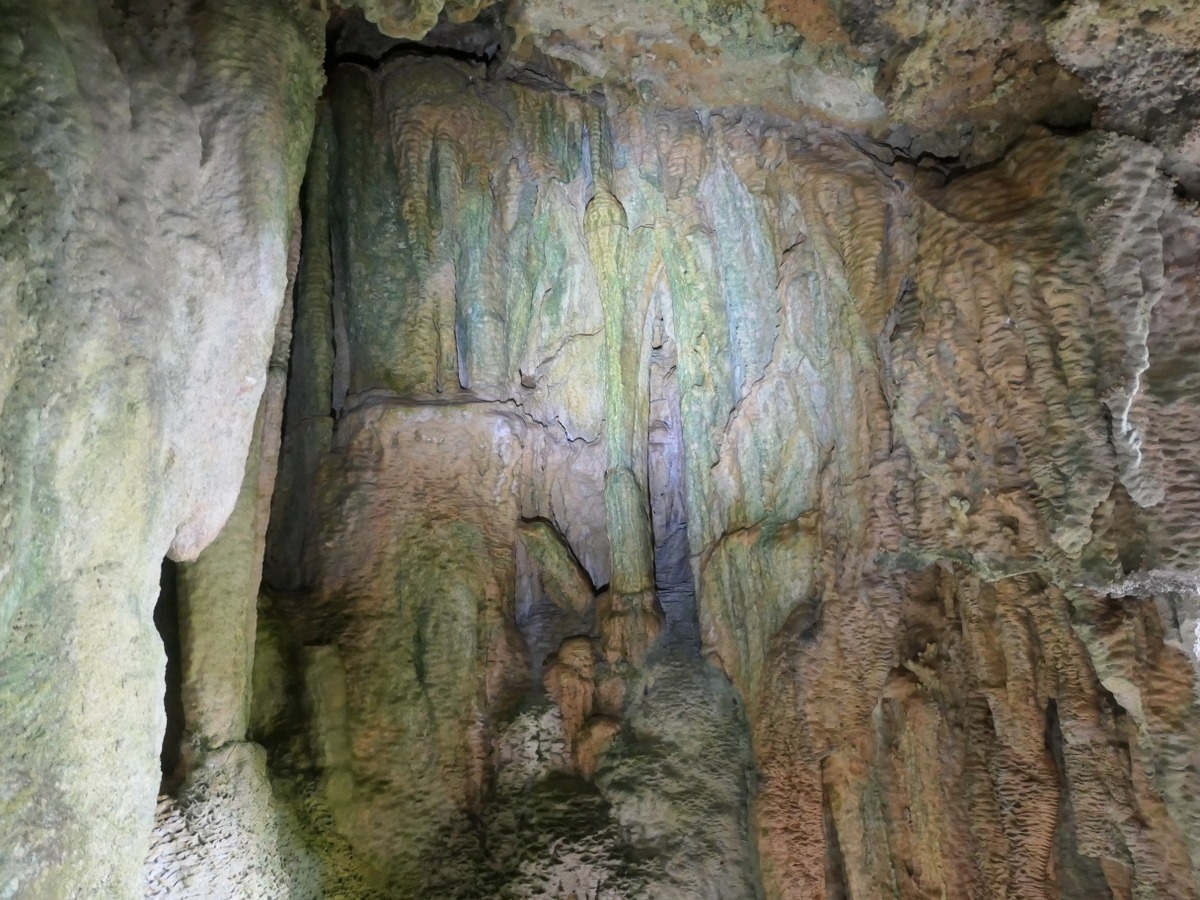
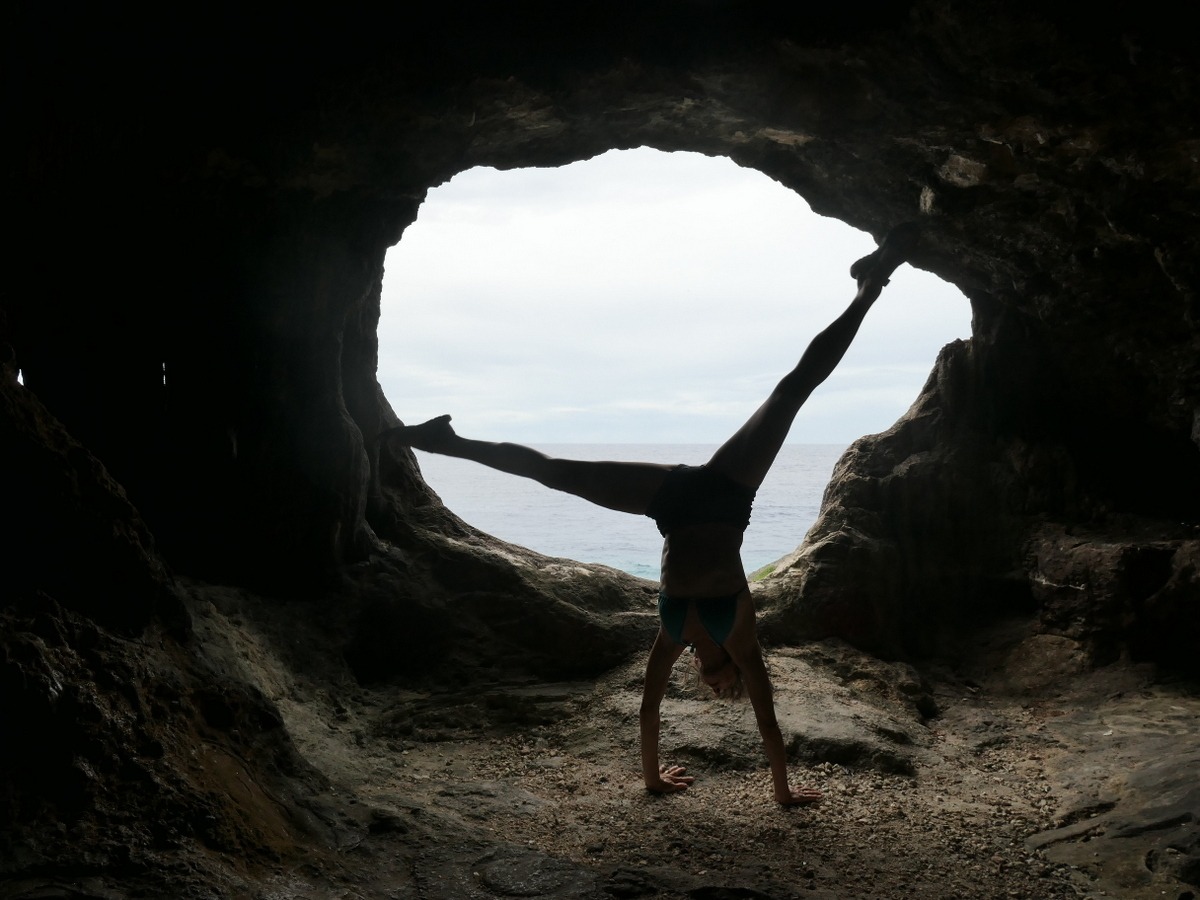
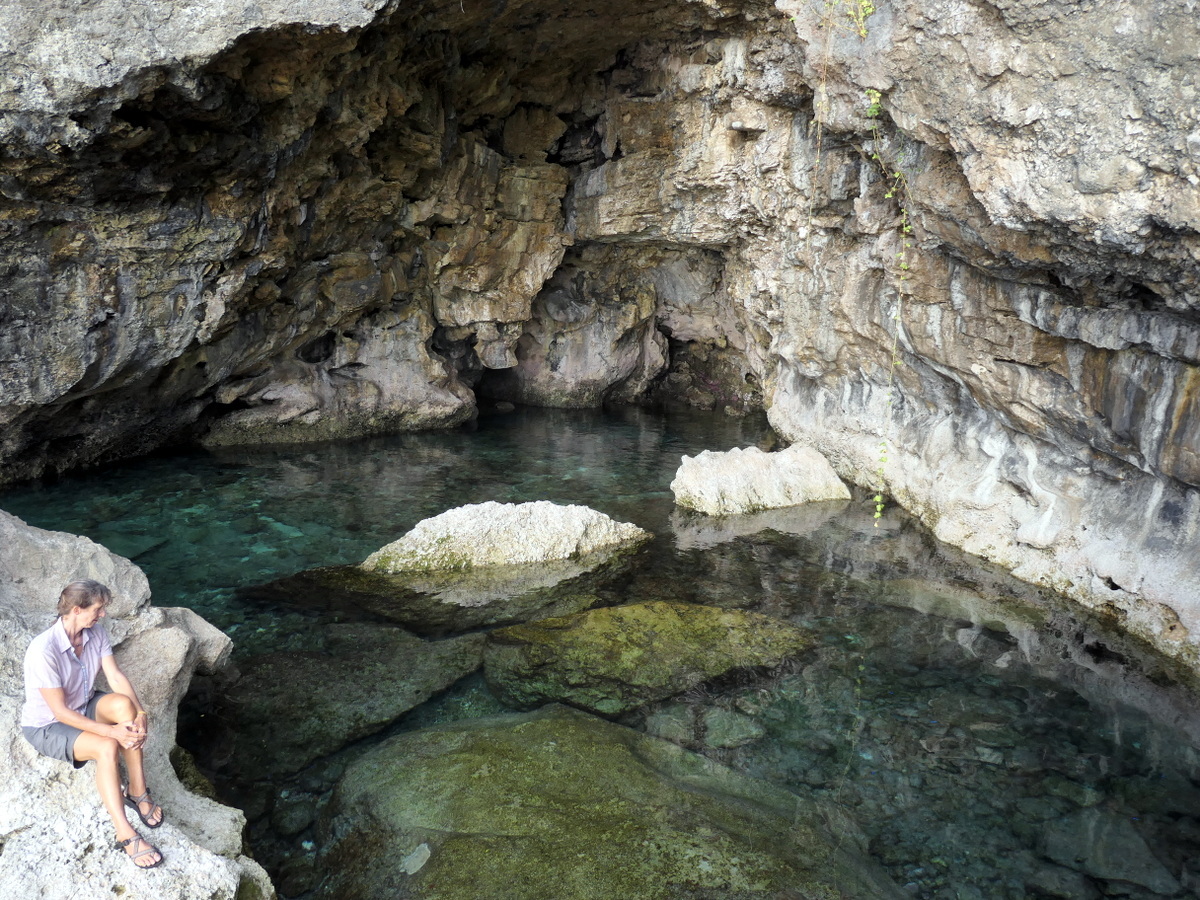
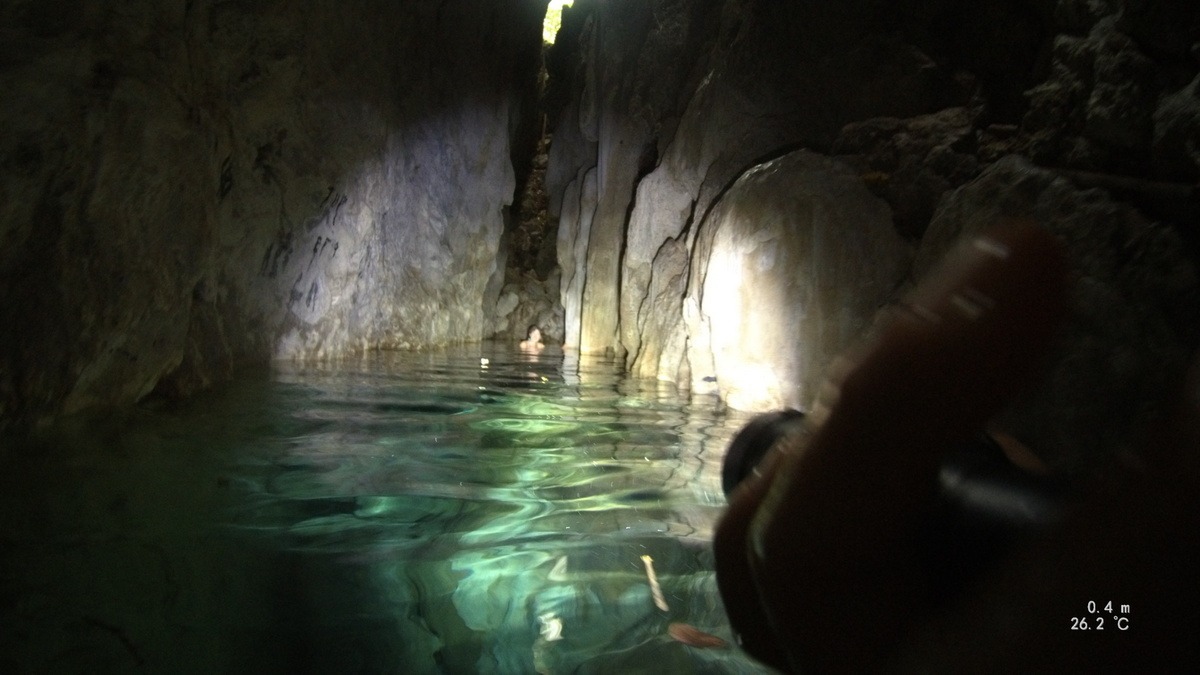
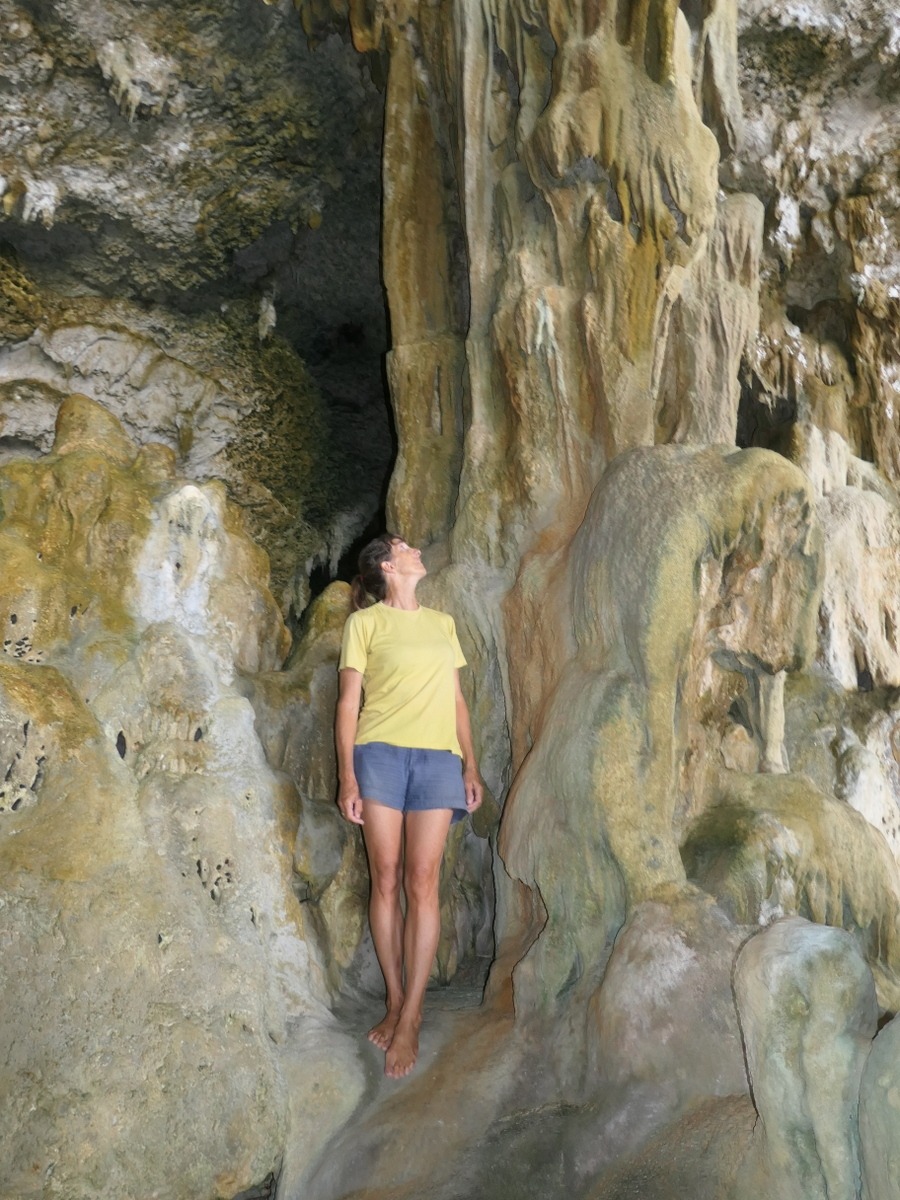
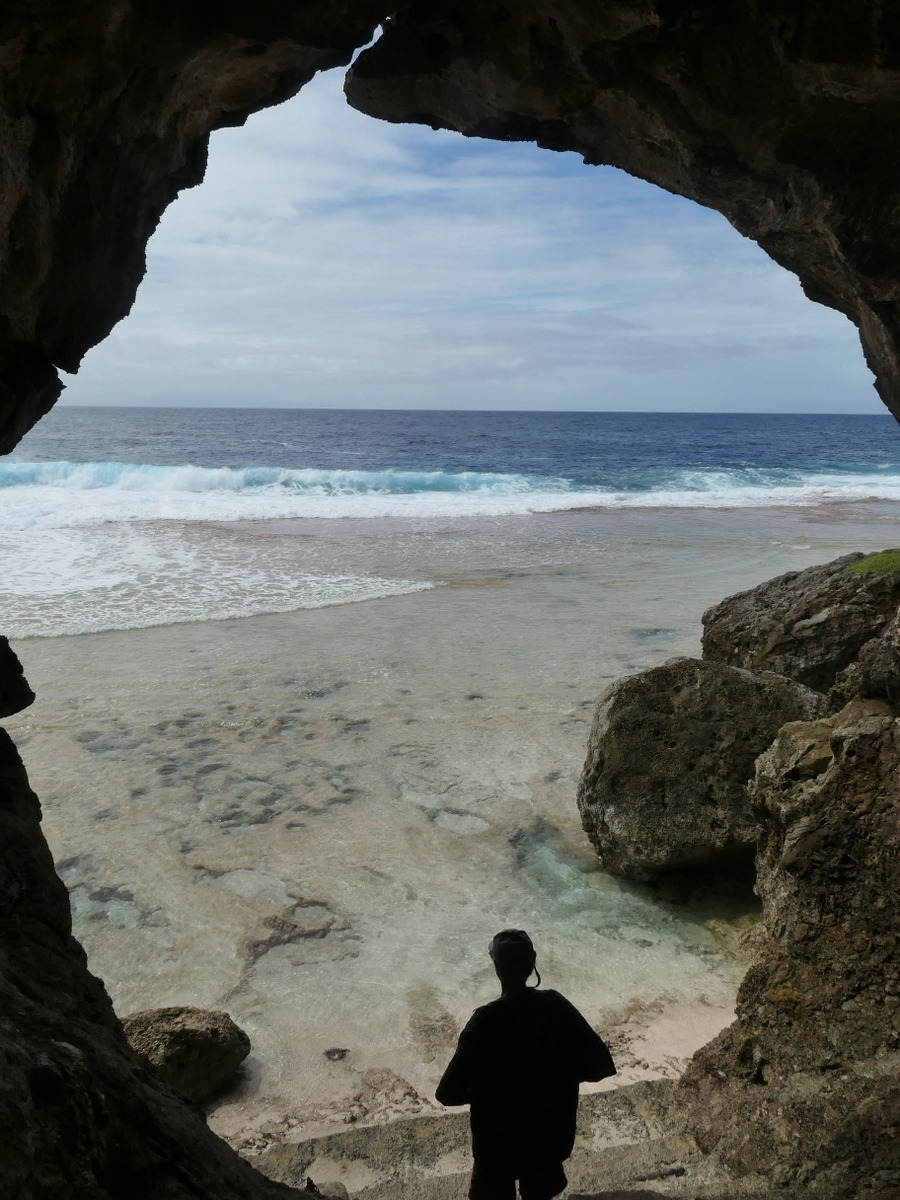
After just a week that felt much too short, we departed to sail the 250NM to Tonga, as did all the other boats on the moorings. Being prudent about the weather comes before continued island fun.
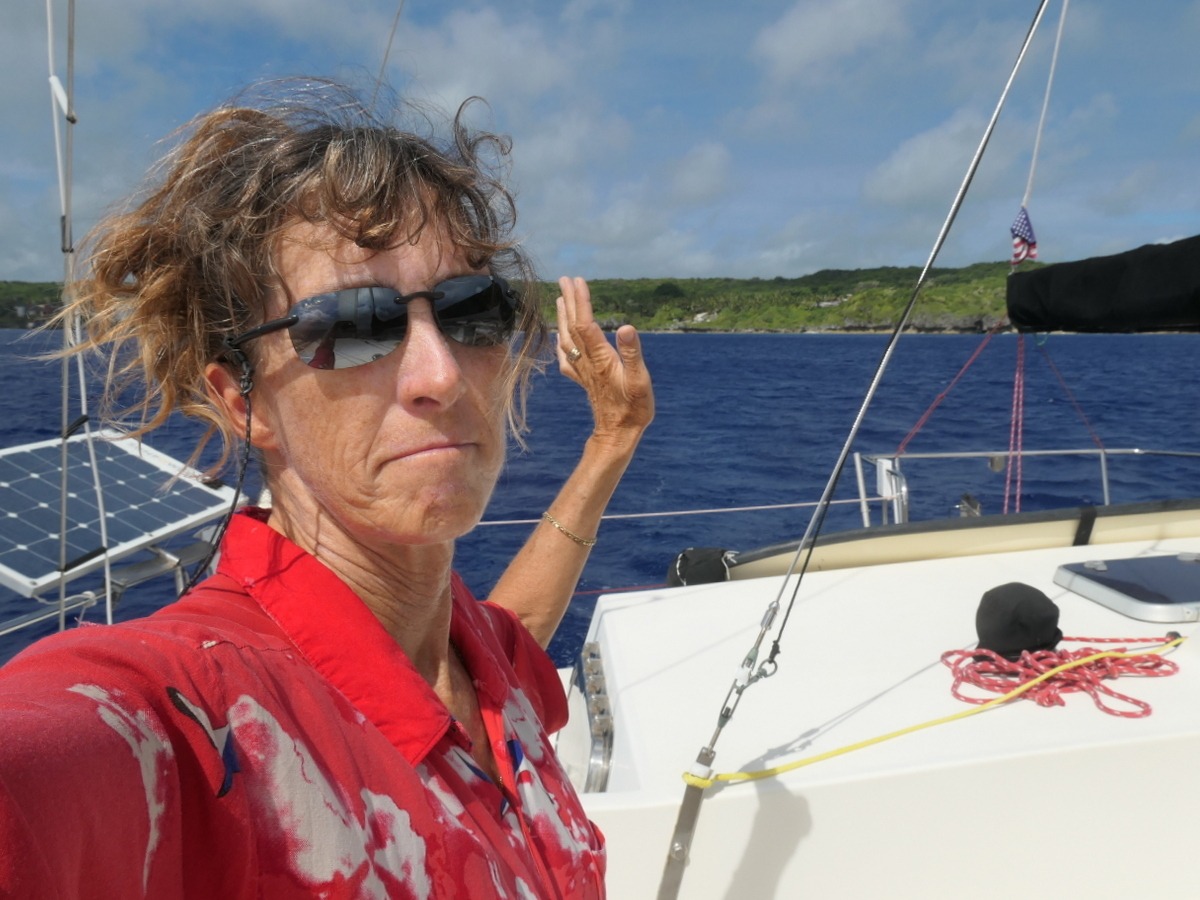
Tonga: More Whales & Caves
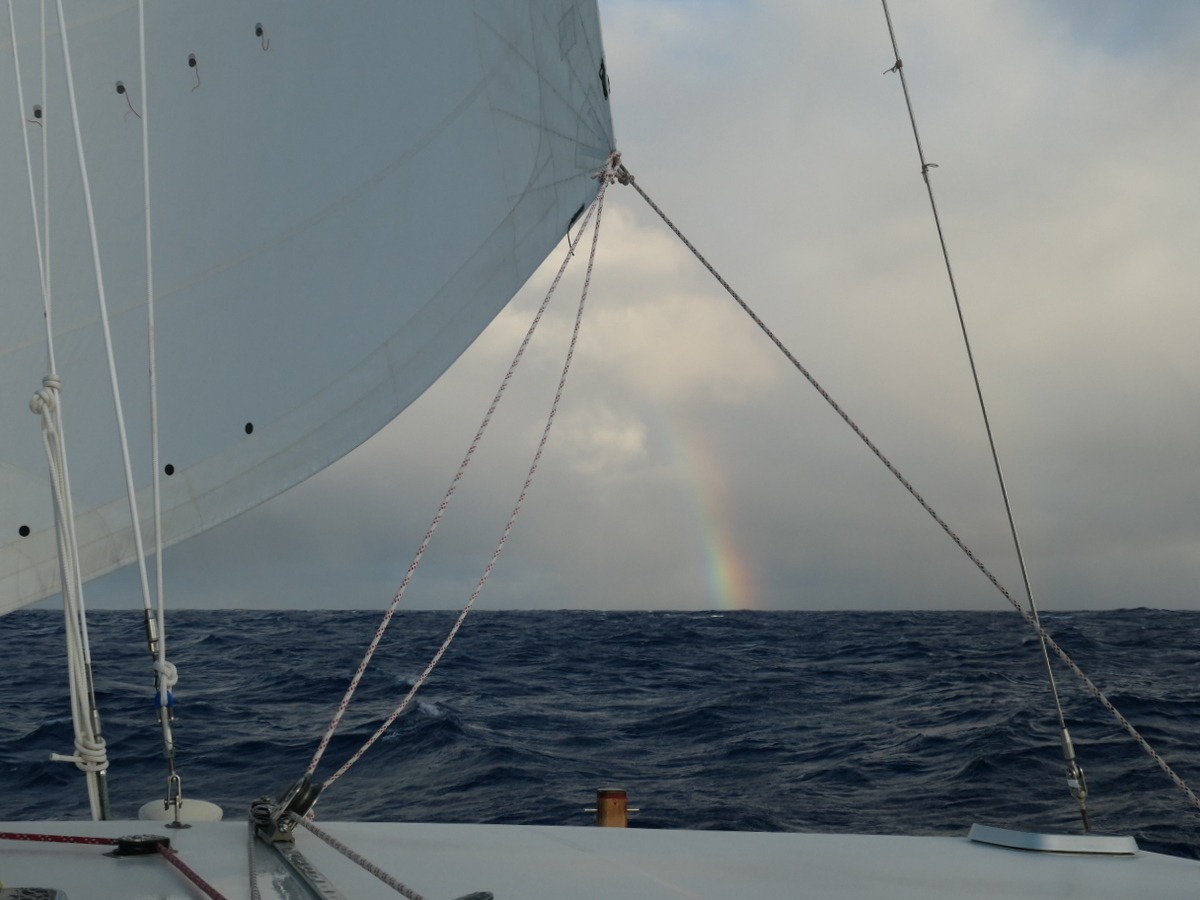
We left Niue four days before the bad weather to ensure we were well settled in Tonga in advance of its arrival. There was plenty of wind — gusting to 30 knots, so the 255NM passage took less than 2 days. The wind was from behind but the seas were big; there was a lot of slewing down the front of the waves making for a sporty ride. We sailed the entire way with only the jib pulling us along; that way it was easy to adjust our speed to time our arrival in the Vava’u group at daybreak.
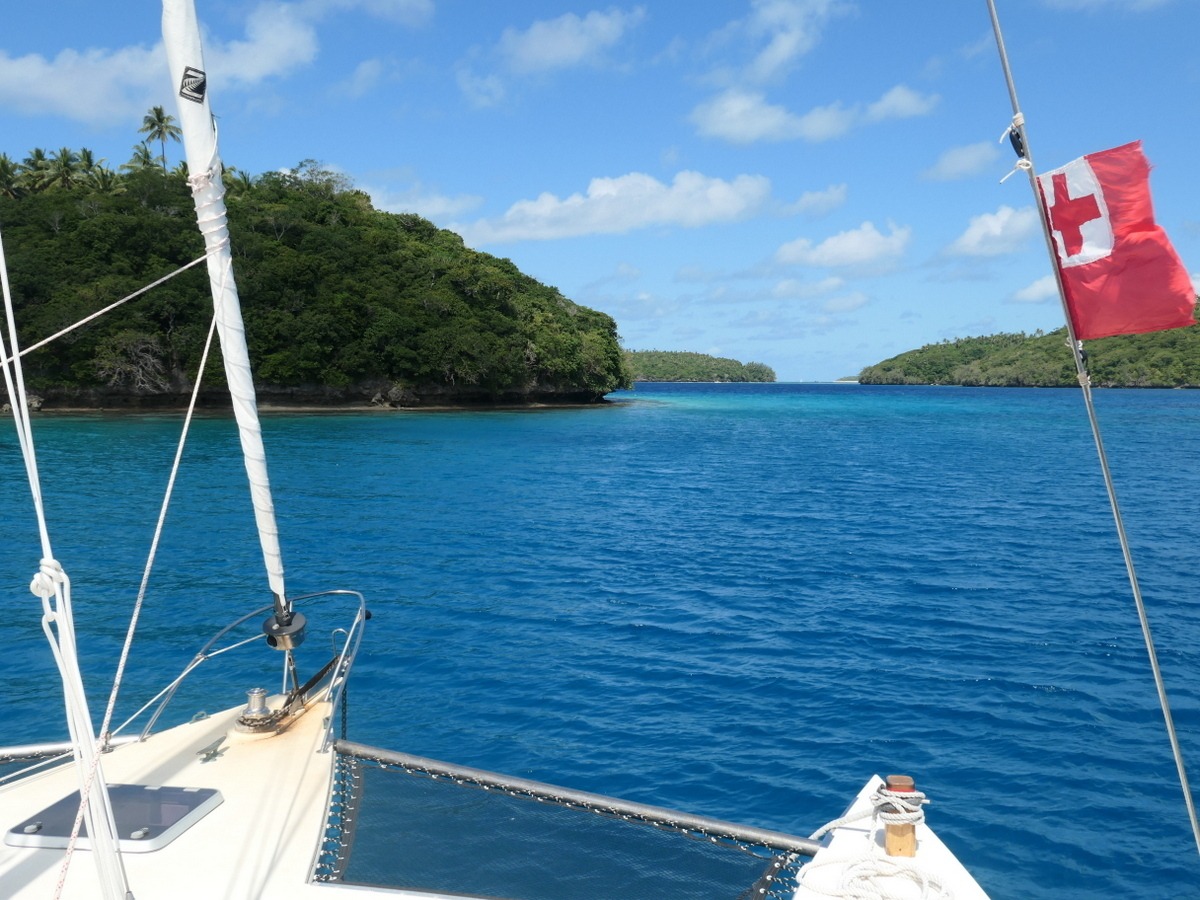
We spent a week in Neiafu checking into the country, provisioning, and getting necessary chores done. Then we sailed to the eastern side of the Vava’u group to the lovely reefy area of Kenutu.
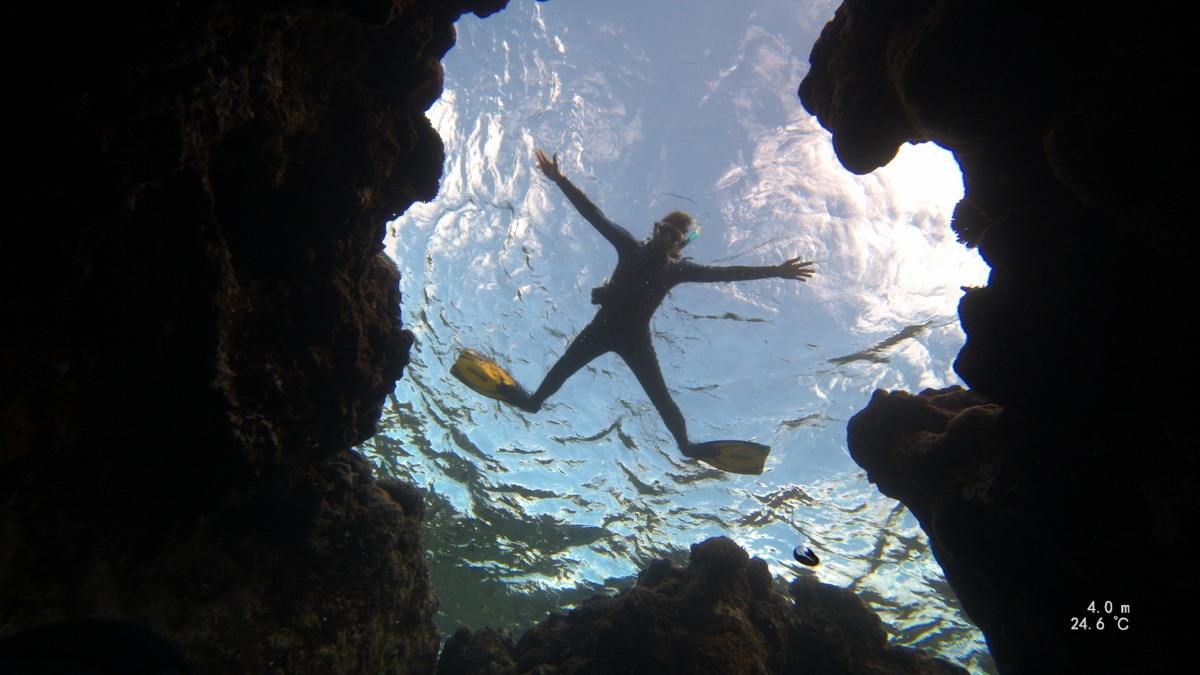
We had read about a cave with a fresh water pool on Umuna Island, so we went to explore. The cave is on land owned by Ben and Lisa who originally said we could not go into the cave due to liability (falling rocks, etc.), but after we talked a bit, they changed their minds. So together with Ben and his visiting guests from NZ (including some kids), we all clambered down into the cavern and had a great time swimming with the orange crayfish and the big eel (which was really a stick that fooled the kids for a while). It was beautiful — the sunlight shafting directly into the water at that time of day.
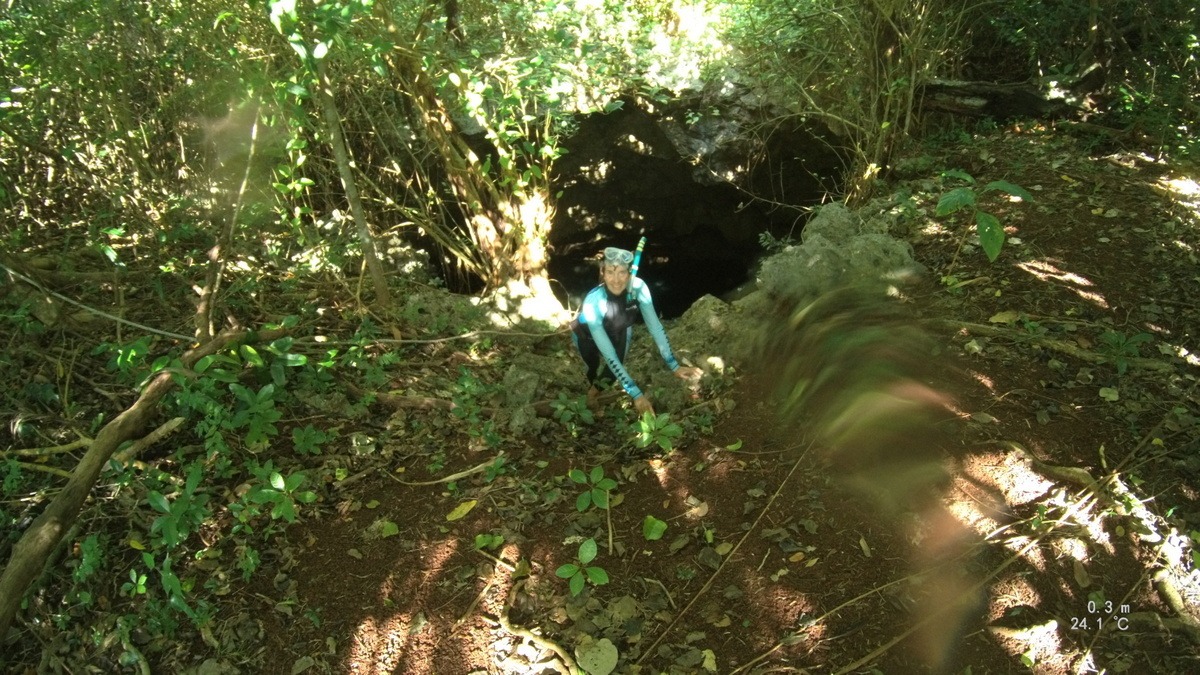
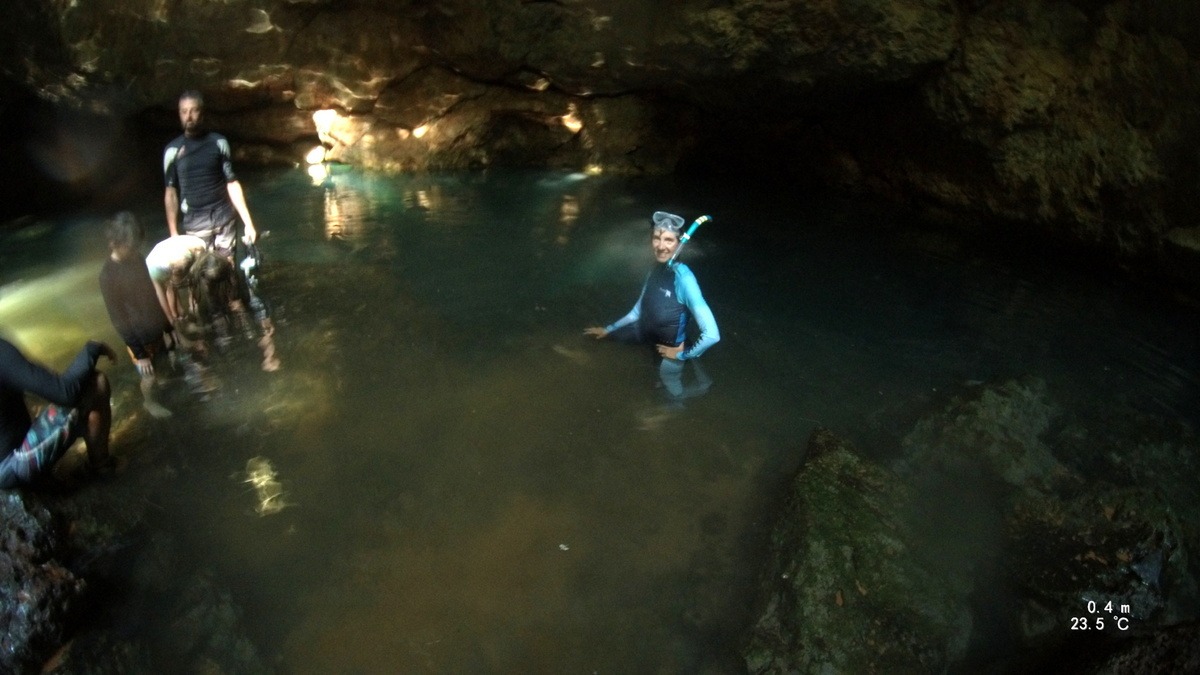
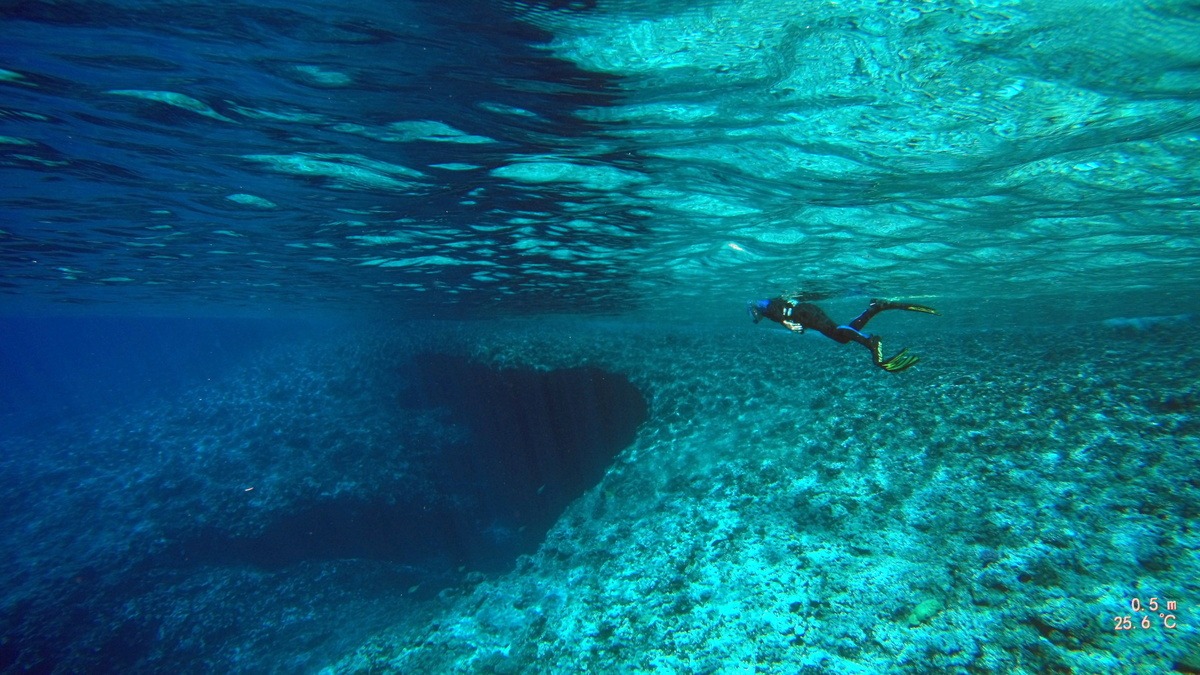
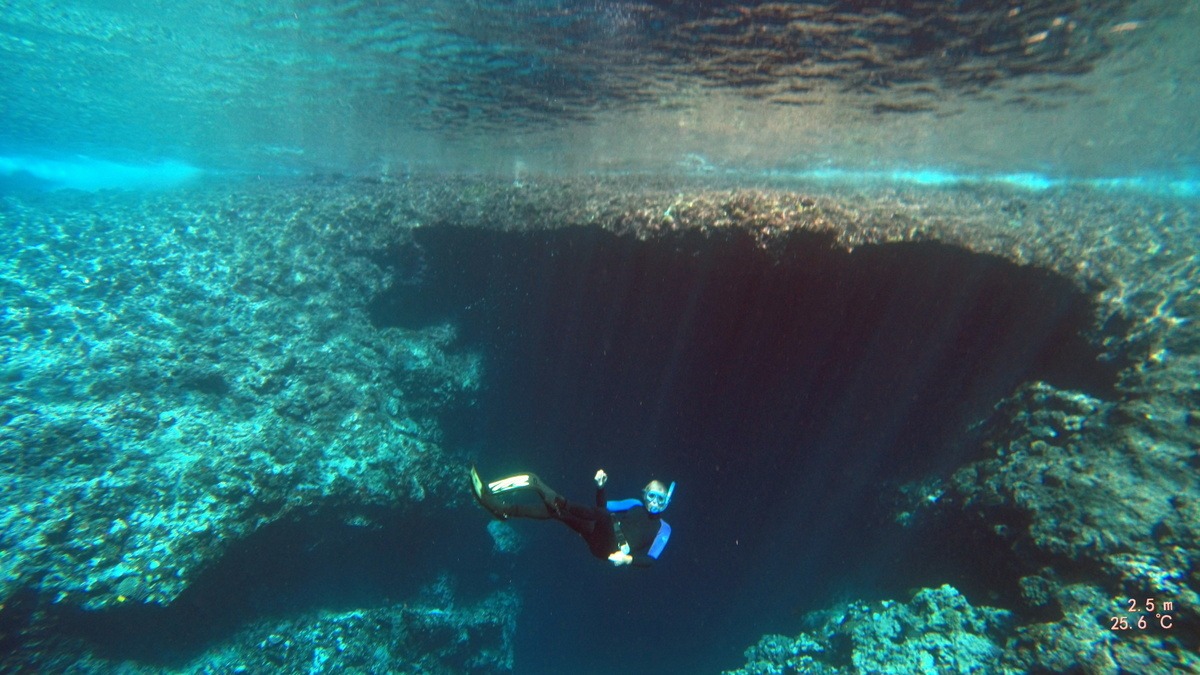
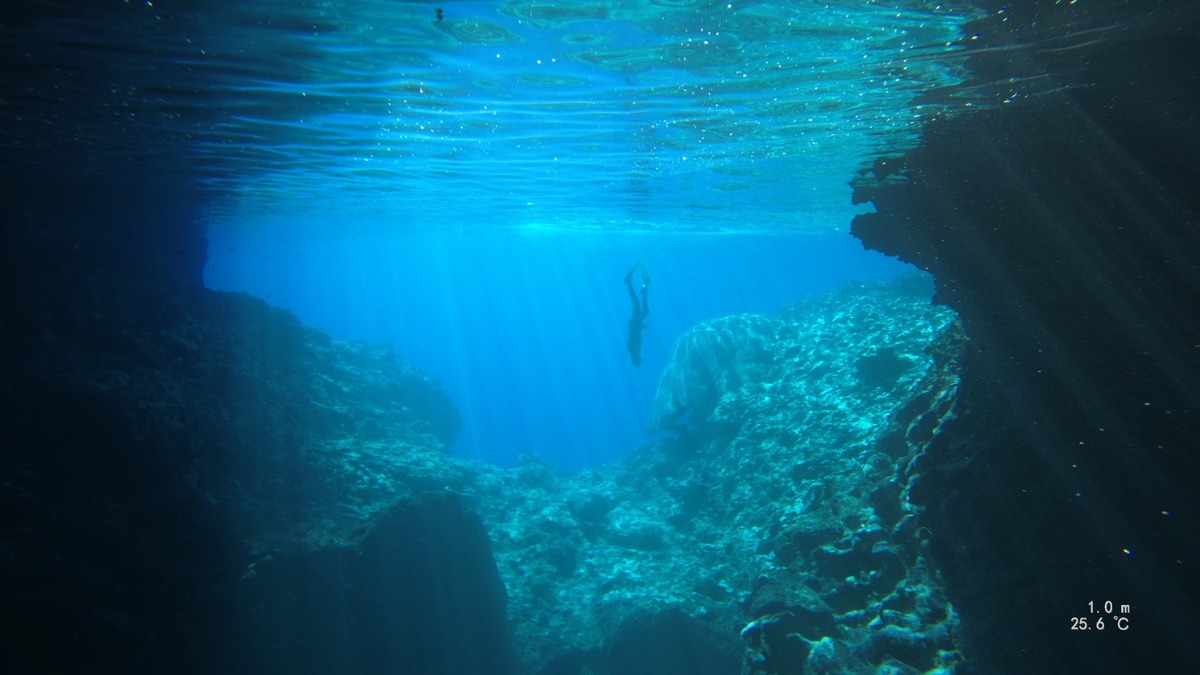
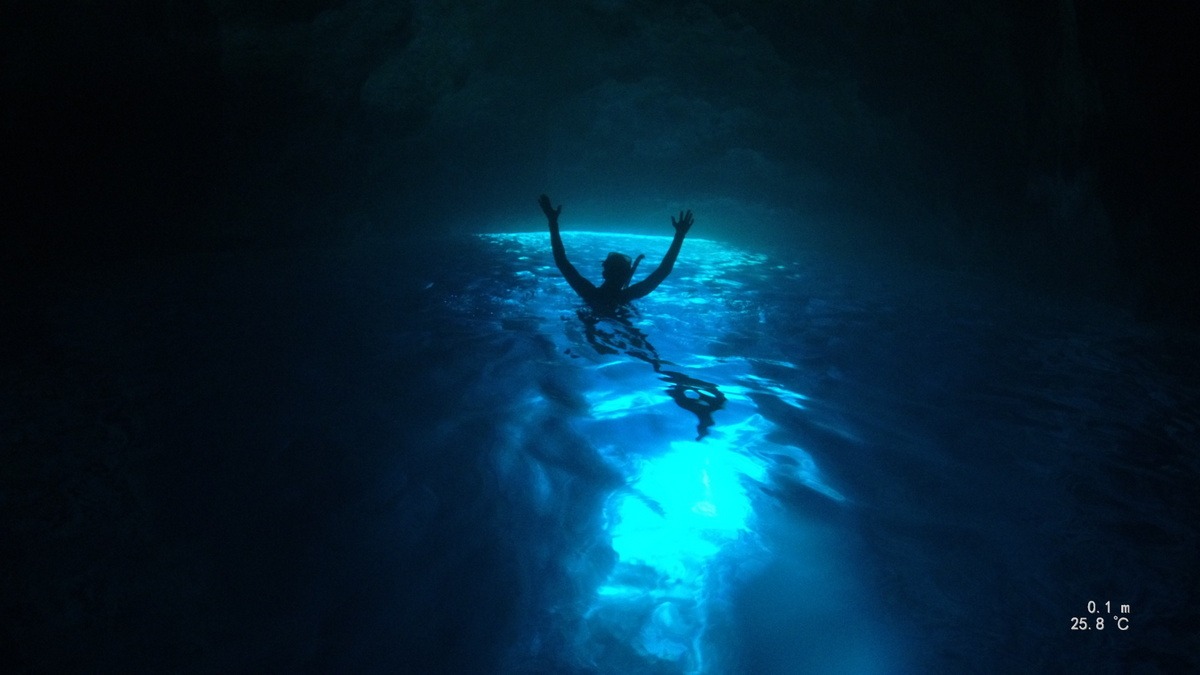
Speaking of caves… One of the things we wanted to do again was visit the two sea caves we loved so much in 2010. Surprisingly, they were even better than we remembered! After dropping the hook at the closest protected anchorage on Mala Island, we took Plover a couple of miles to Mariner’s Cave. Although the area is quite deep, we were able to anchor on a shelf near the entrance. There is no evidence of the cave from outside; one must know where it is, swim down 10’ (3m), then horizontally 13’ (4m), then back up inside the cave. Because there is no air ingress, the air inside gets pressurized and creates a heavy mist when compressed from the wave surge. As the water level lowers, the mist disappears. Our ears do a lot of readjusting each time there’s a surge. It’s a strange sensation.
Entering the Cave
Goofing Around in the Entrance
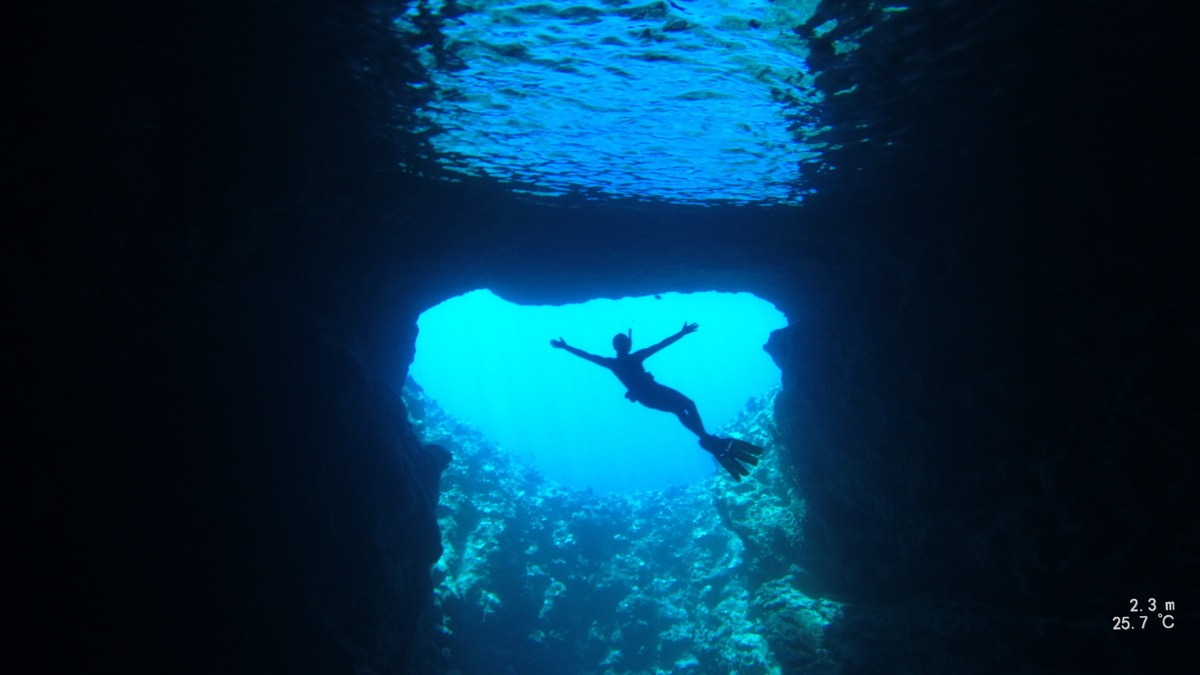
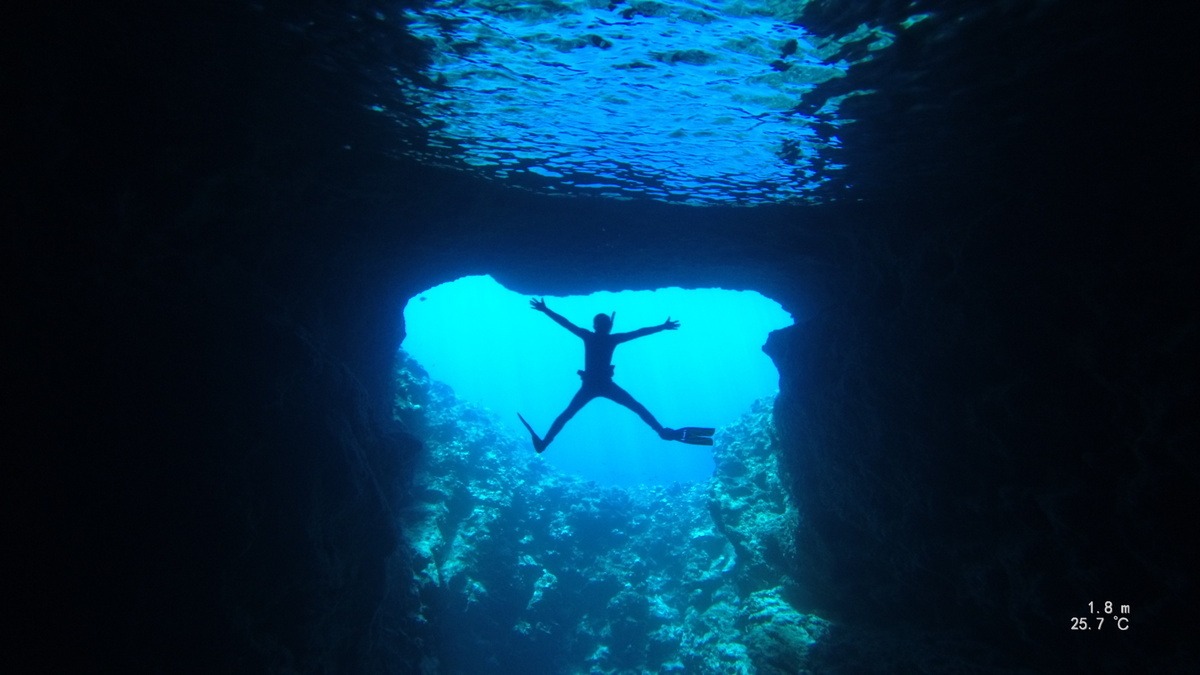
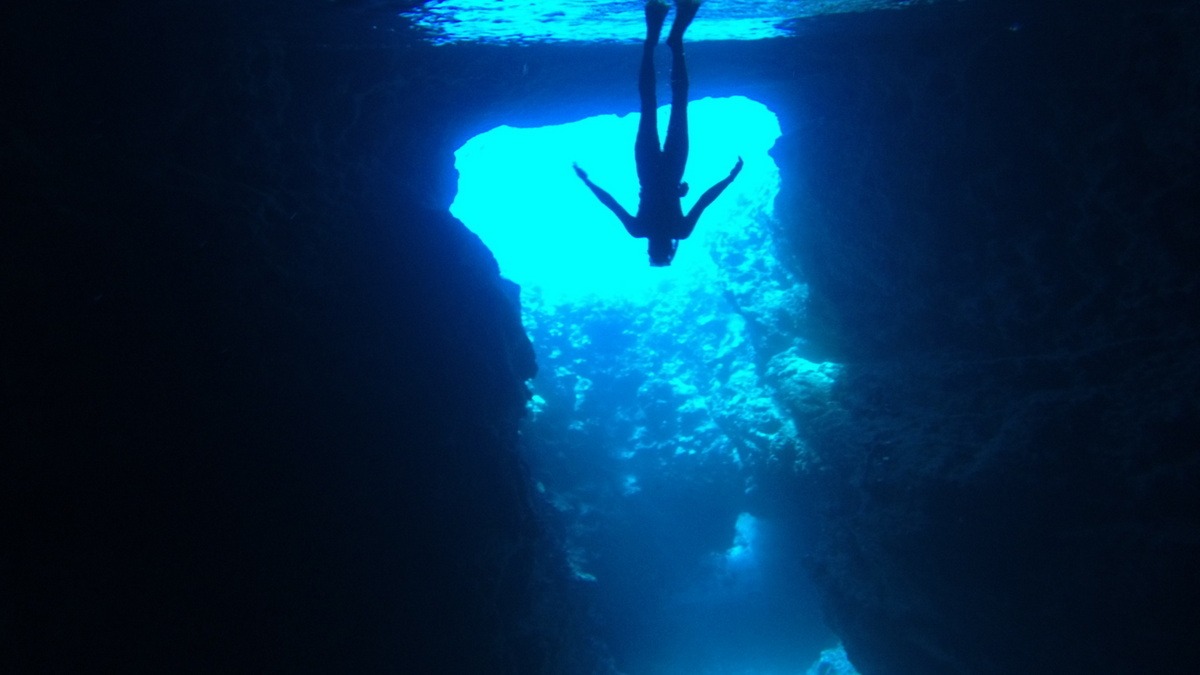
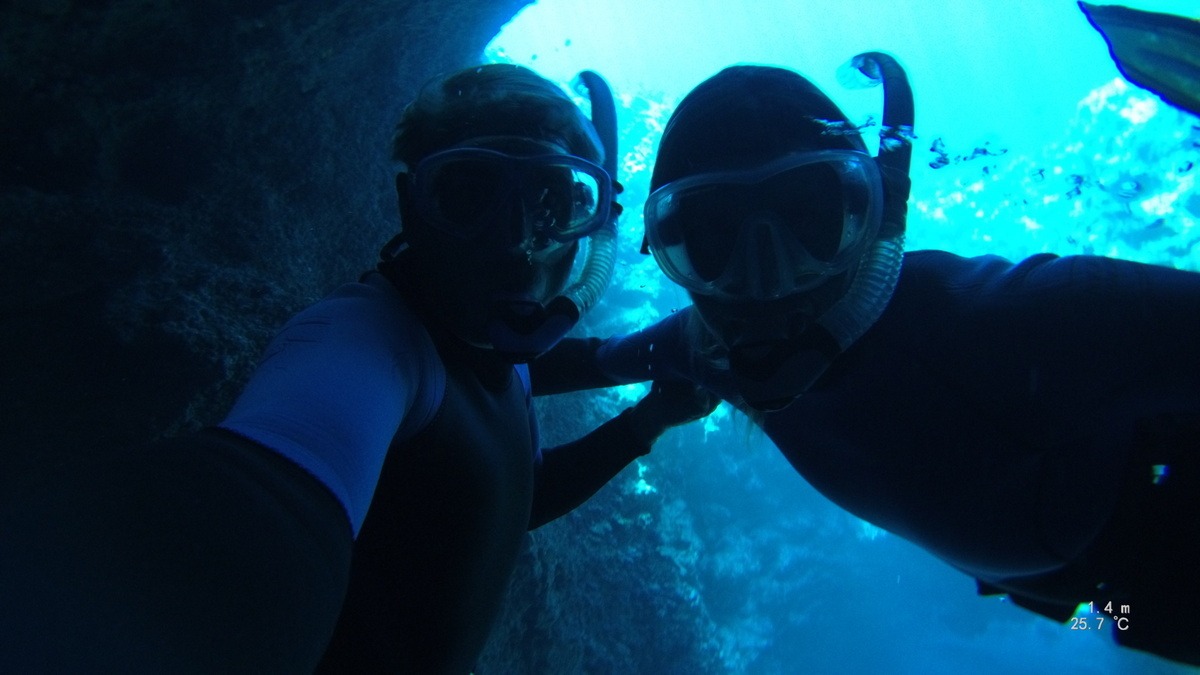
We then dinked over to Swallows’ Cave — another well-known site in the kingdom. We timed both caves perfectly… Tour boats were just leaving as we arrived.
Visiting Swallows’ Cave late in the day was magical. The cave is big enough to bring Plover into, but again we chose to anchor the dinghy outside, partly in the hope that in swimming a little distance to the cave, we might encounter a whale, but no such luck.
As we swam into the big opening of the main cave there was a school of little silver fish that played against the glowing blues of the deep water inside. So pretty!
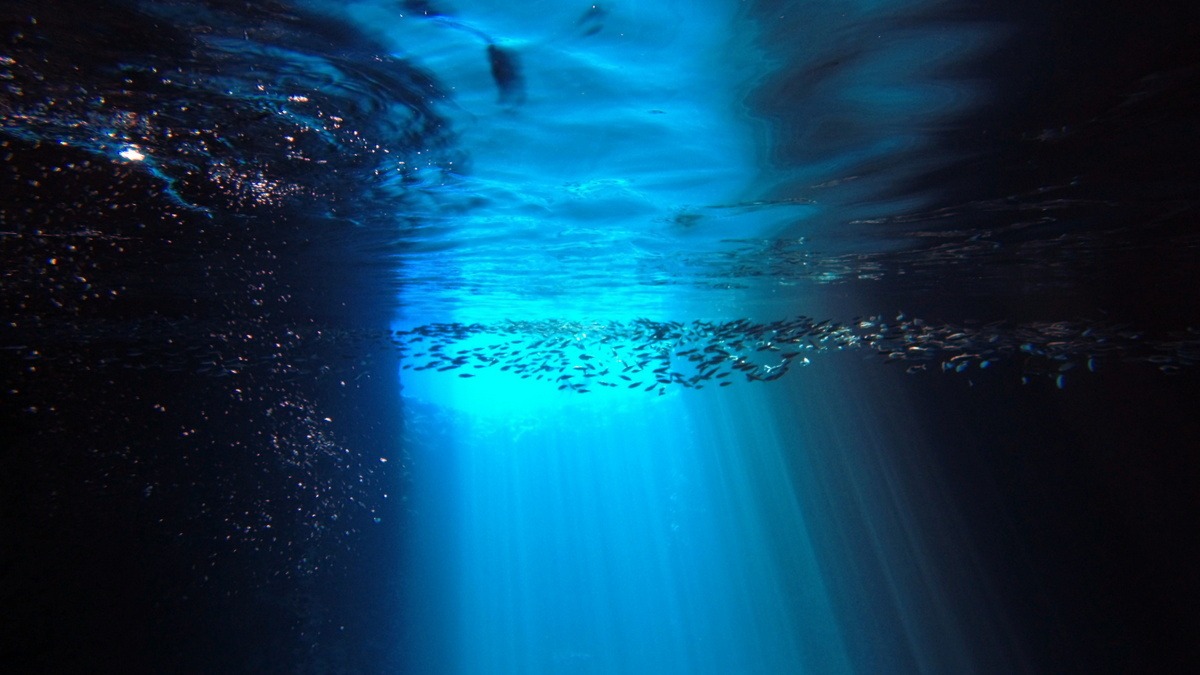
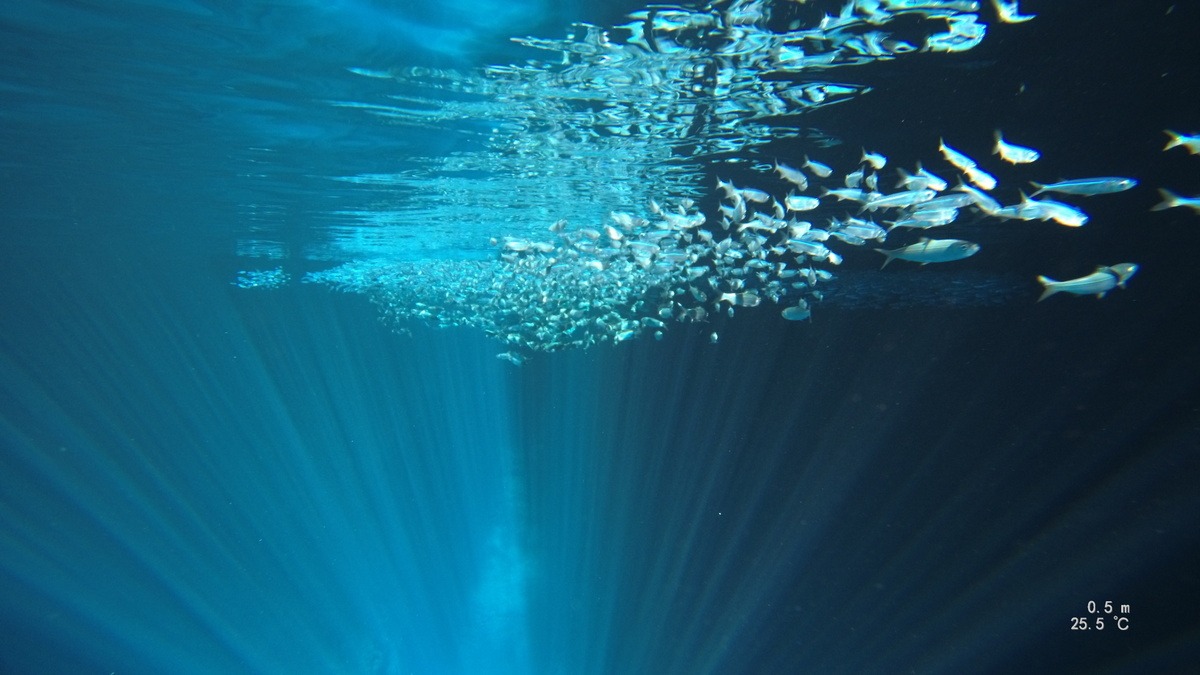
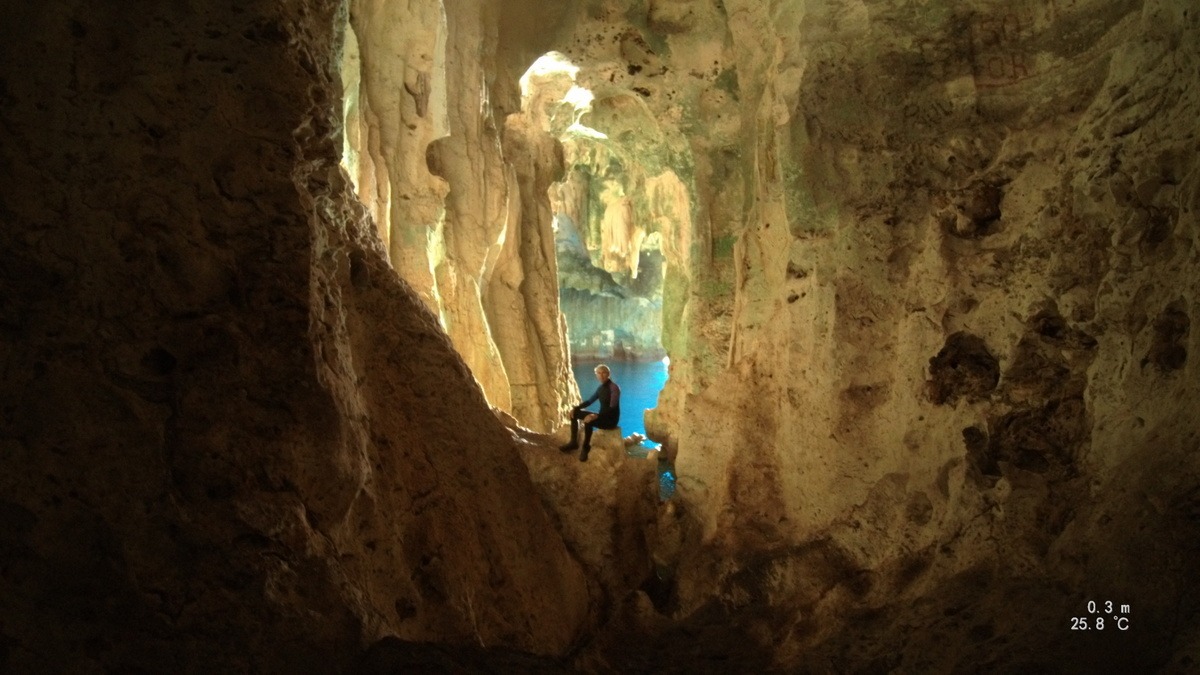
The late-afternoon sun slanted through the opening all the way to the back of the cave. There, a second section can only be reached by climbing over rocks to a dry upper level where light comes from a hole in the roof with green trees arching above. The view looking back into the main cave open to the sea was so beautiful that it was practically a religious experience. And how lucky that we had it to ourselves.
We then spent a busy week in the Vava’u group.
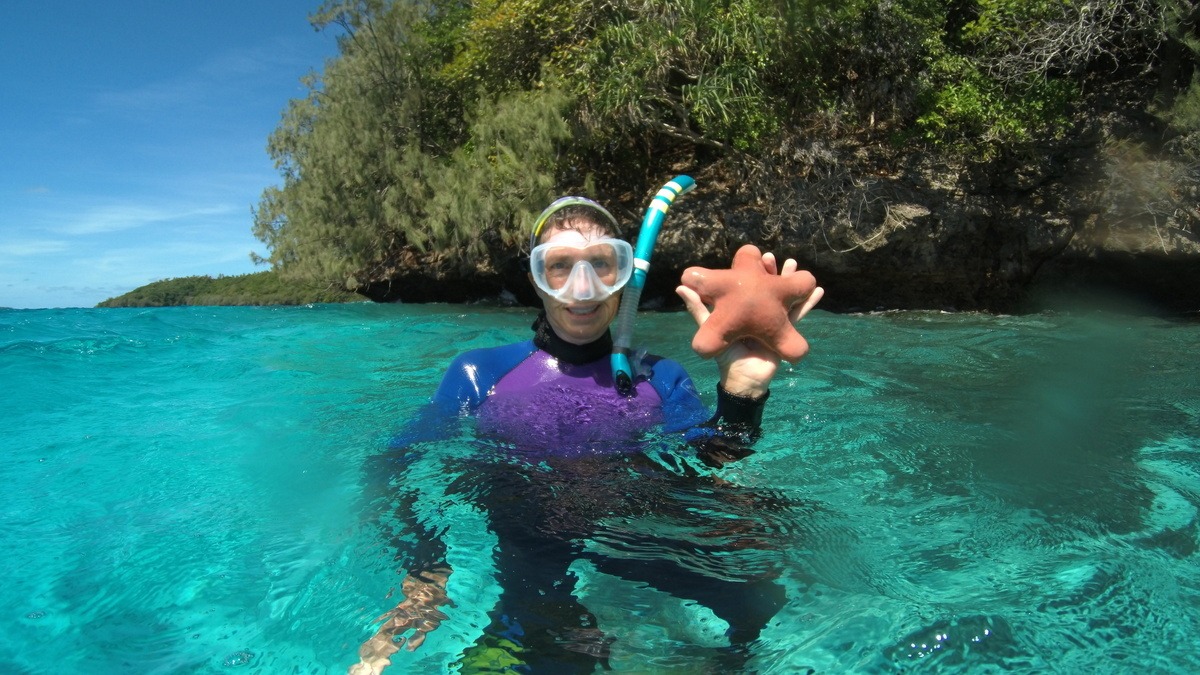
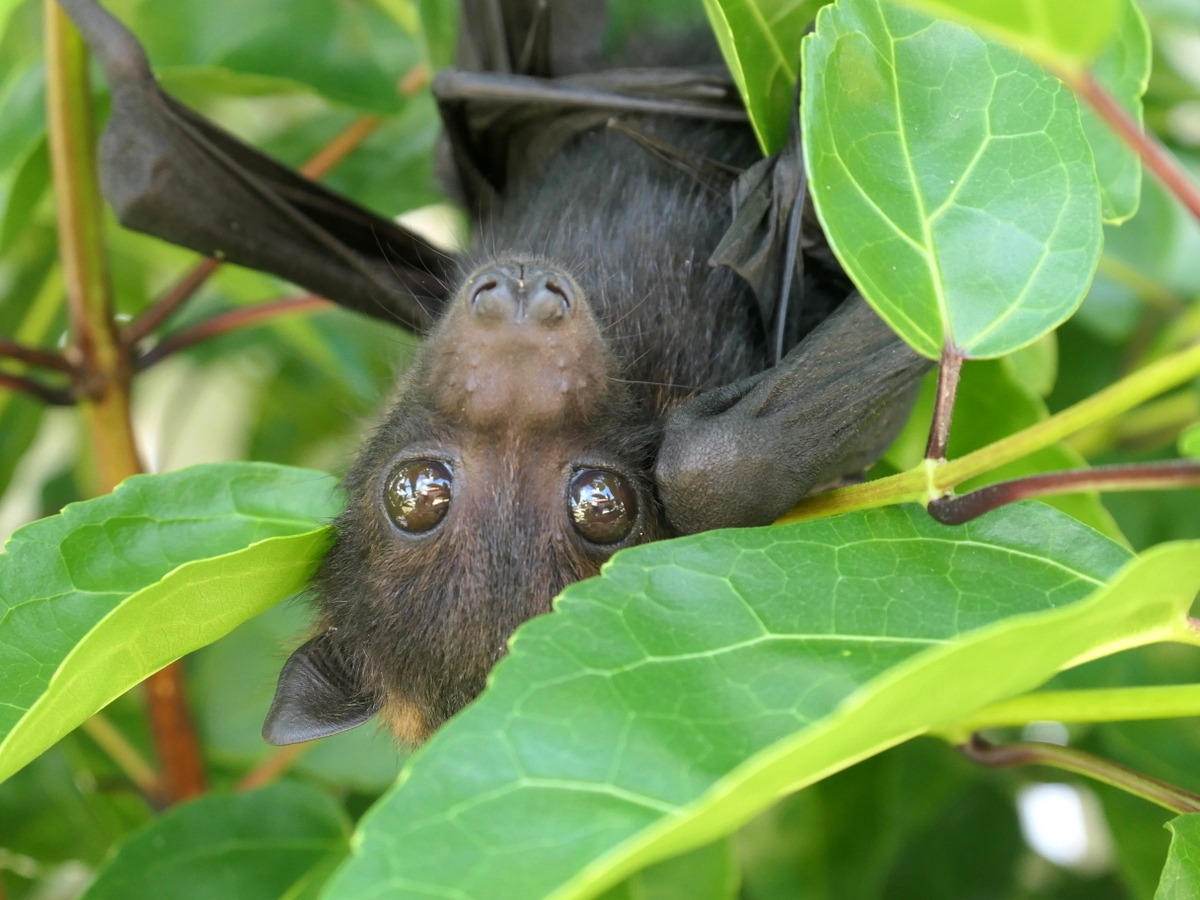
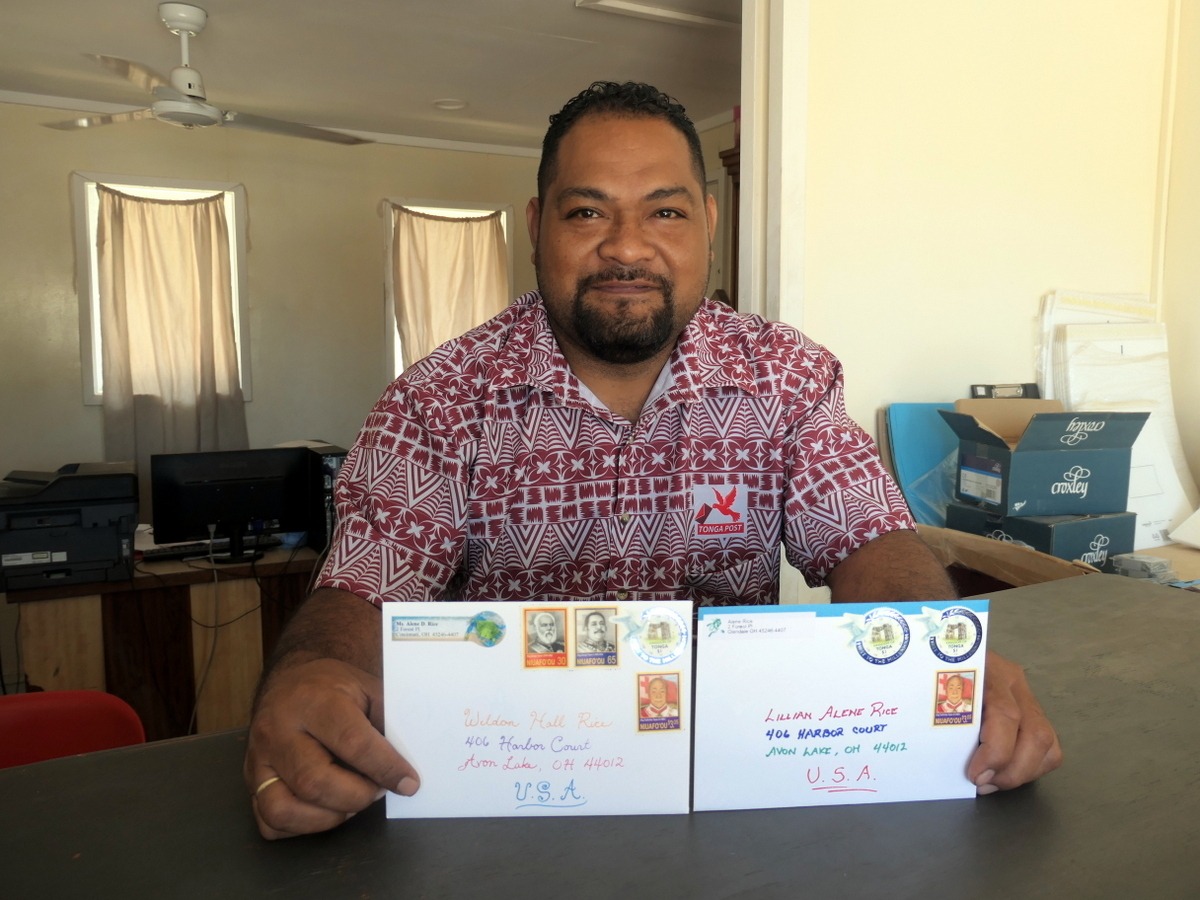
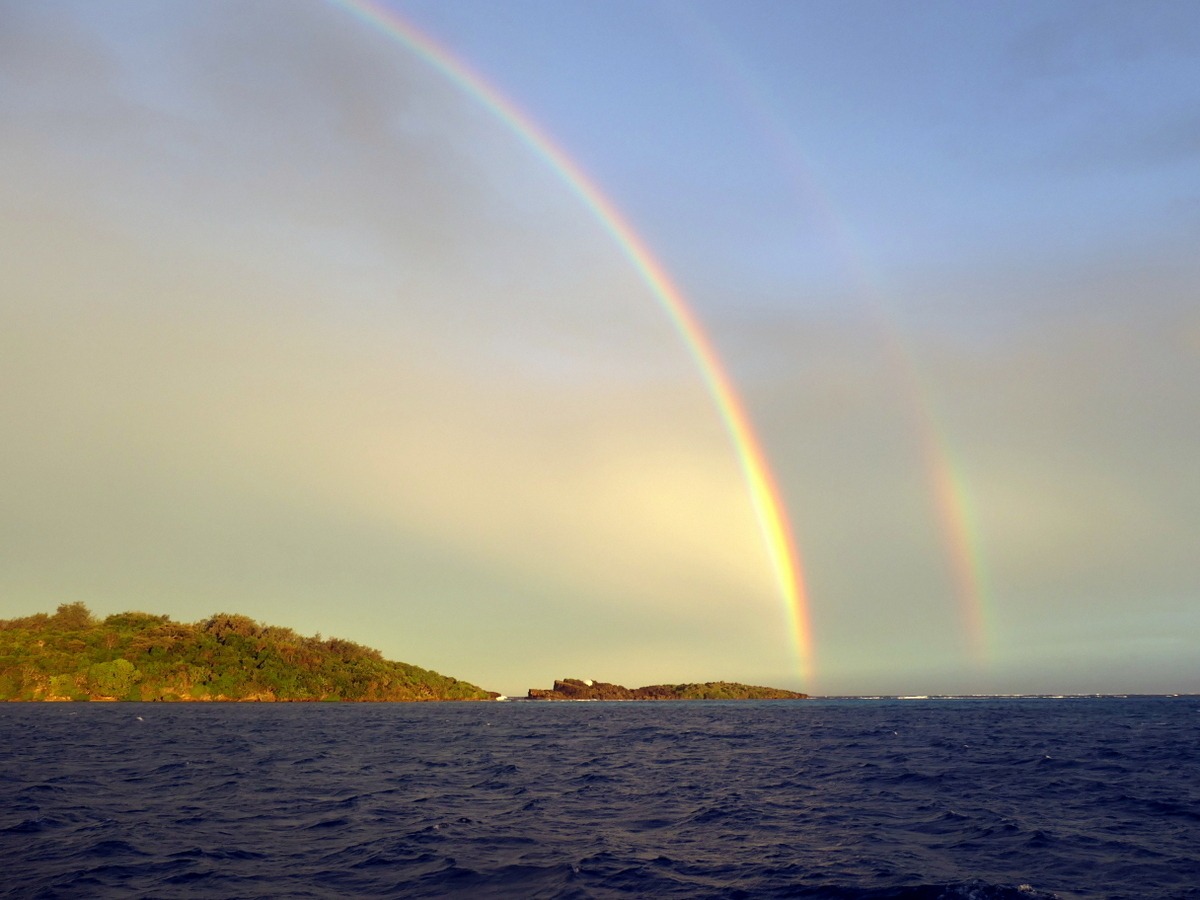
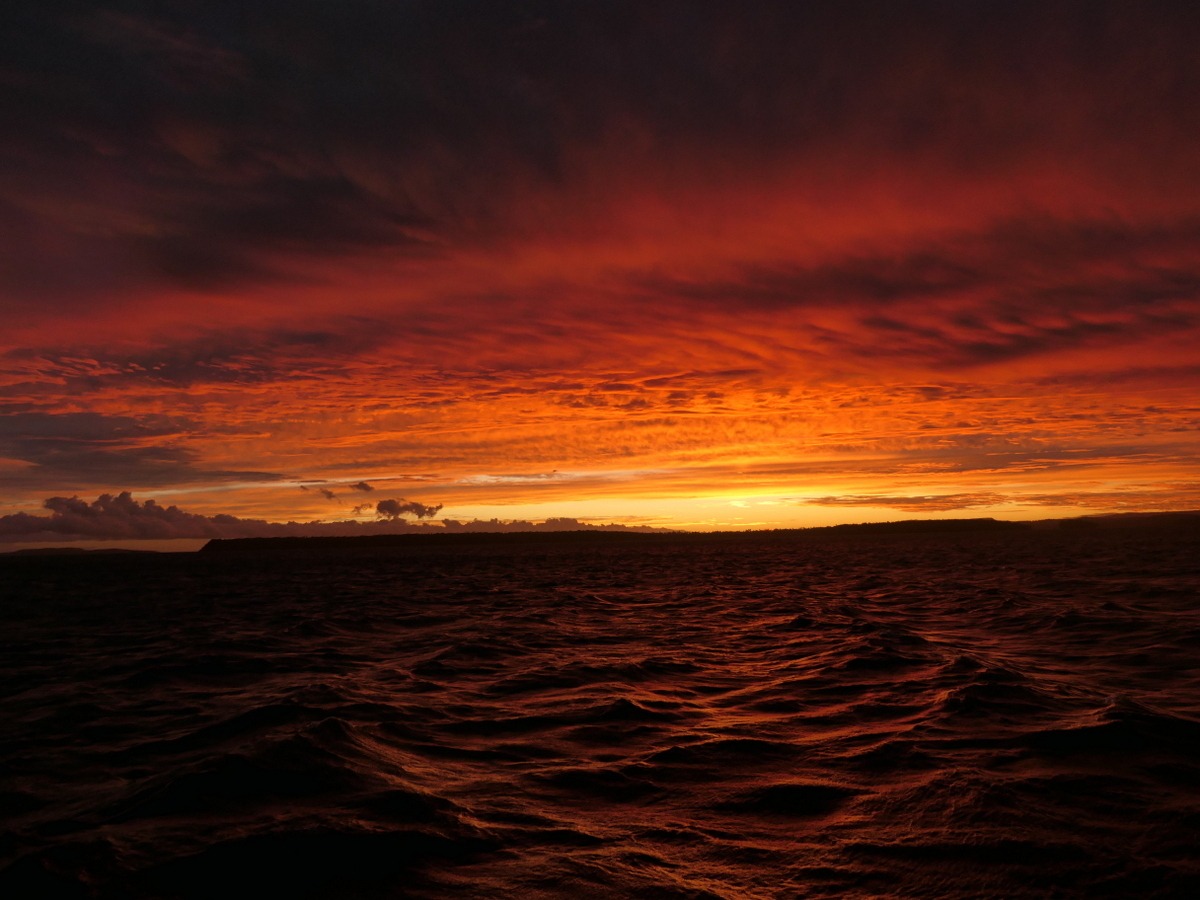
It was time to begin our southerly migration, so we sailed overnight to the Ha’apai group and had an incredible experience the morning after our arrival. We’d weighed anchor at Ha’ano Island and just pulled out the jib. The boat was beginning to gain speed, so when I heard an odd noise, I attributed it to the splashing on the bows, but then the sound registered in my brain: whale blow! The sound was so close that it echoed off the jib, and with good reason: I ran forward to see a full-sized adult whale diving under our starboard hull. It was a mother whale, with a calf right next to her — an ALBINO!!! We got a good closeup view — we couldn’t believe we hadn’t hit either of them because both whales were only a few feet from our hull. They must’ve just surfaced at that moment, because we would have heard an earlier blow had they been up already. No photos of course — it all happened too fast, but the sight of that white whale next to her gigantic mother sliding by so near is seared in my brain. Just incredible.
We spent some time in the main town of Pangai as well as some of the nearby islands. So many memories from our time here in 2009 and 2010.
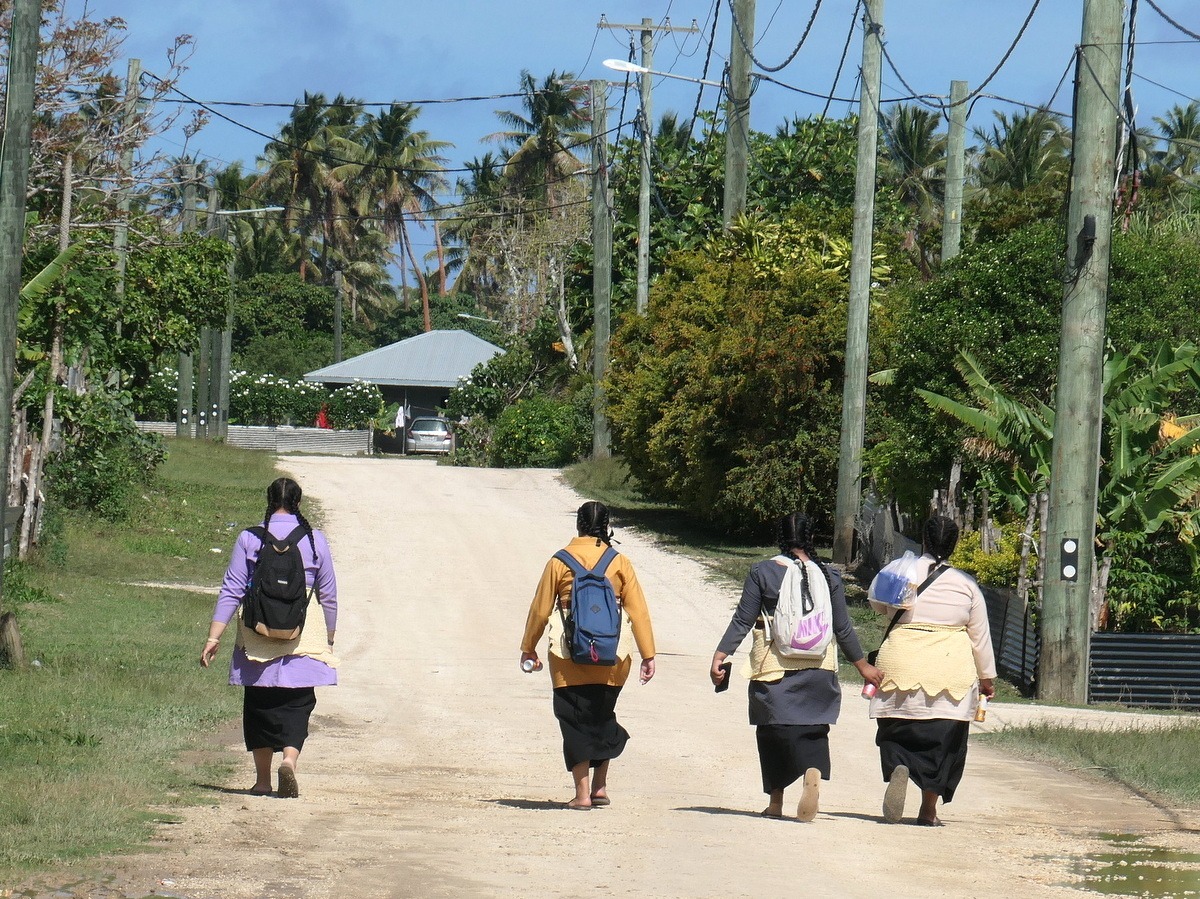
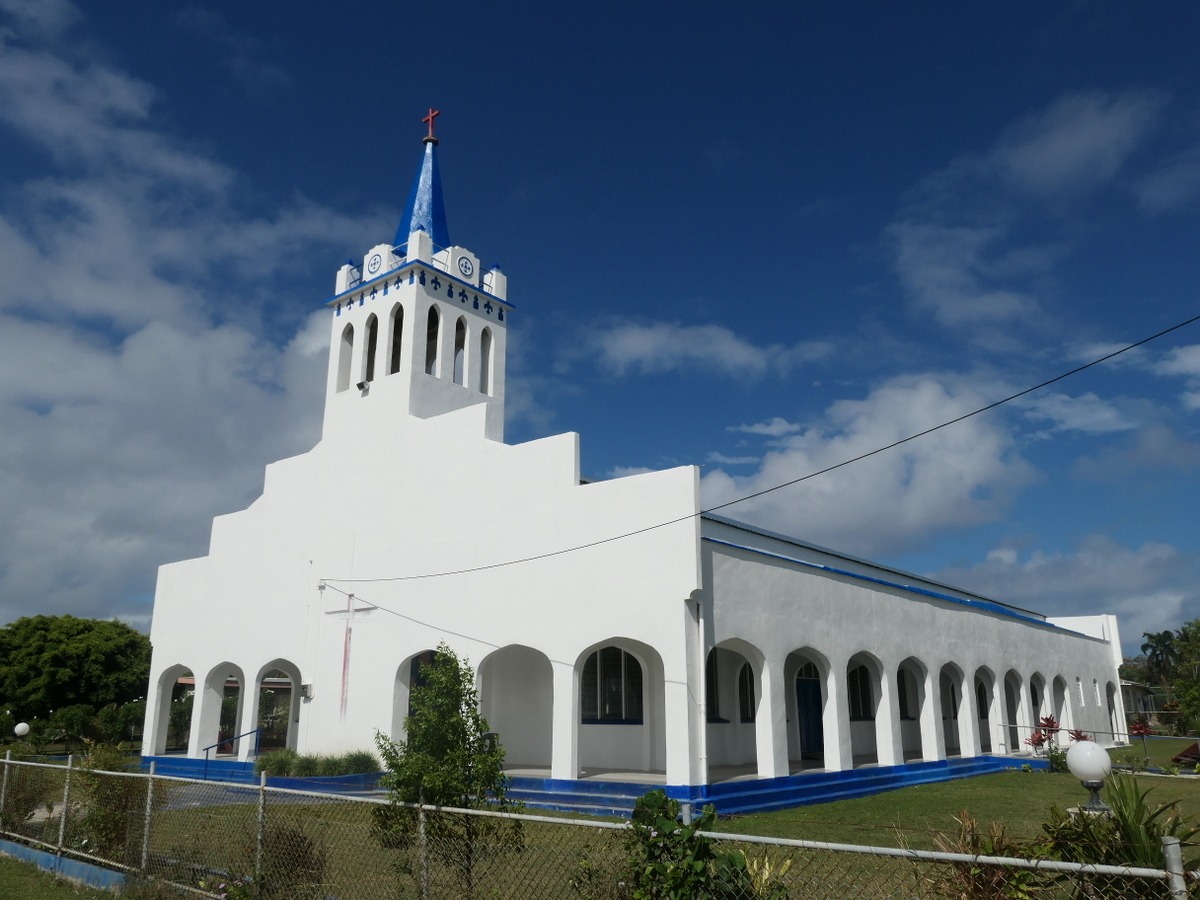
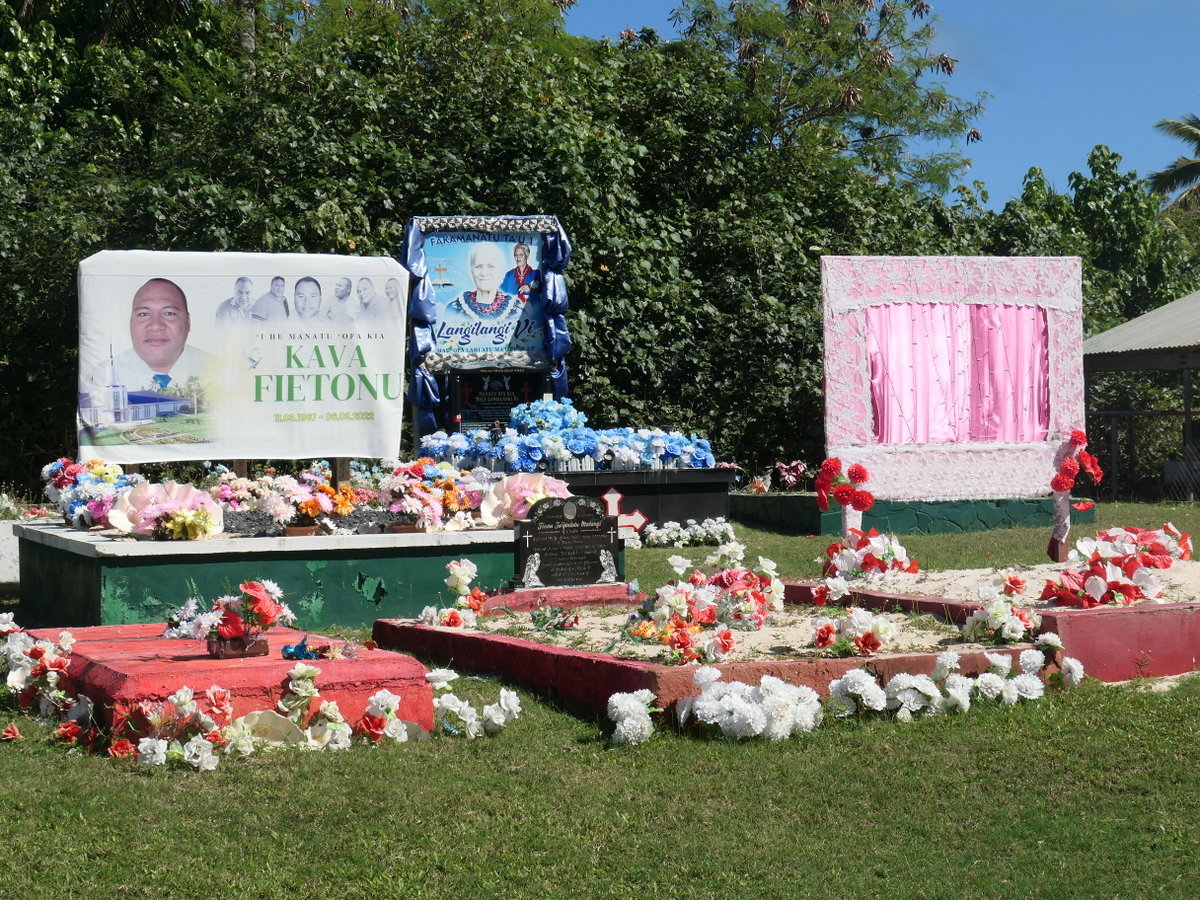
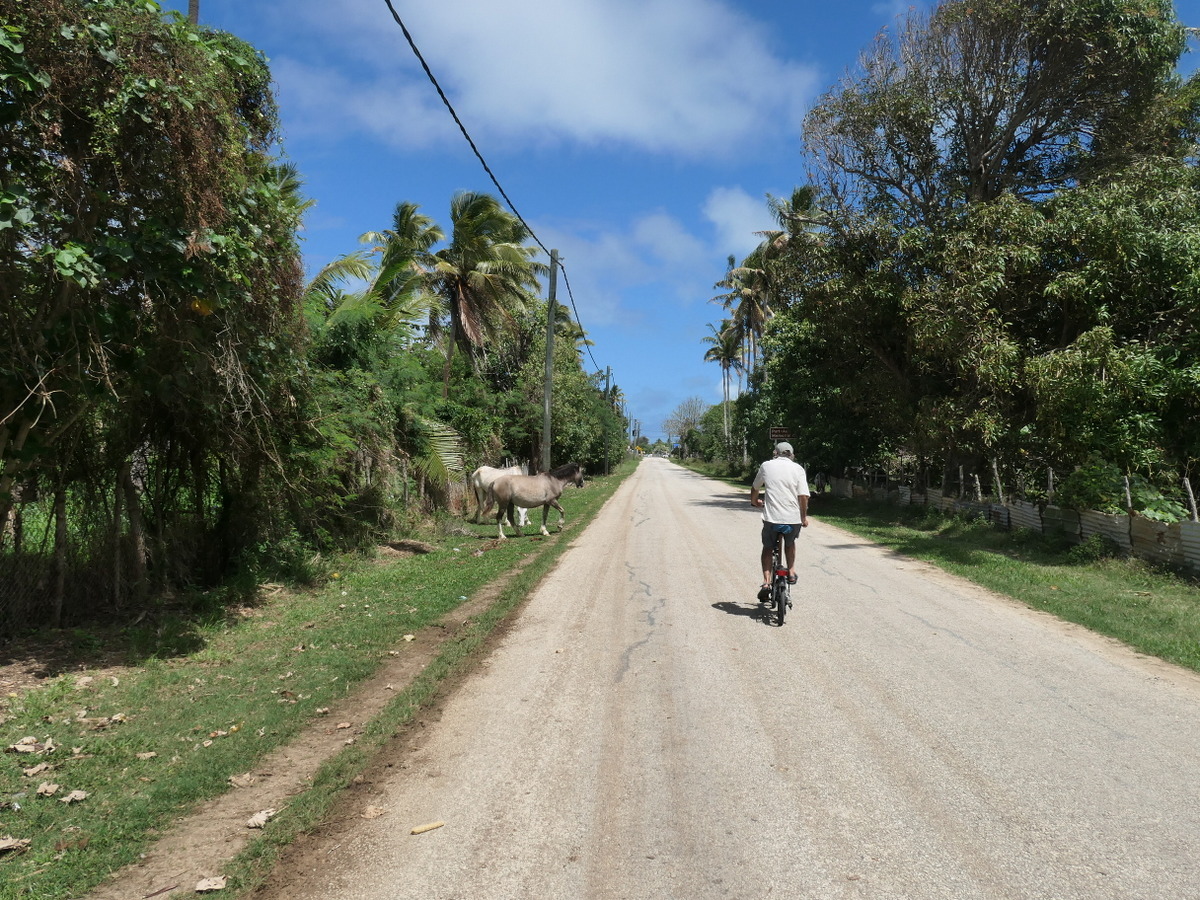
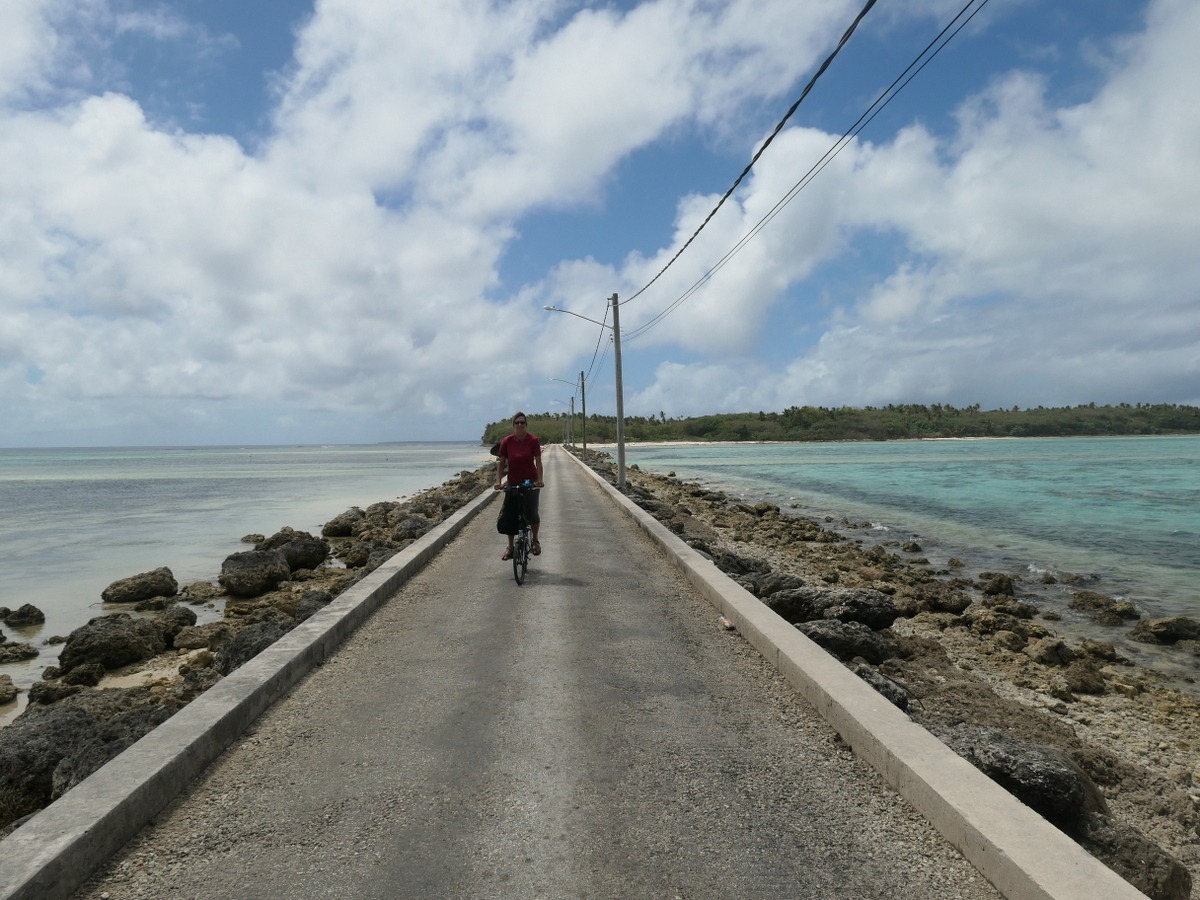
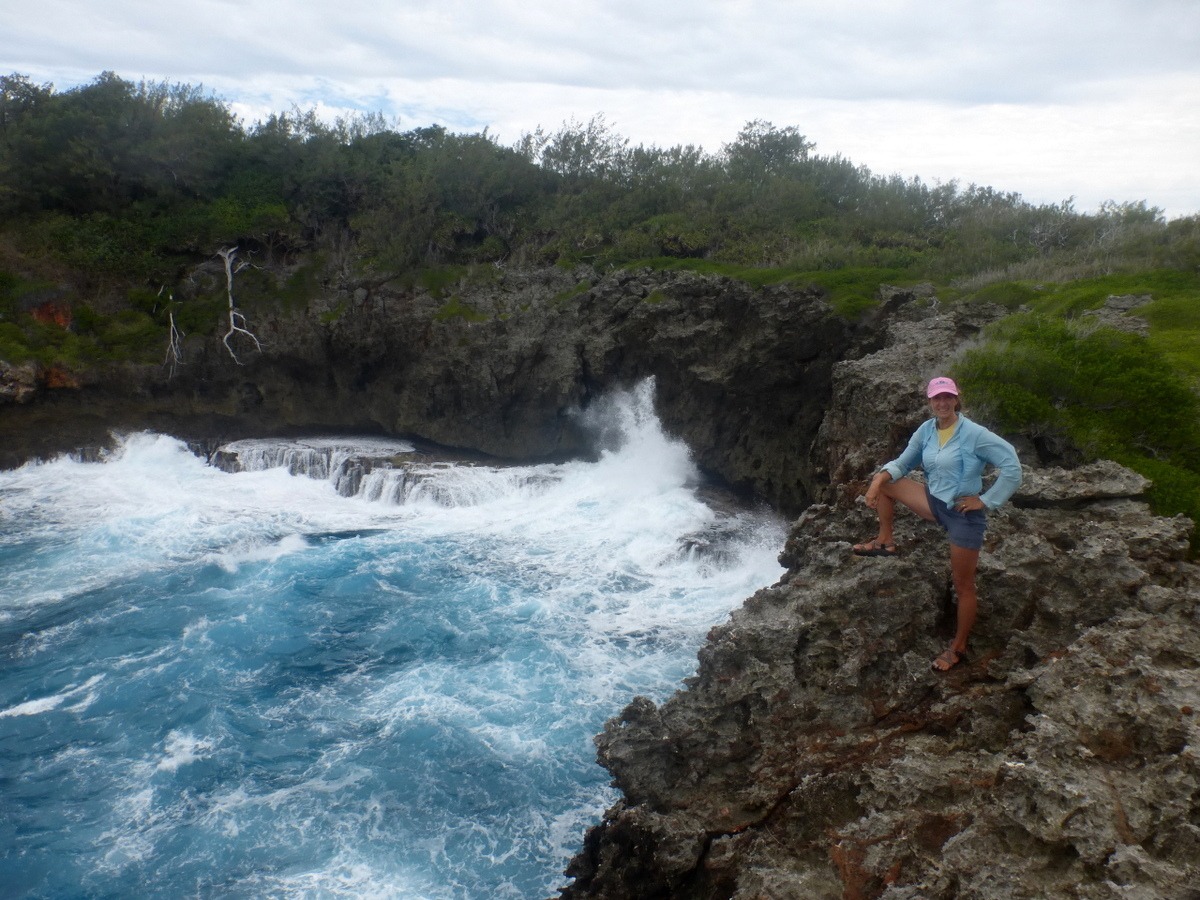
Then suddenly, the weather… the forecast called for gale-force winds from the west… again! The same direction that chased us out of Niue. Ha’apai is our favorite area of Tonga but there are only a few places to hide from these uncommon winds. Thus, we headed to O’ua Island, 30 miles to the south. O’ua is well-protected by reefs and became our refuge more than once.
The sail from Pangai to O’ua was delightful. It was easy sailing in light winds in calm protected waters. We were only about five minutes out of Pangai when we saw our first whales. They were easy to find with a whale-watching boat right next to them and the mother and calf both tail slapping, fin slapping, and breaching. Ahead of us to starboard was another whale-watching boat and more whales. Then we saw four whales on the port side. All the whales were on the surface heading in the opposite direction; however, one of the four broke off from the group, turned, and followed behind Migration for about a minute — clearly checking us out — before making a sharp turn on the surface to rejoin the group. The whale was only about two boat lengths (100’/30m) behind our stern, and much of the whale’s back was visible on the surface as it turned. It was sooo big!
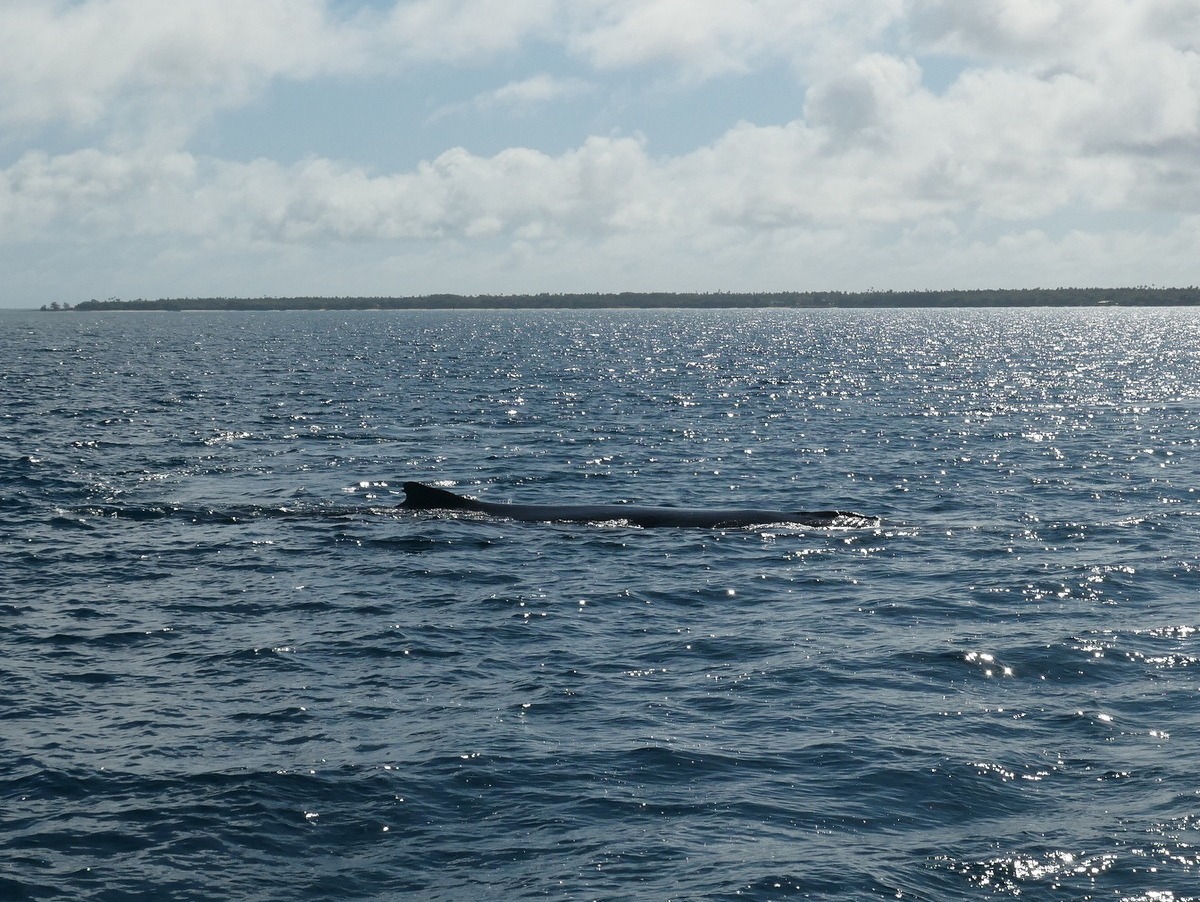
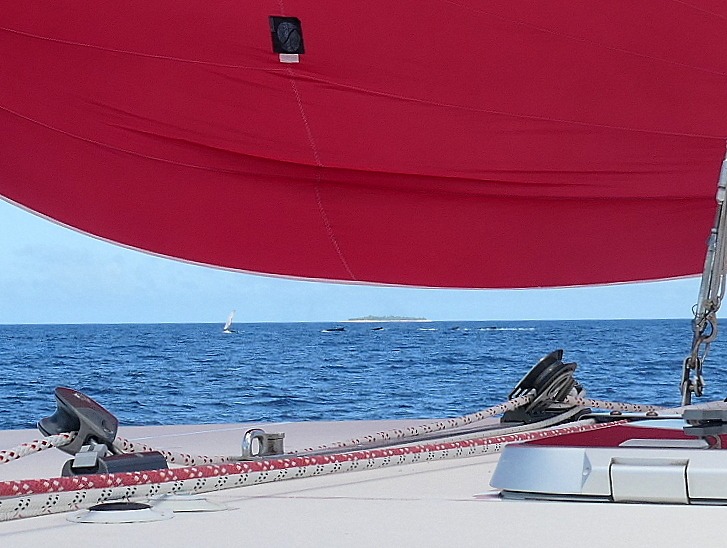
Whales just kept appearing. We had to change course a couple of times to ensure we didn’t cross their path — a bit challenging under spinnaker. At times we had numerous groups in sight, and there was rarely a time when we couldn’t see at least one whale. By the end of our 6-hour sail, we’d spotted over 50 whales!
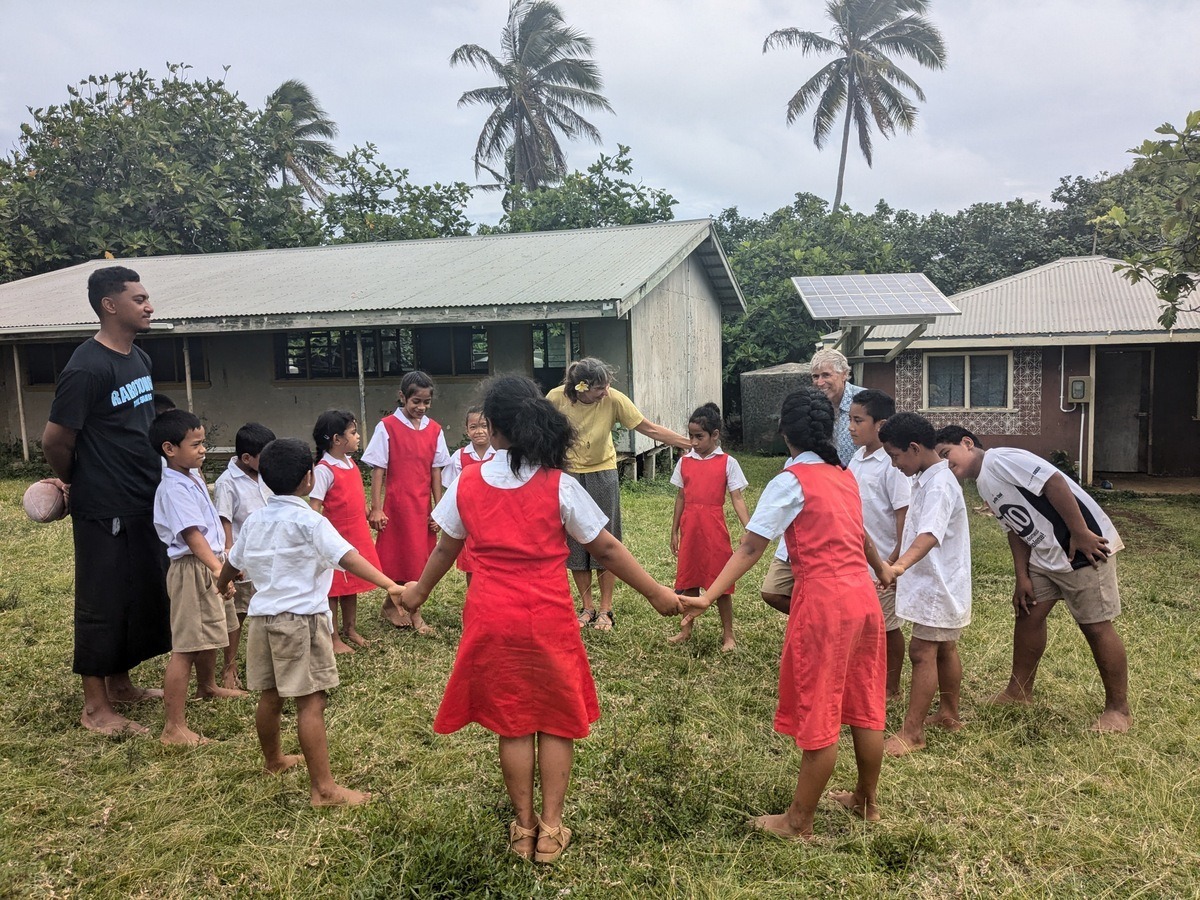
The anchorage at O’ua is beautiful. Upon arrival, we did yoga at sunset to the accompaniment of surprising amounts of birdsong emanating from the island even though we were anchored a quarter of a mile from shore. We still had some time before the bad weather arrived so the next day we went ashore to visit the village.
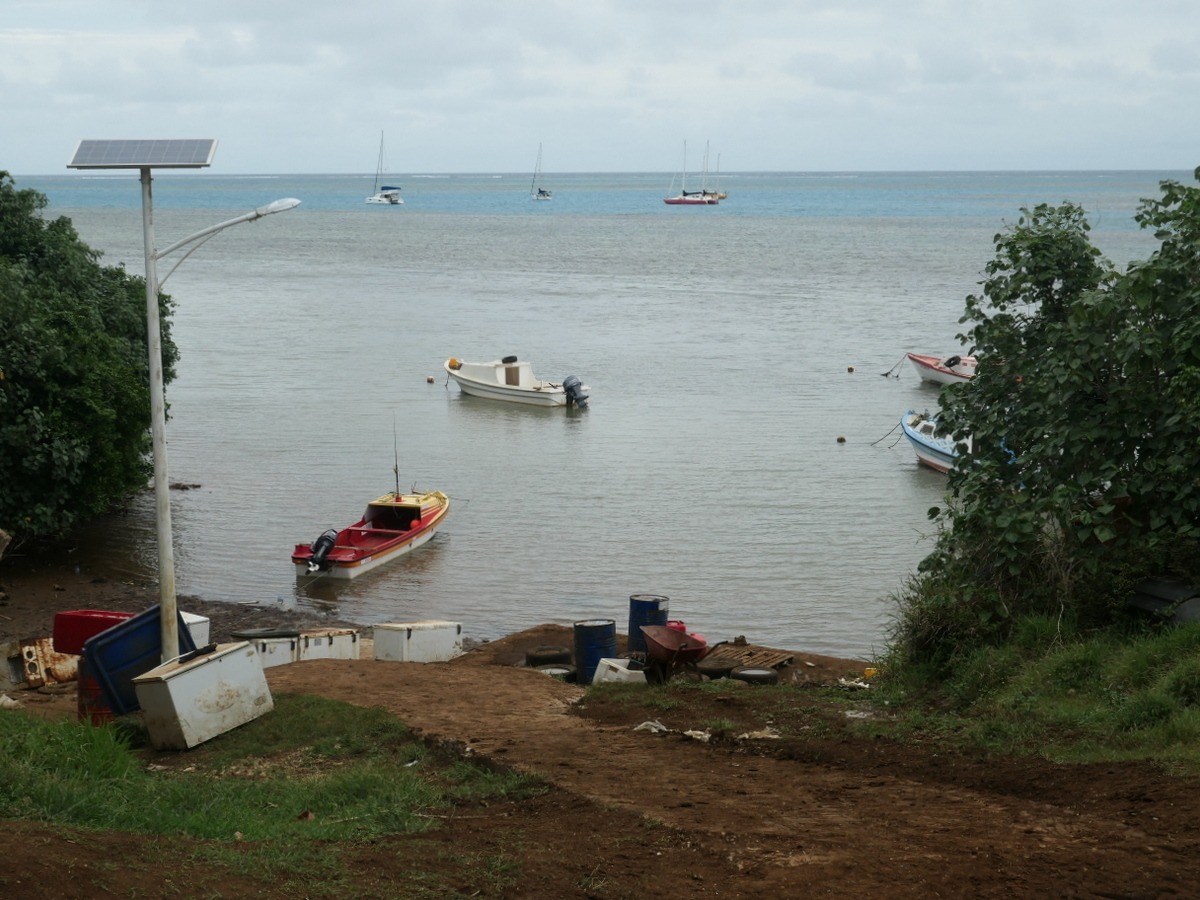
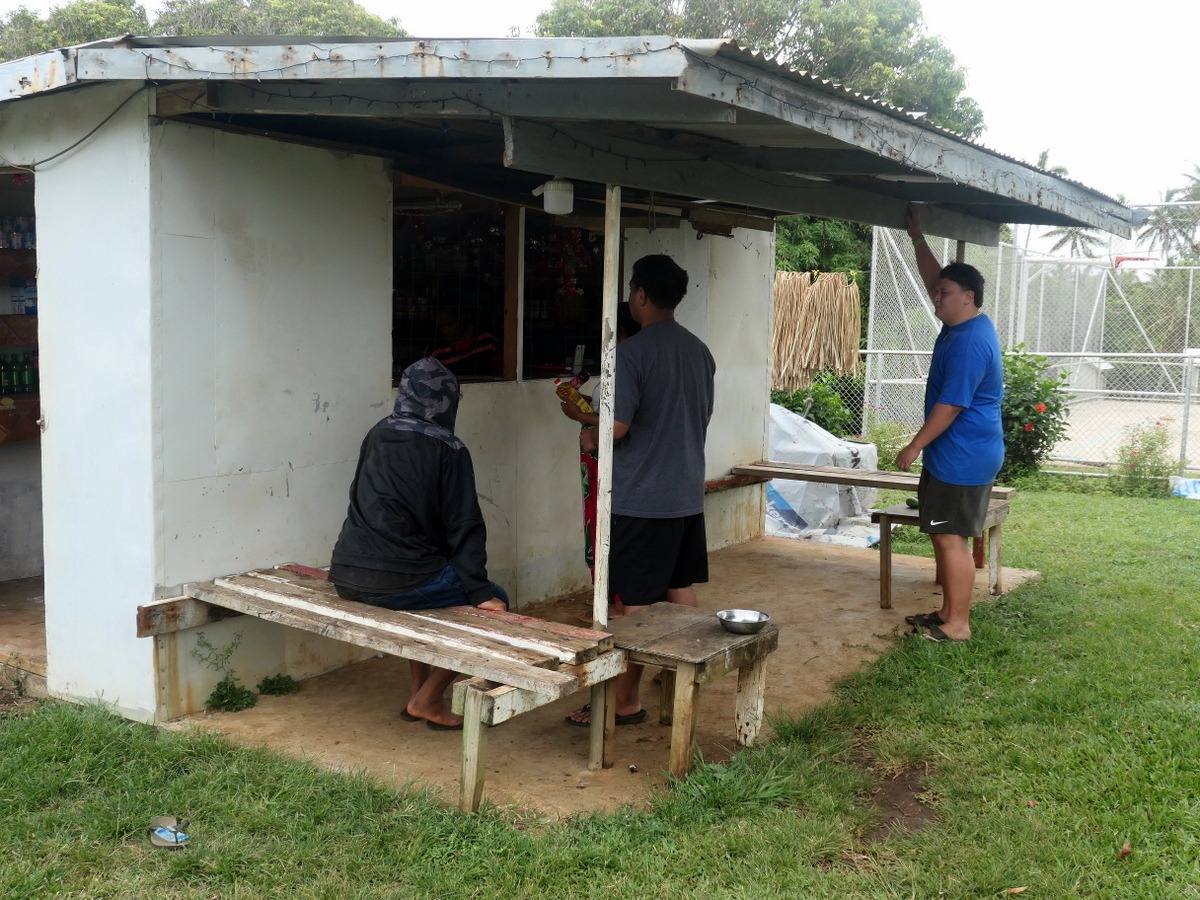
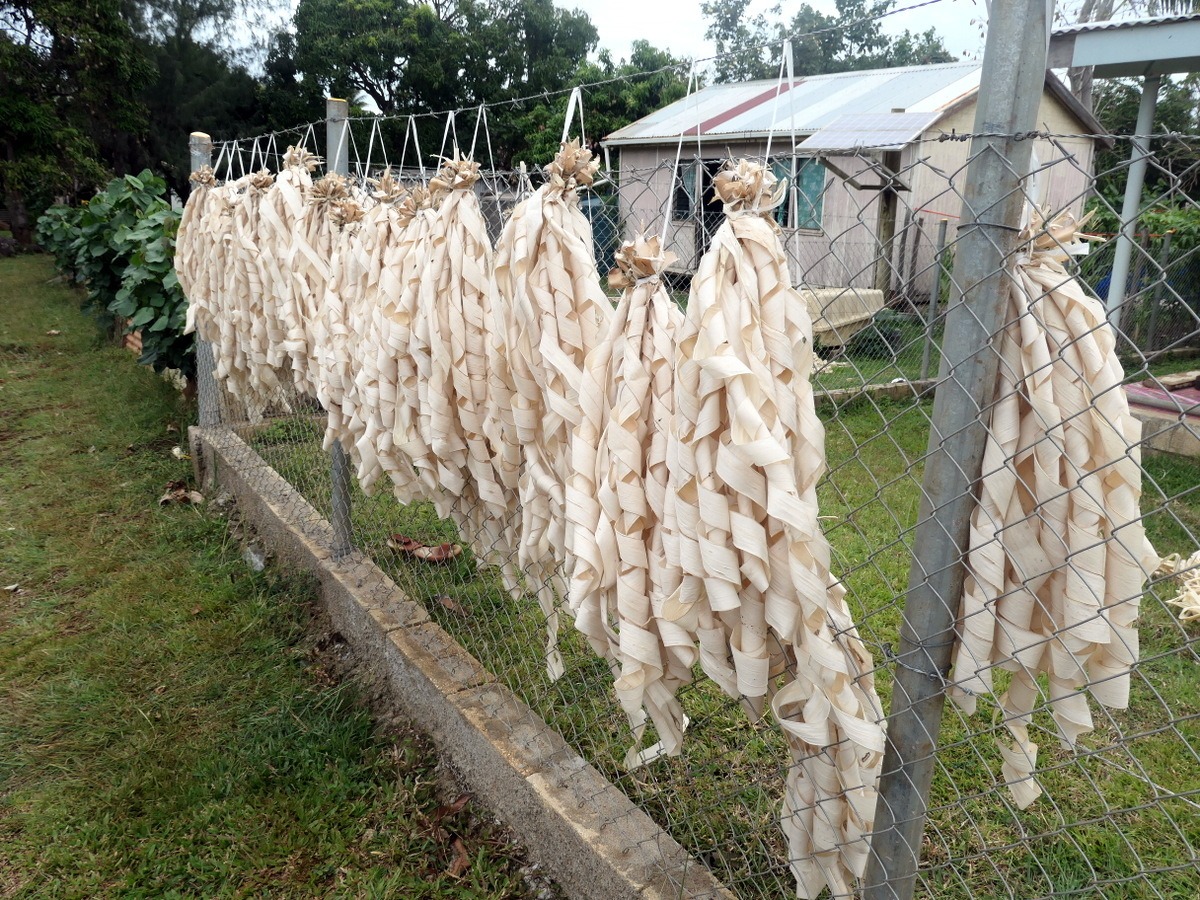
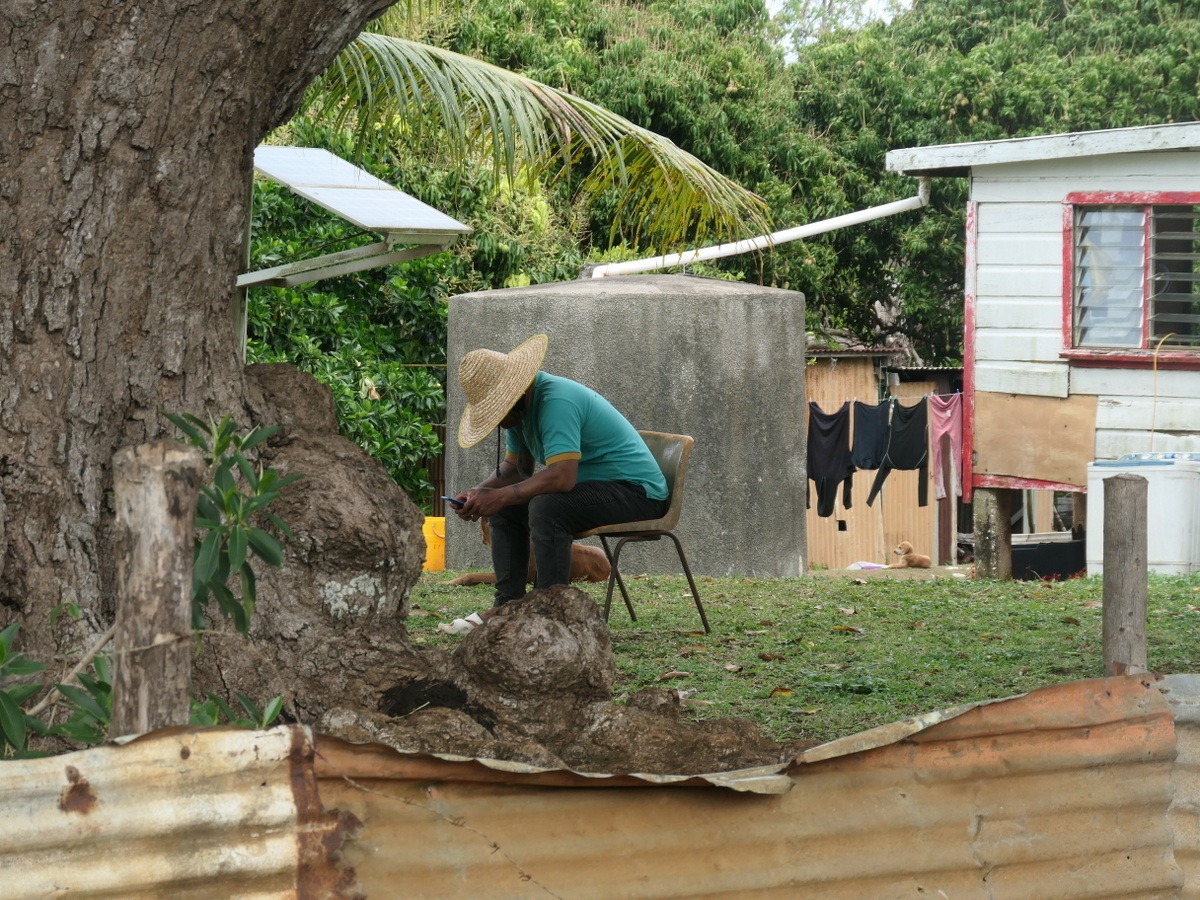
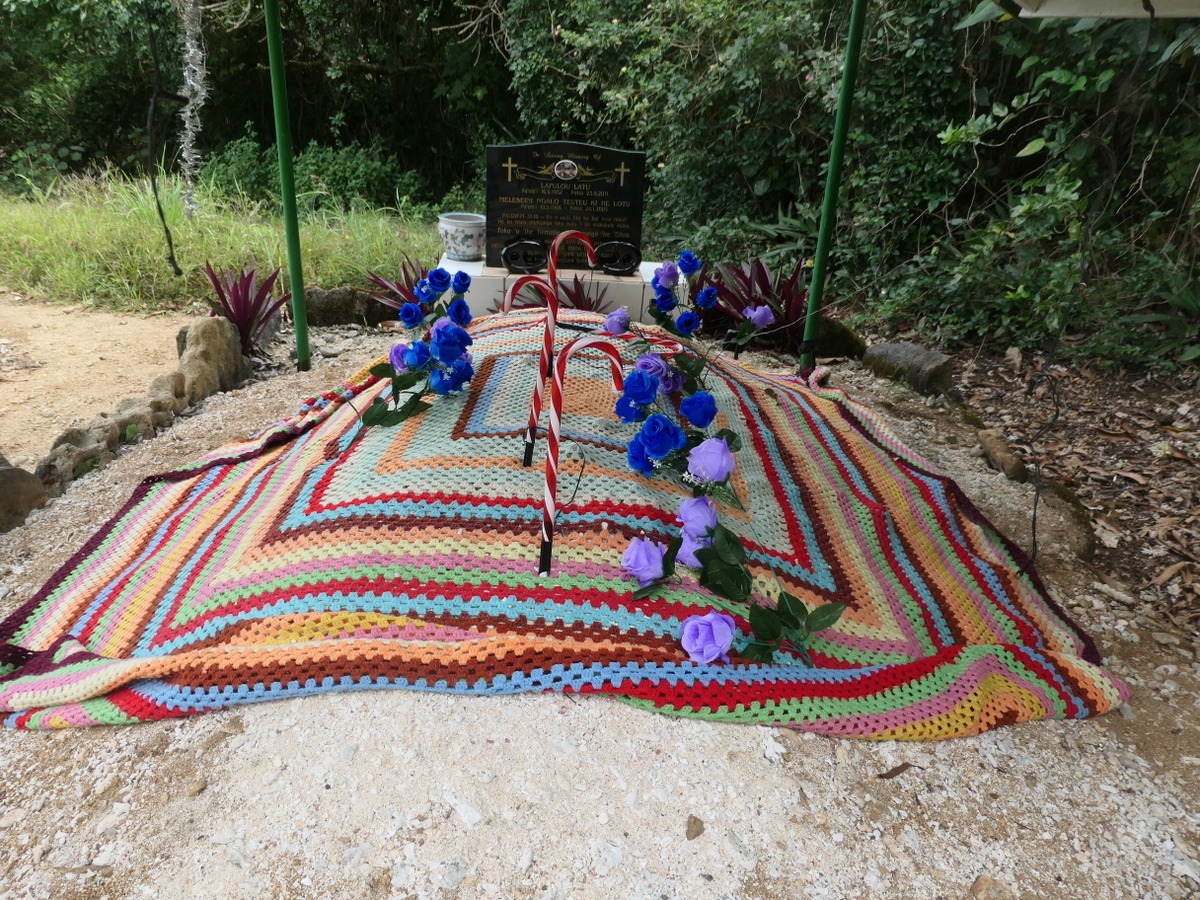
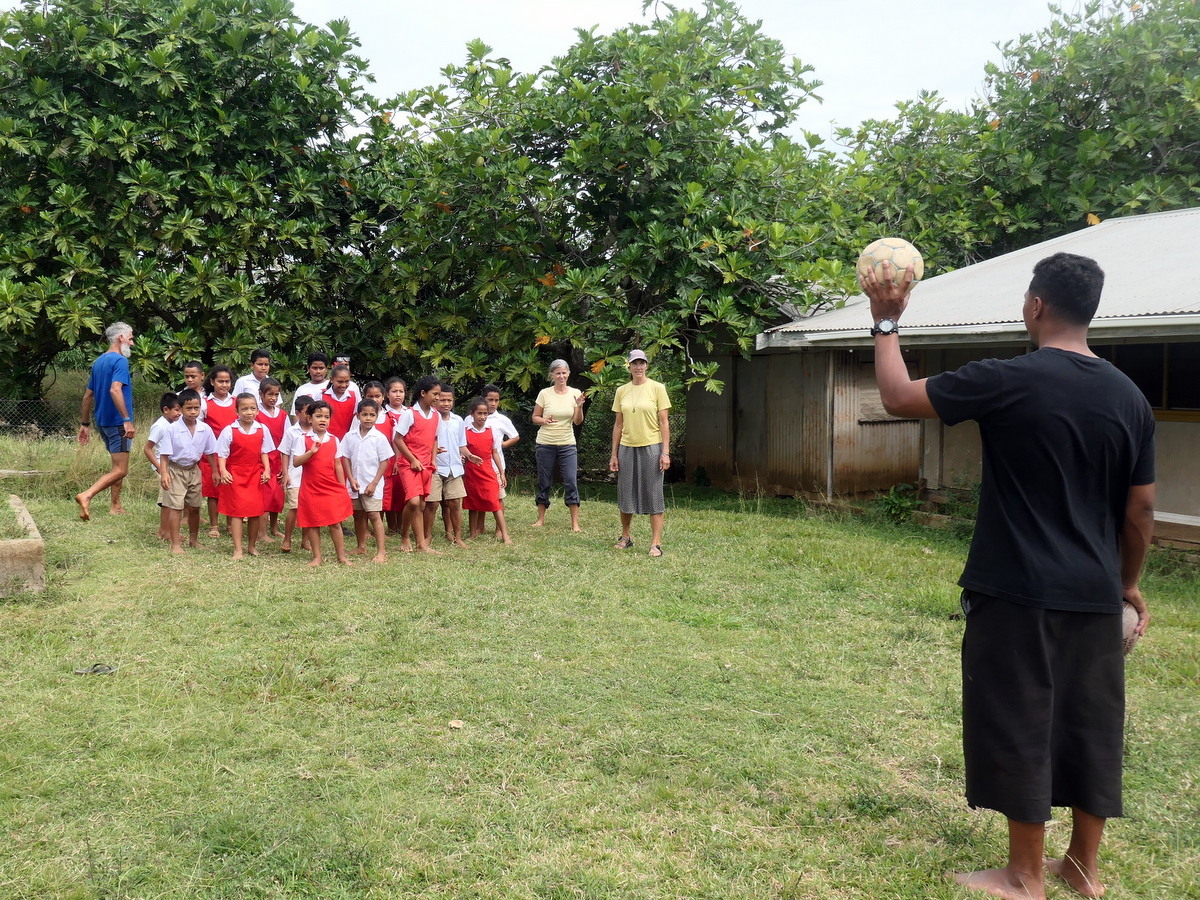
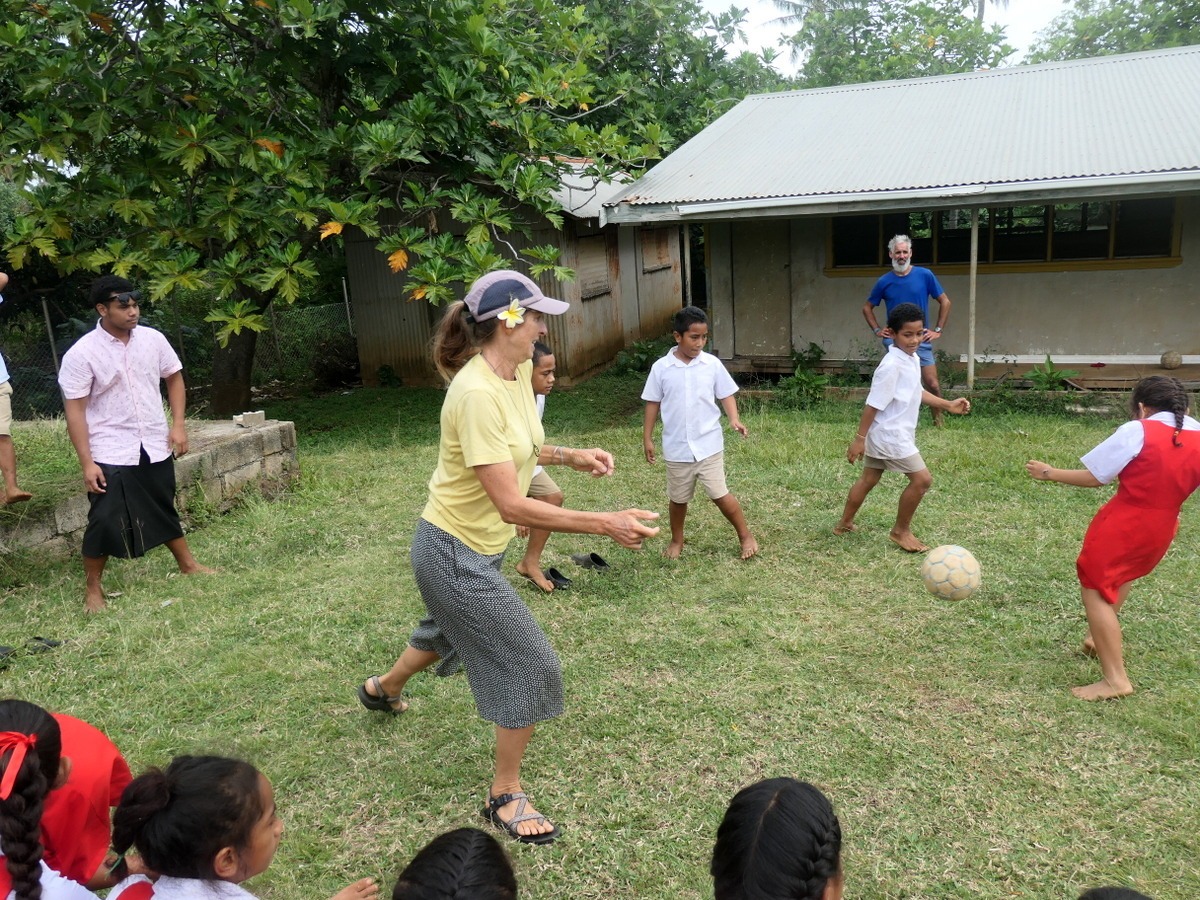
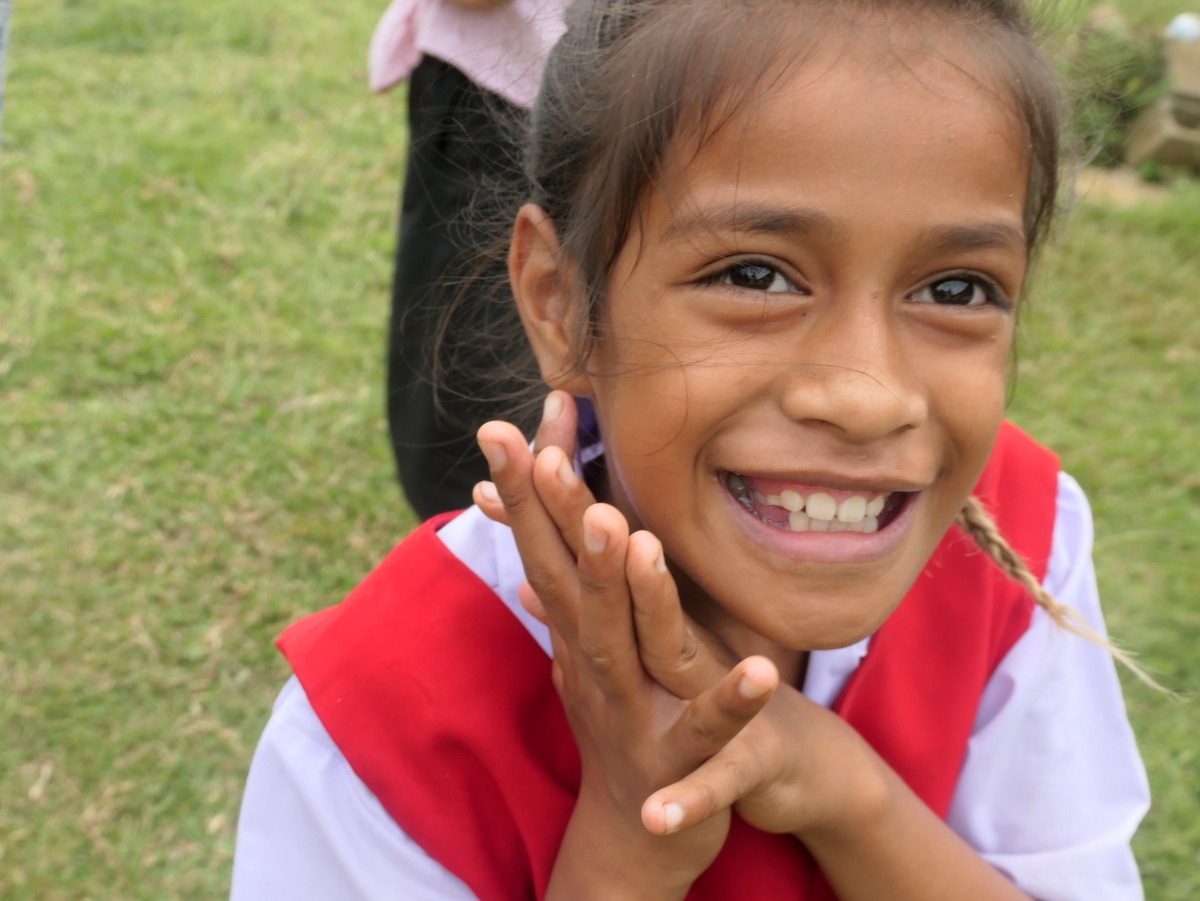
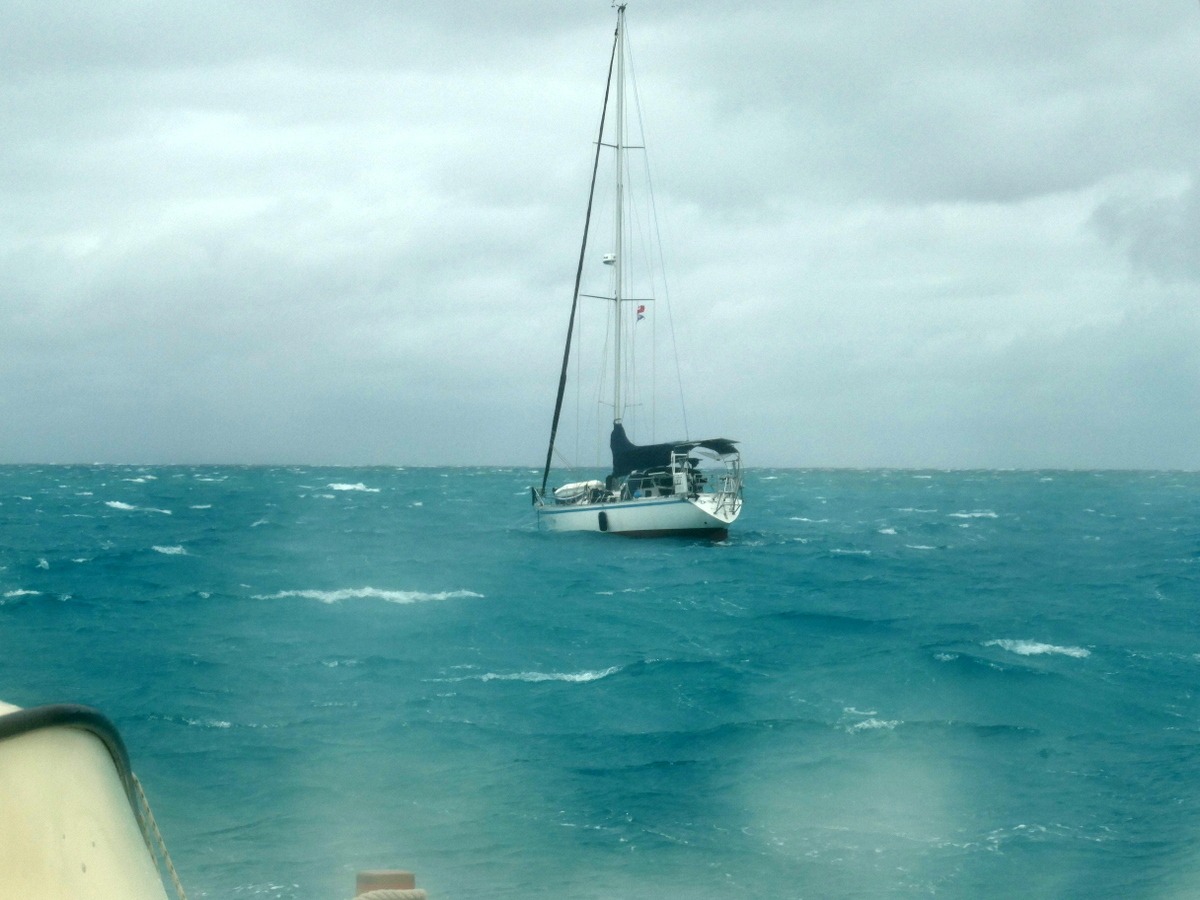
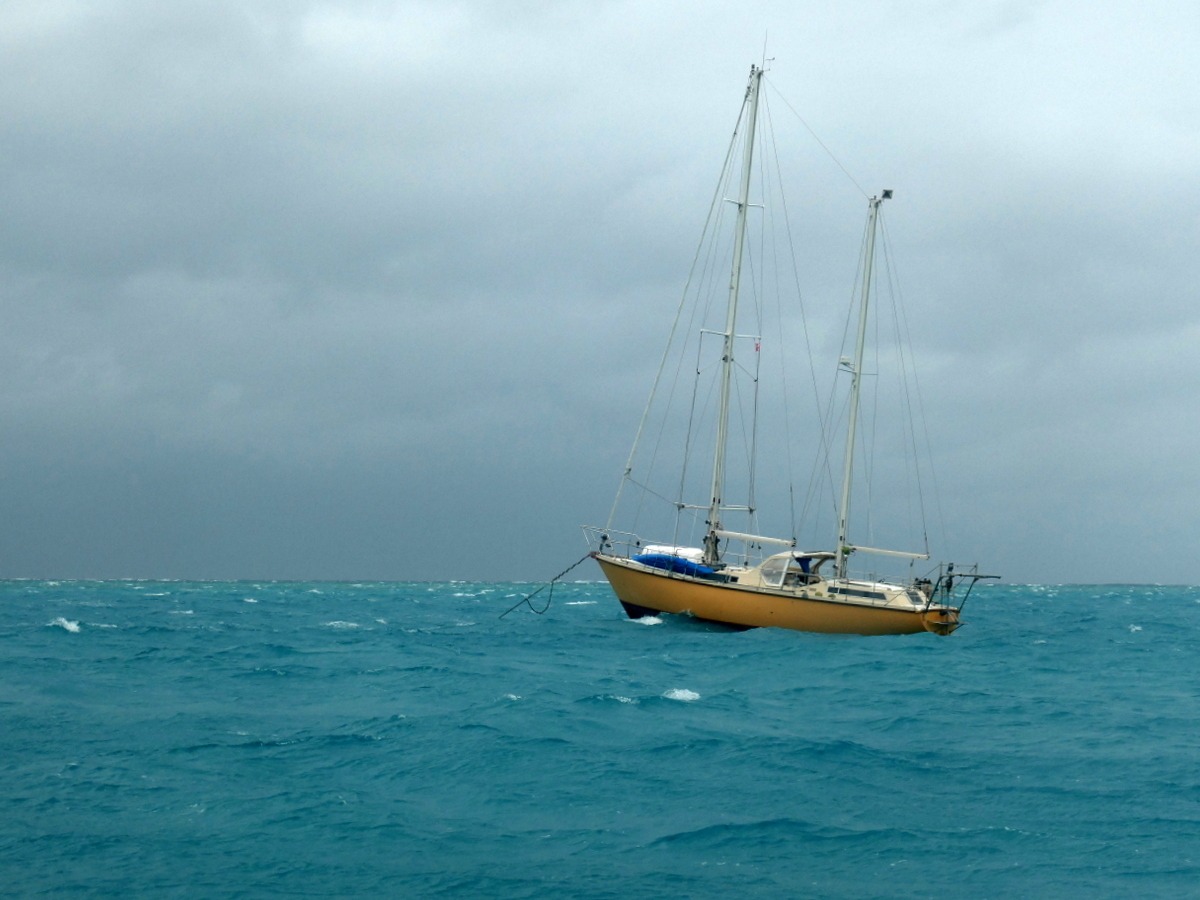
At first, we were the only boat in the anchorage, but as the forecasted westerly winds approached, three other boats came into the area for refuge. It was a windy couple of days…
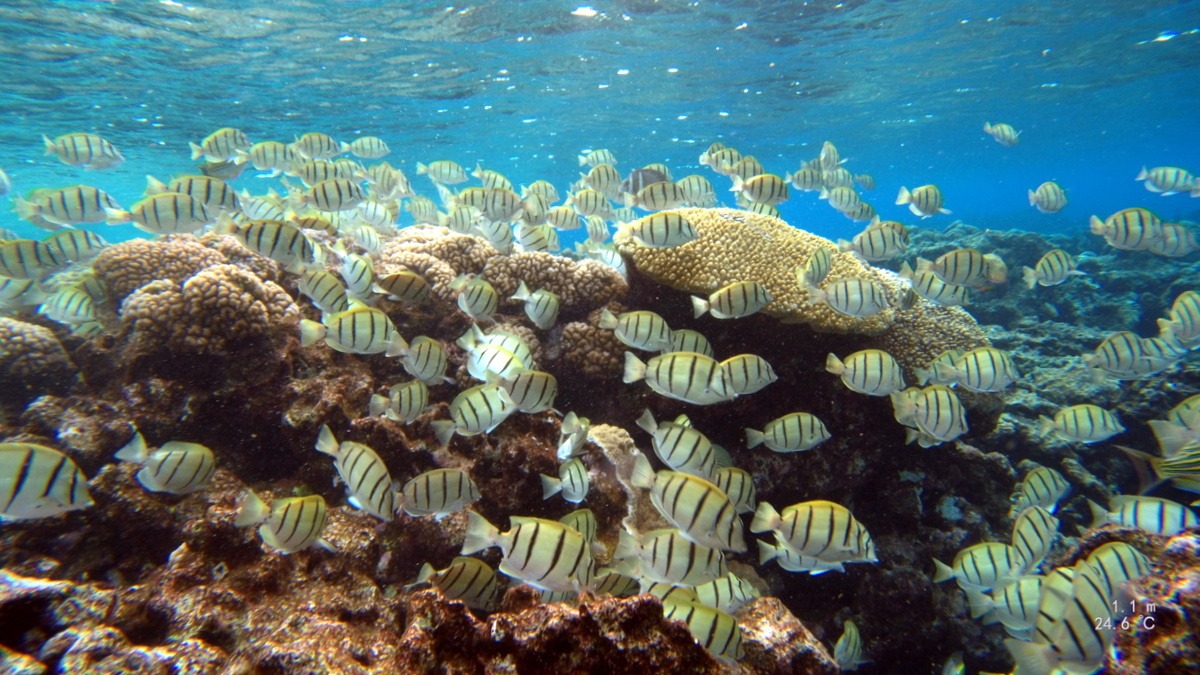
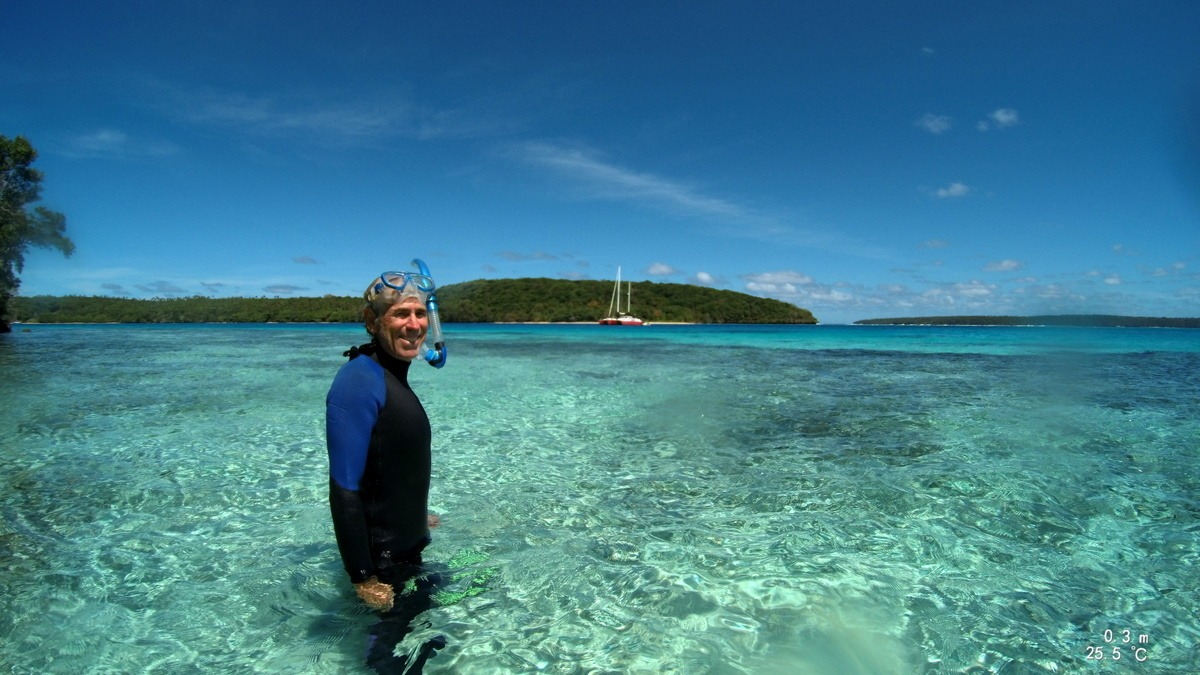
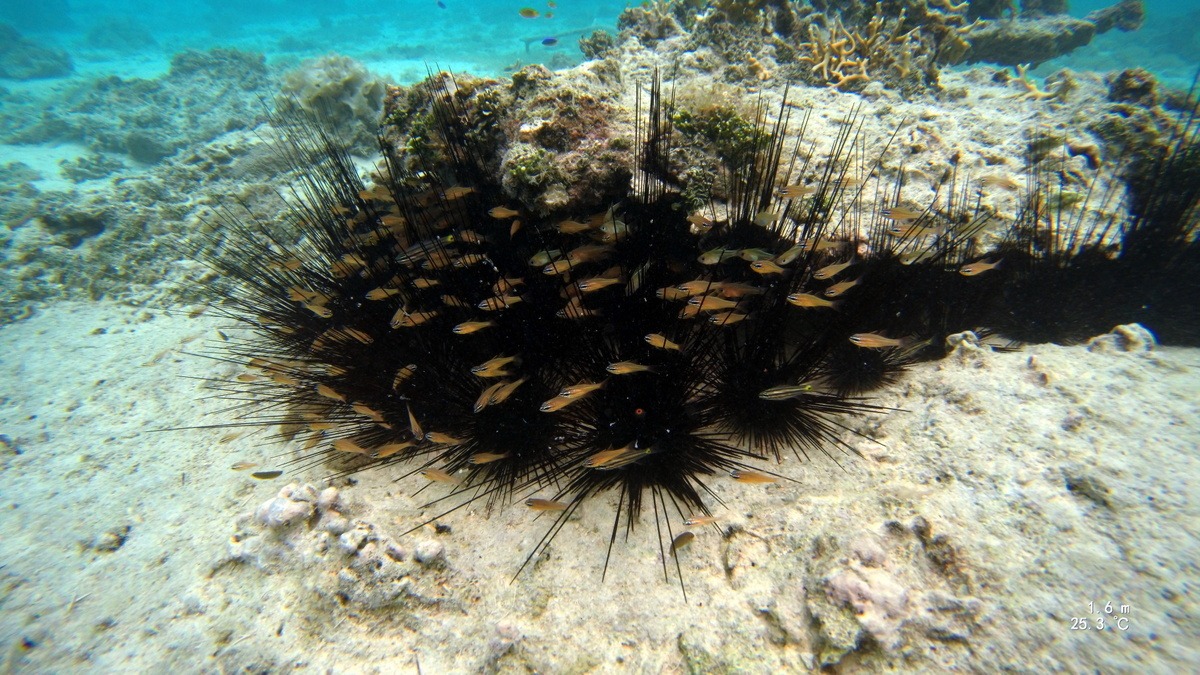
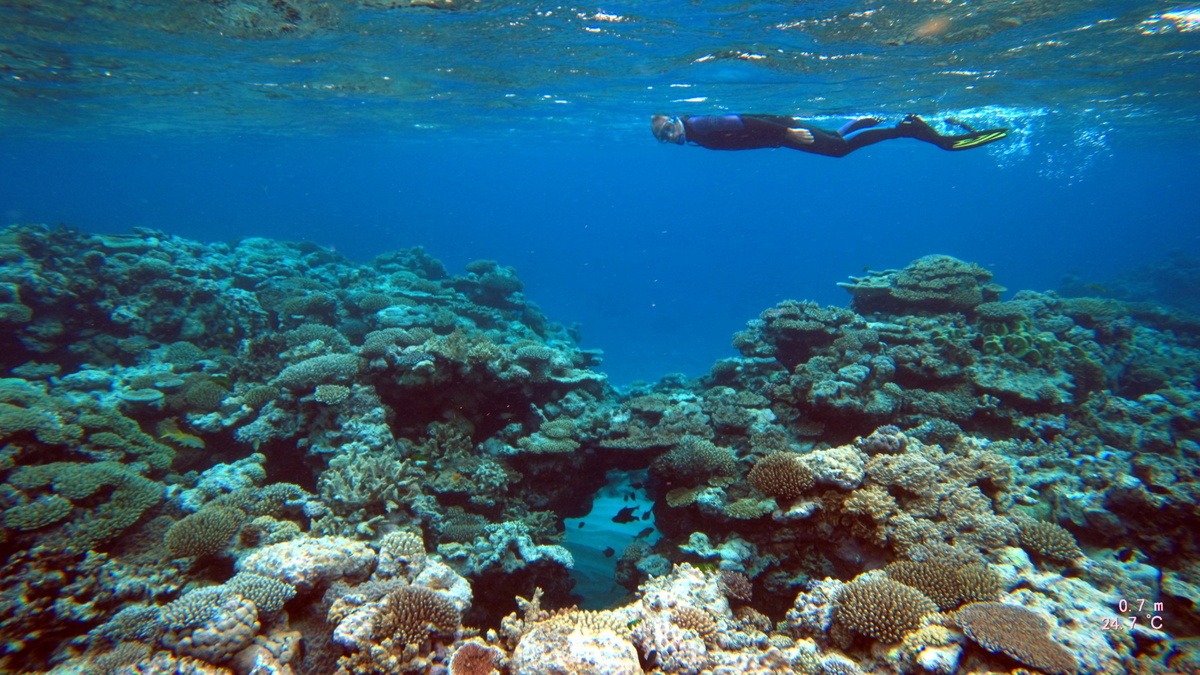
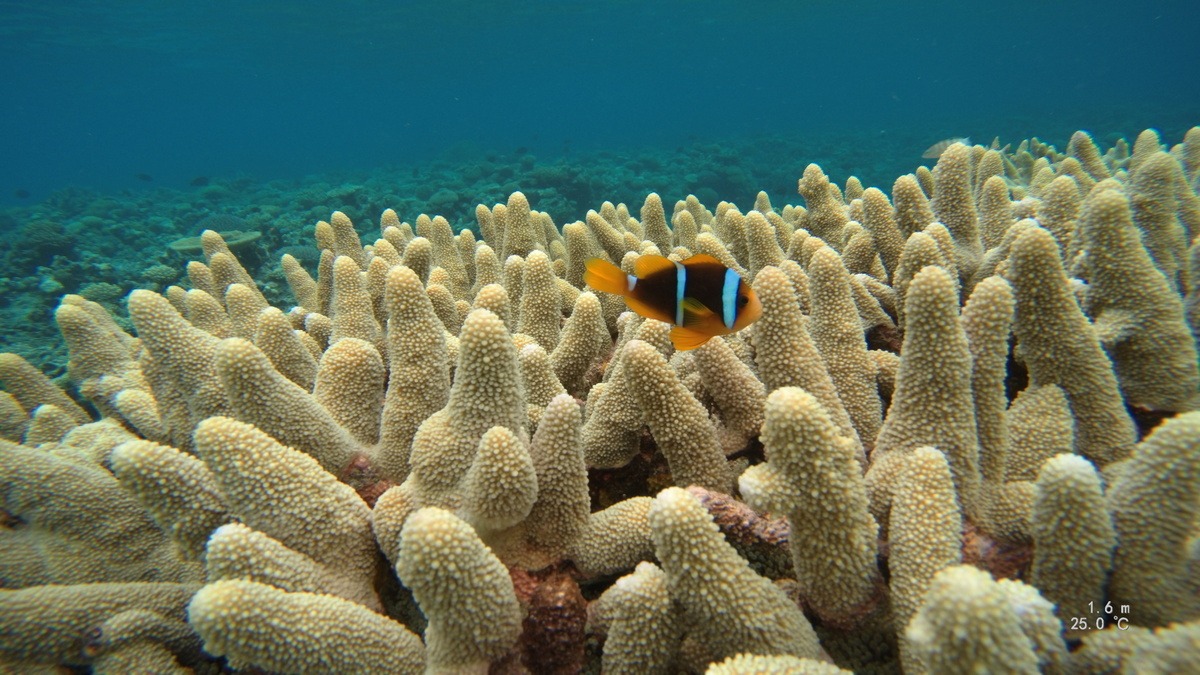
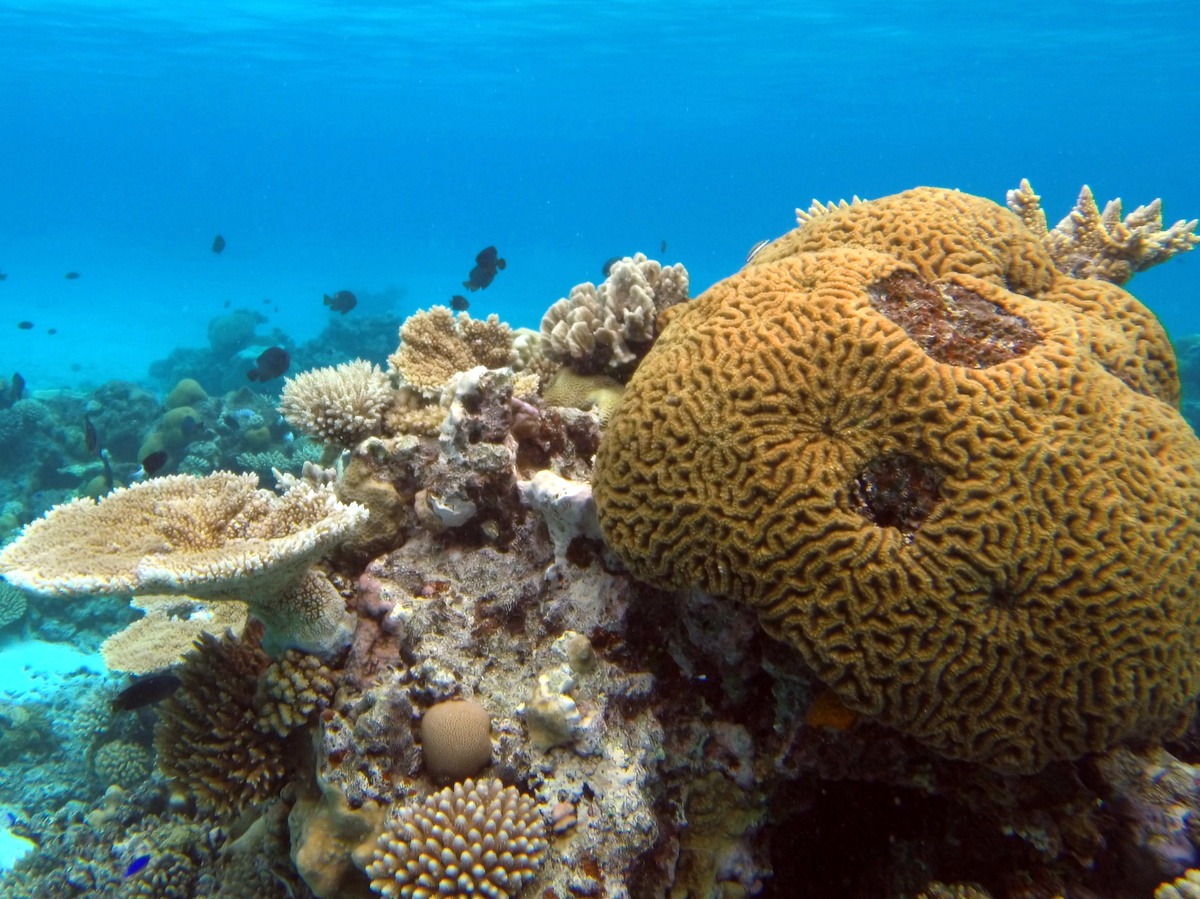
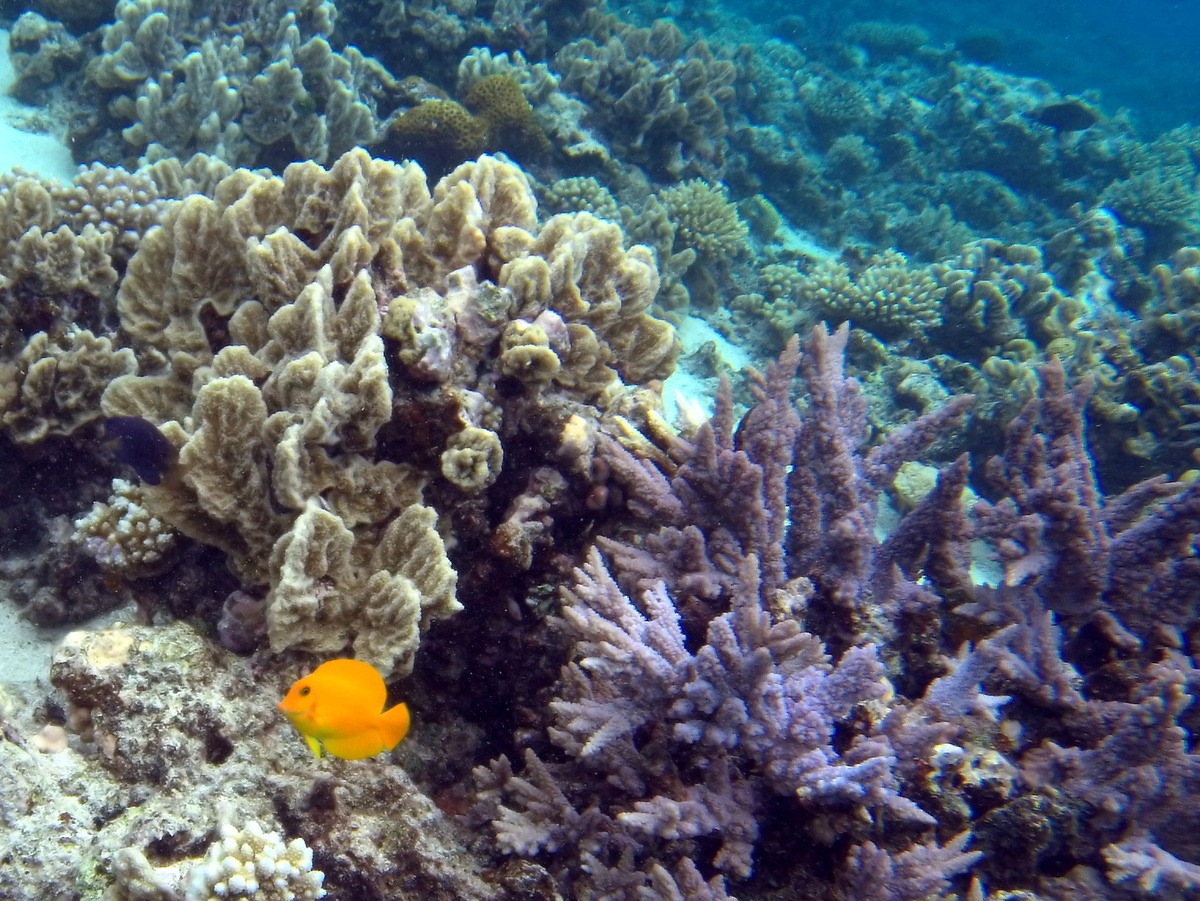
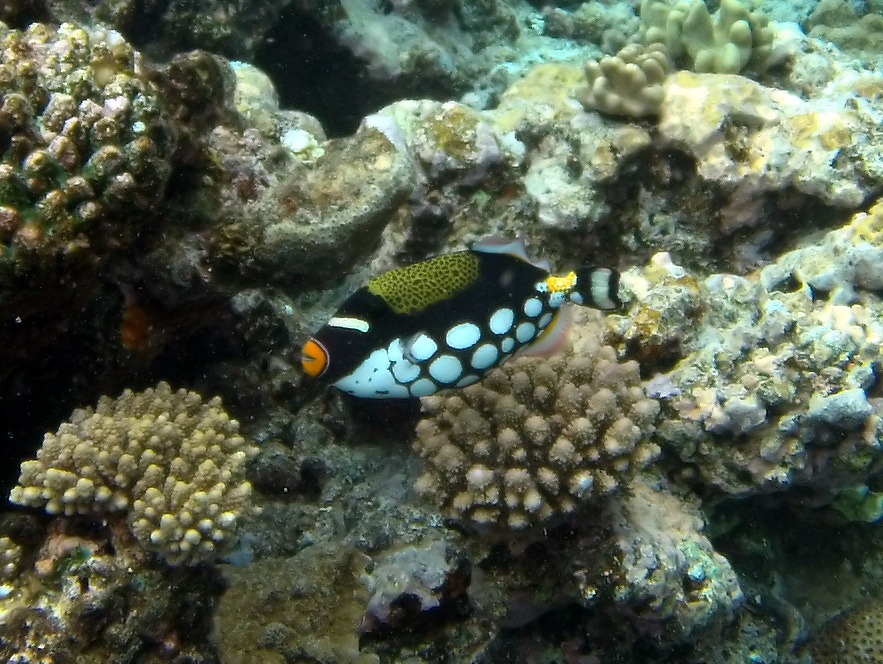
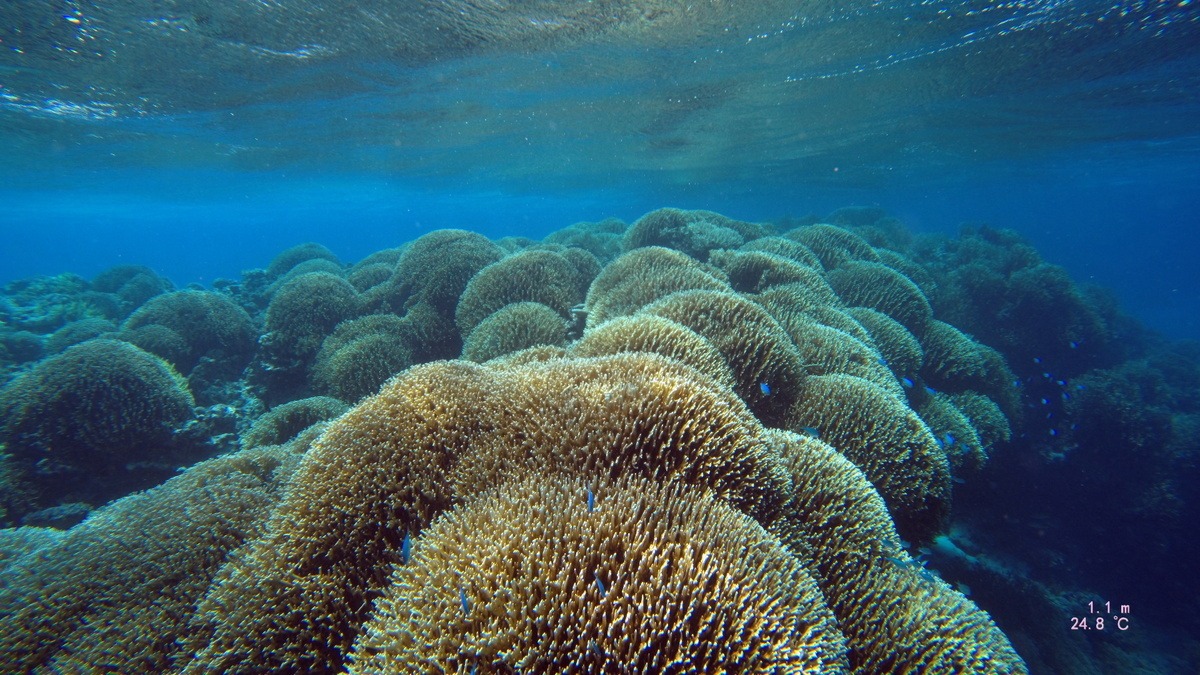
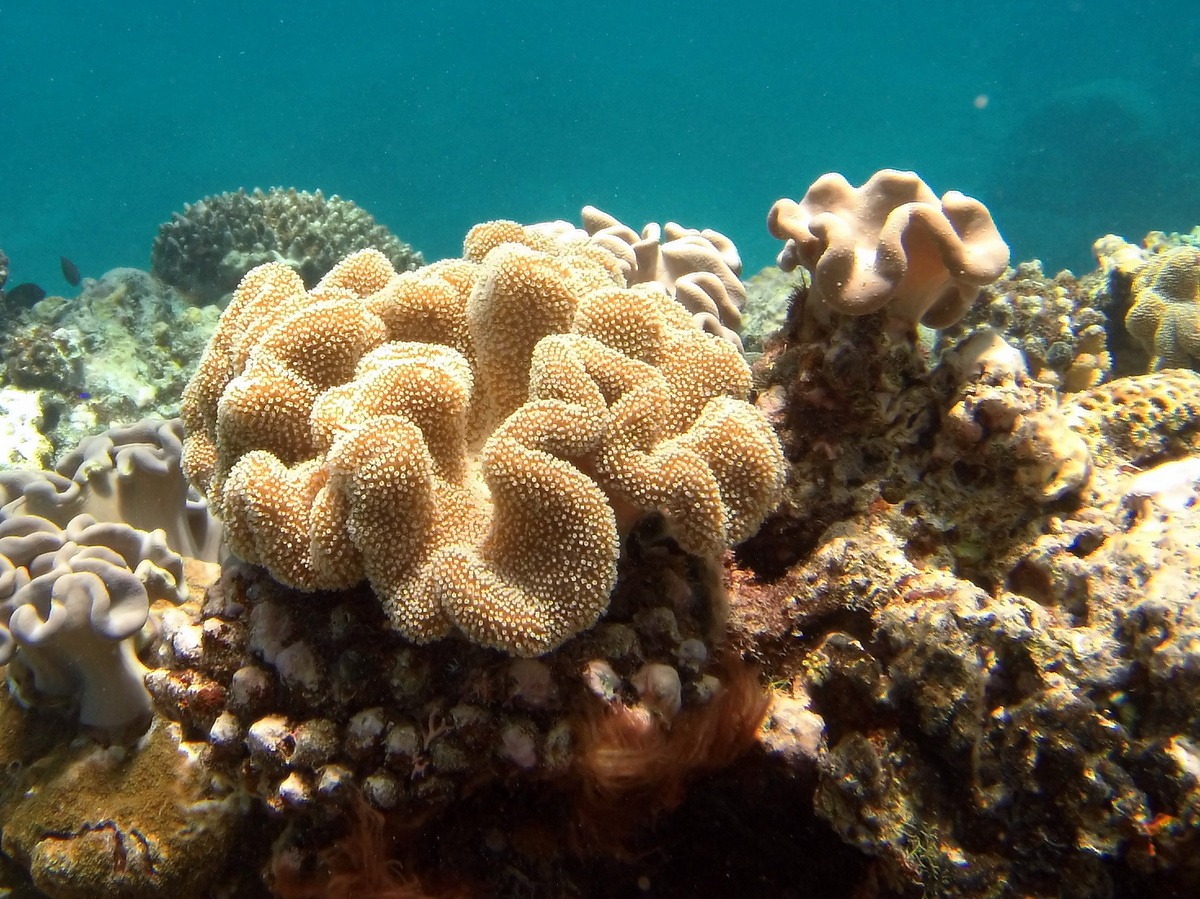
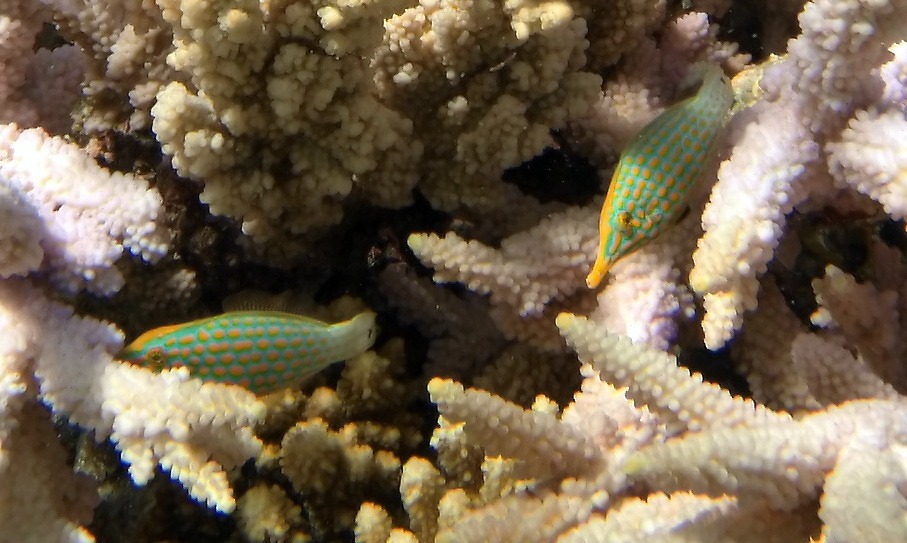
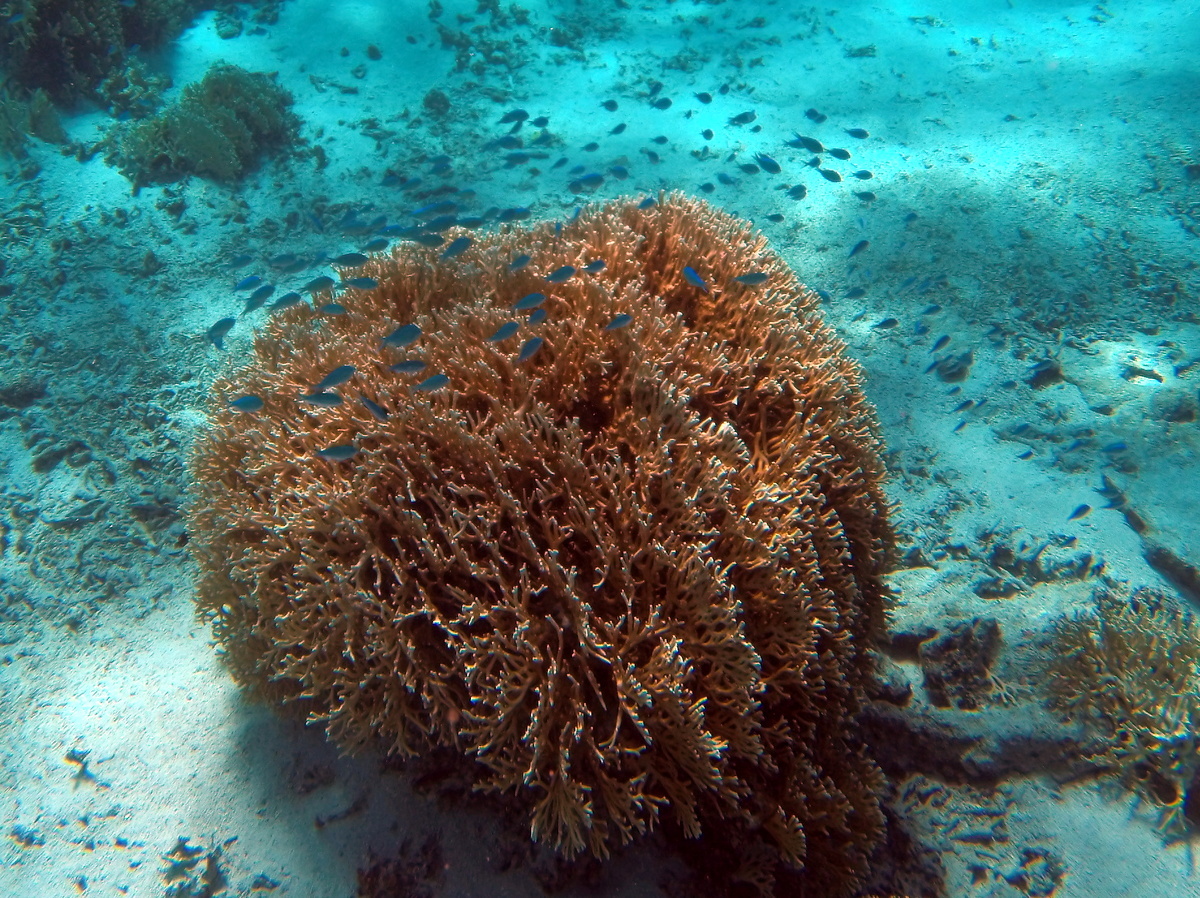
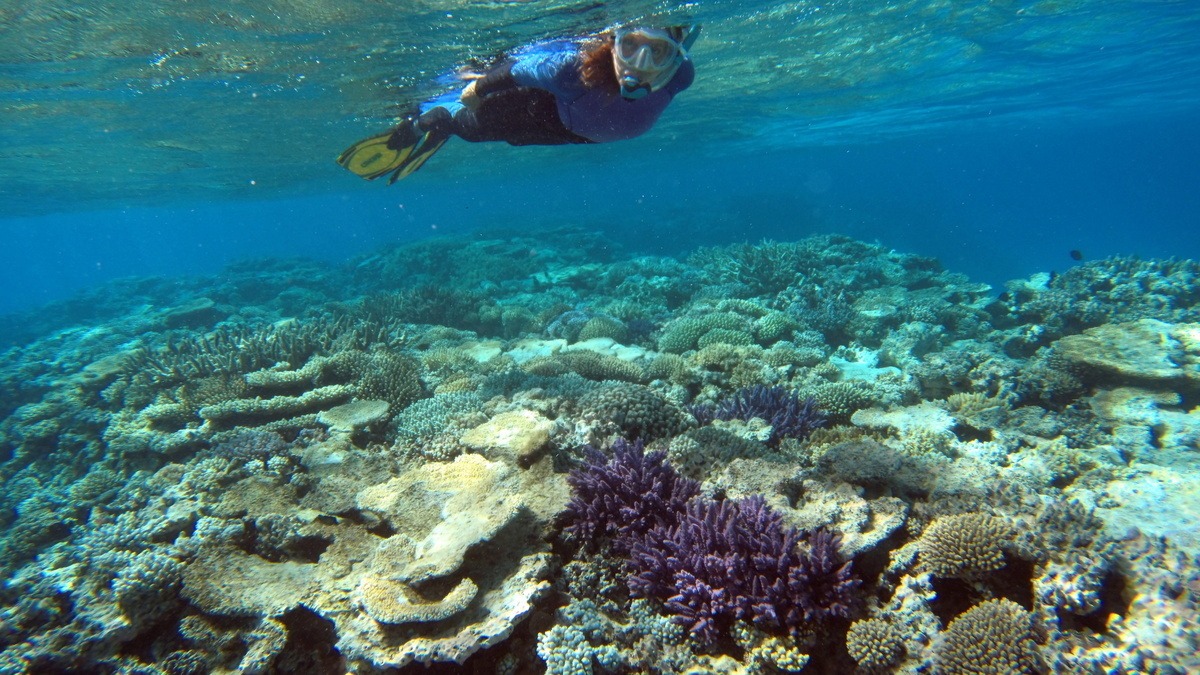
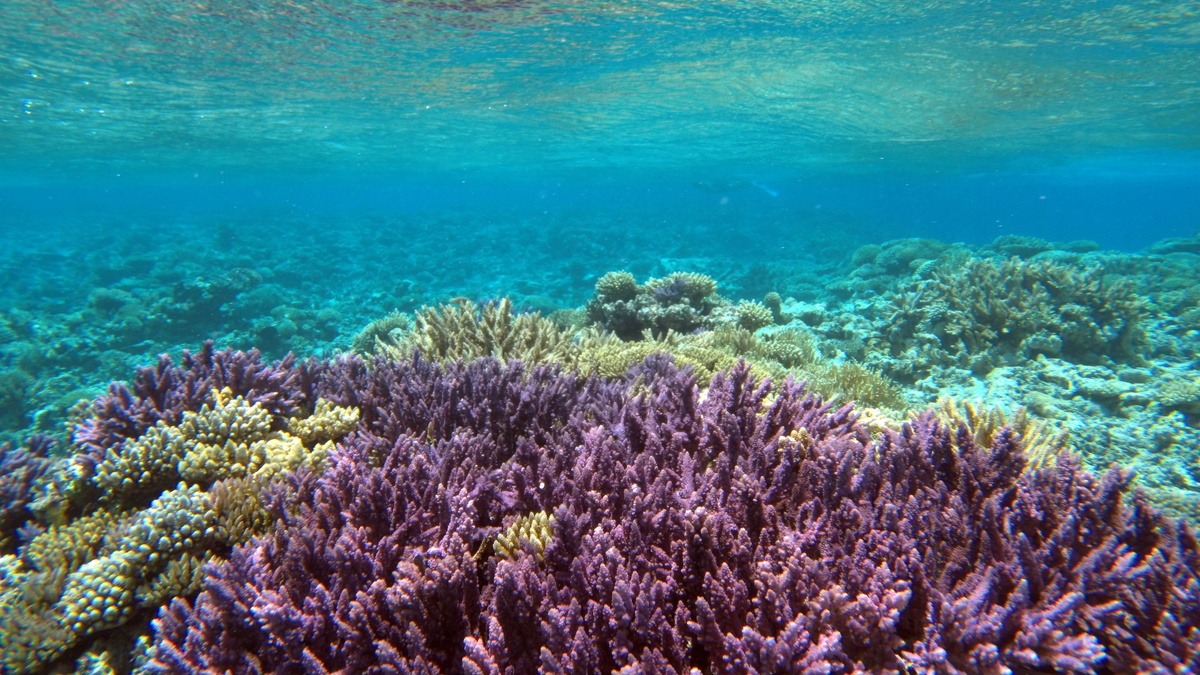
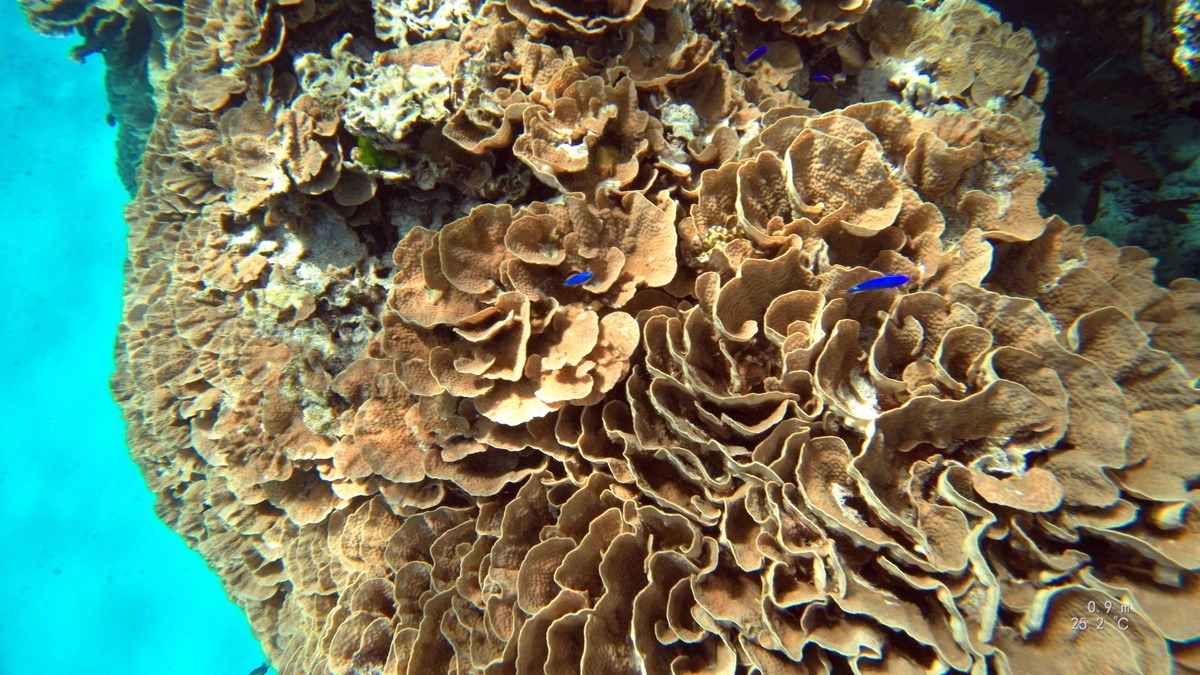
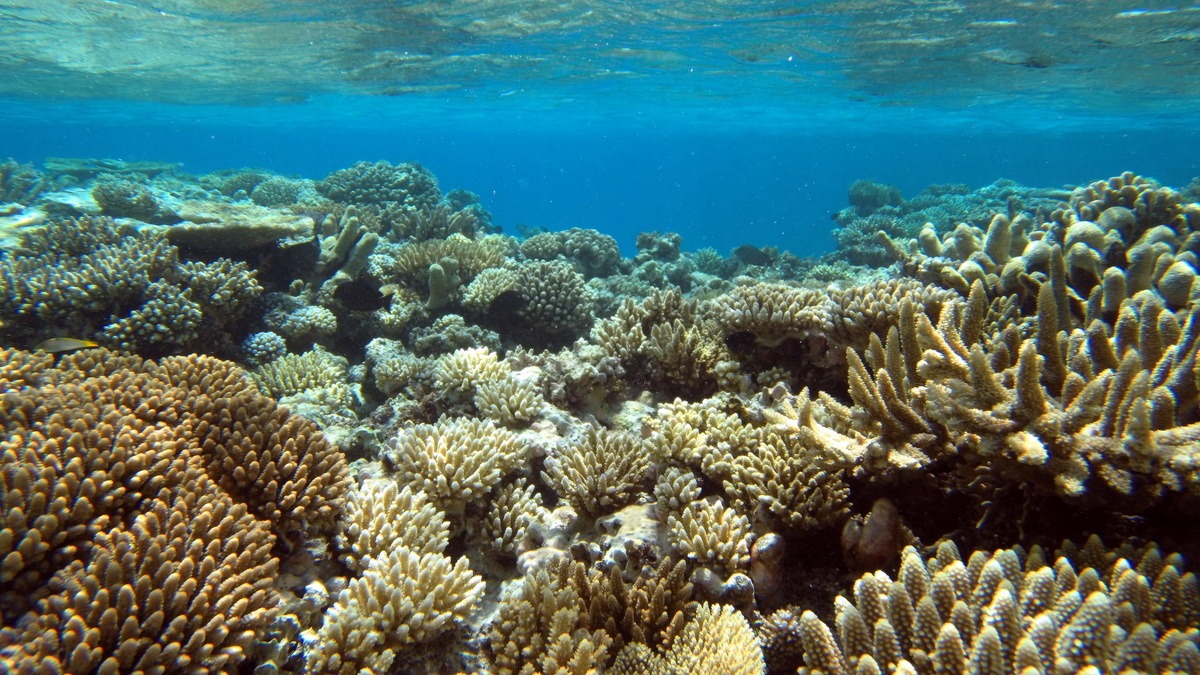
To avoid uncomfortable anchorages during our two-plus months in Tonga we moved around a lot, but when it was calm, we headed to the less protected islands. One of these is tiny, uninhabited Limu which we visited with our local friend Sio in in 2010. It was so nice to see the coral was still healthy and colorful and there were plenty of fish. We took Plover a couple miles away to drift snorkel a pass. Where a pass like this in French Polynesia would have dozens of sharks, there was only one gray, but we were glad to see at least that one. Many of the Pacific island nations have traded away their fishing rights to China in exchange for aid and local investment. That means a lot of shark-finning goes on and we definitely see the difference between these countries and areas like French Polynesia where France keeps the Chinese boats out. (Please remember to never order shark fin soup.)
Snorkeling in the Ha’apai
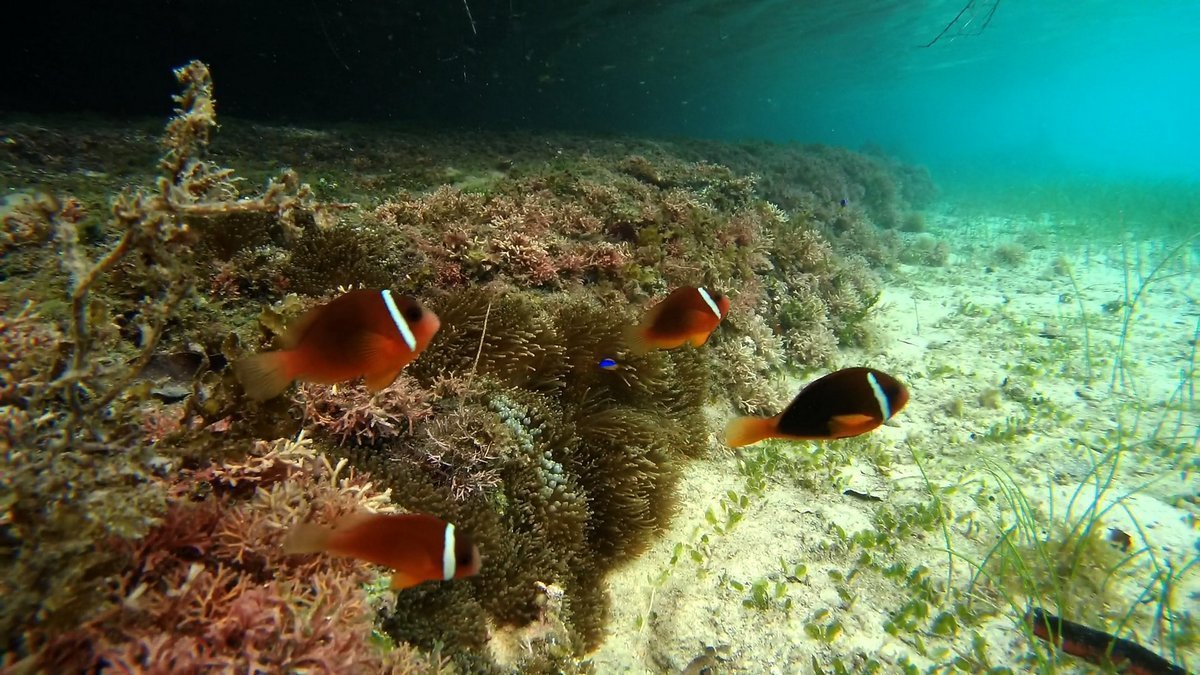
Exactly a month later, big winds were predicted again, so we headed back to ‘O’ua to sit out the blow and ended up staying another week. When the wind is up, it’s a good time to get indoor projects done like cleaning, organizing, and writing website updates! (Does that mean we should be pinned down by bad weather more often given how delinquent we’ve been in updating the Migrations website?)
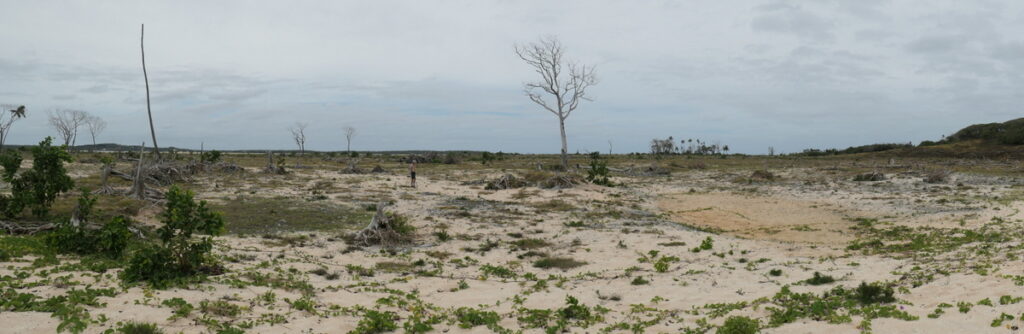
After the blow, we headed a bit south to another island we visited 15 years ago: Nomuka. This area was hit hard by the tsunami caused by the eruption of the Hunga-Tonga-Hunga-Ha’apai volcano in 2022.
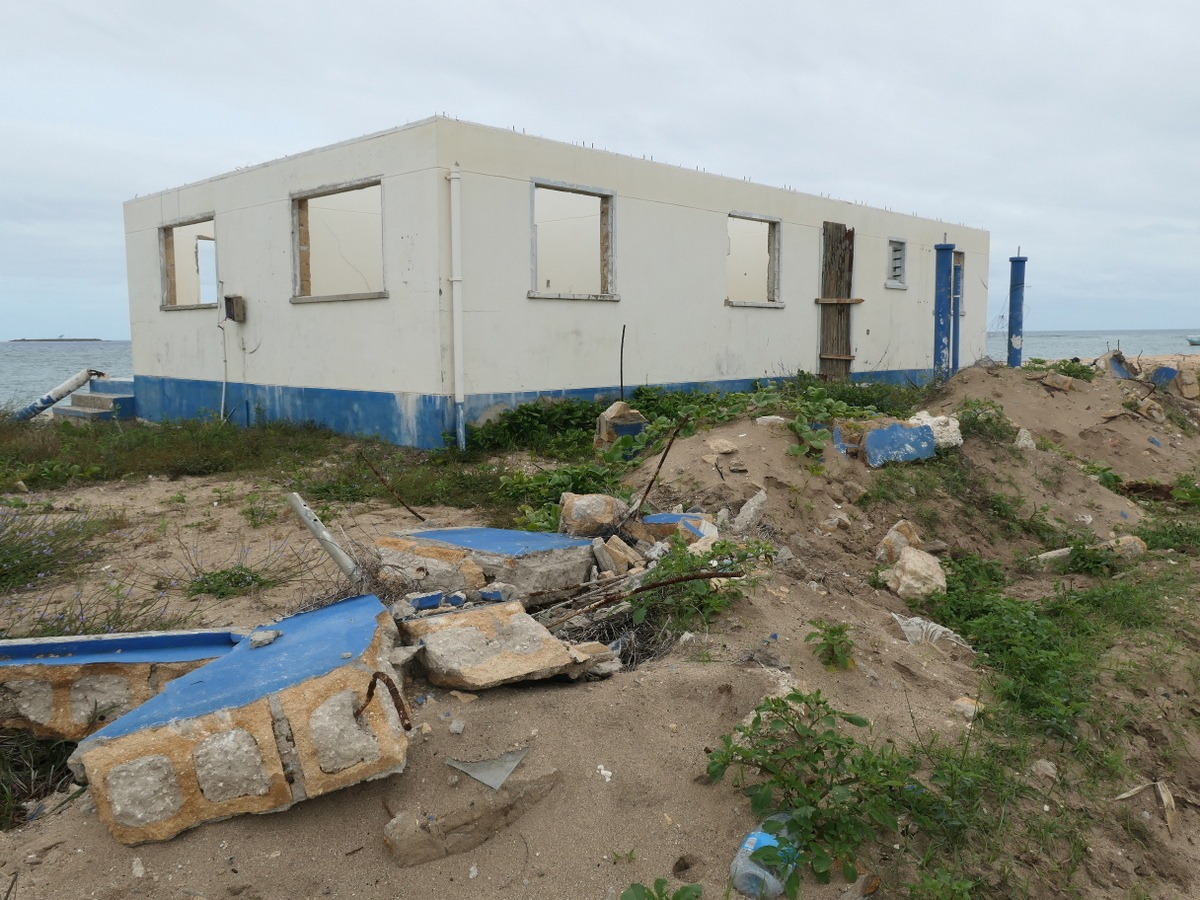
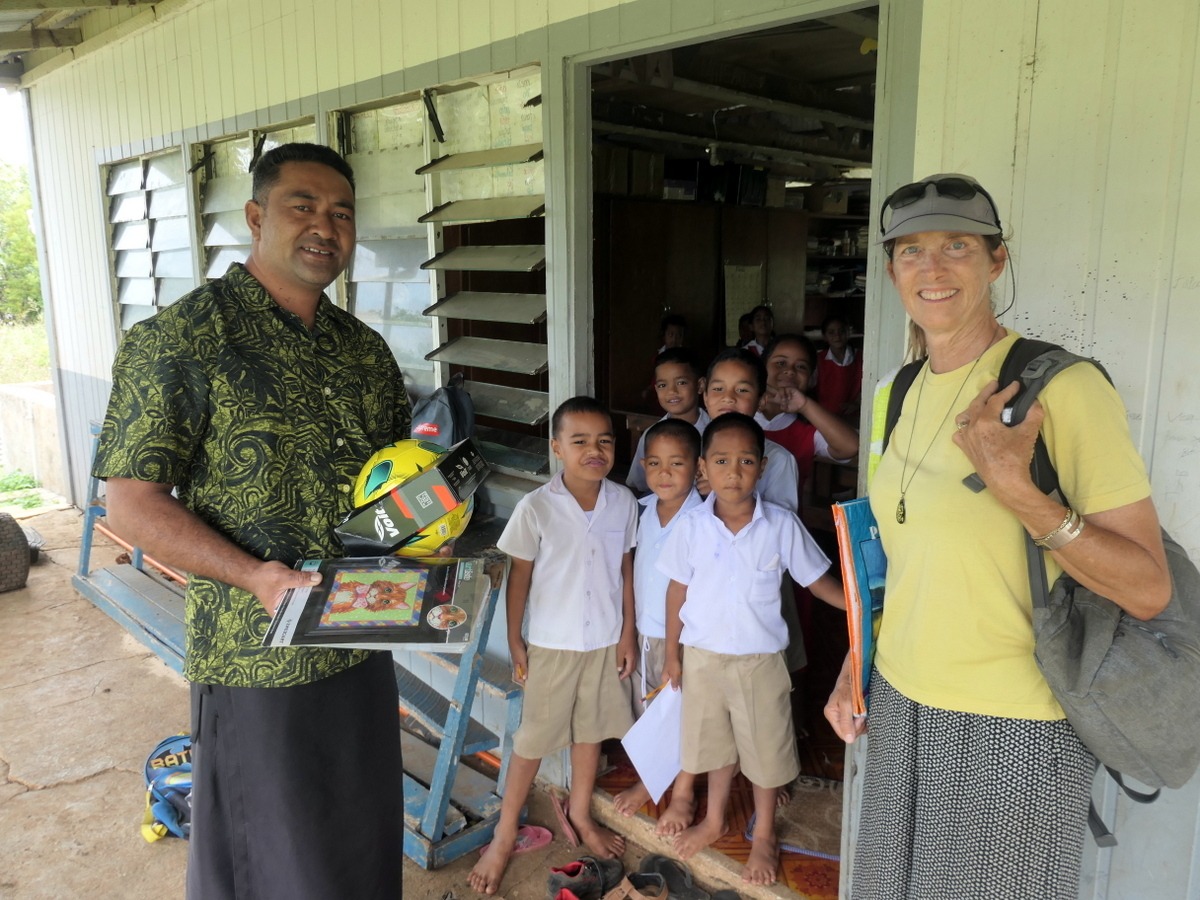
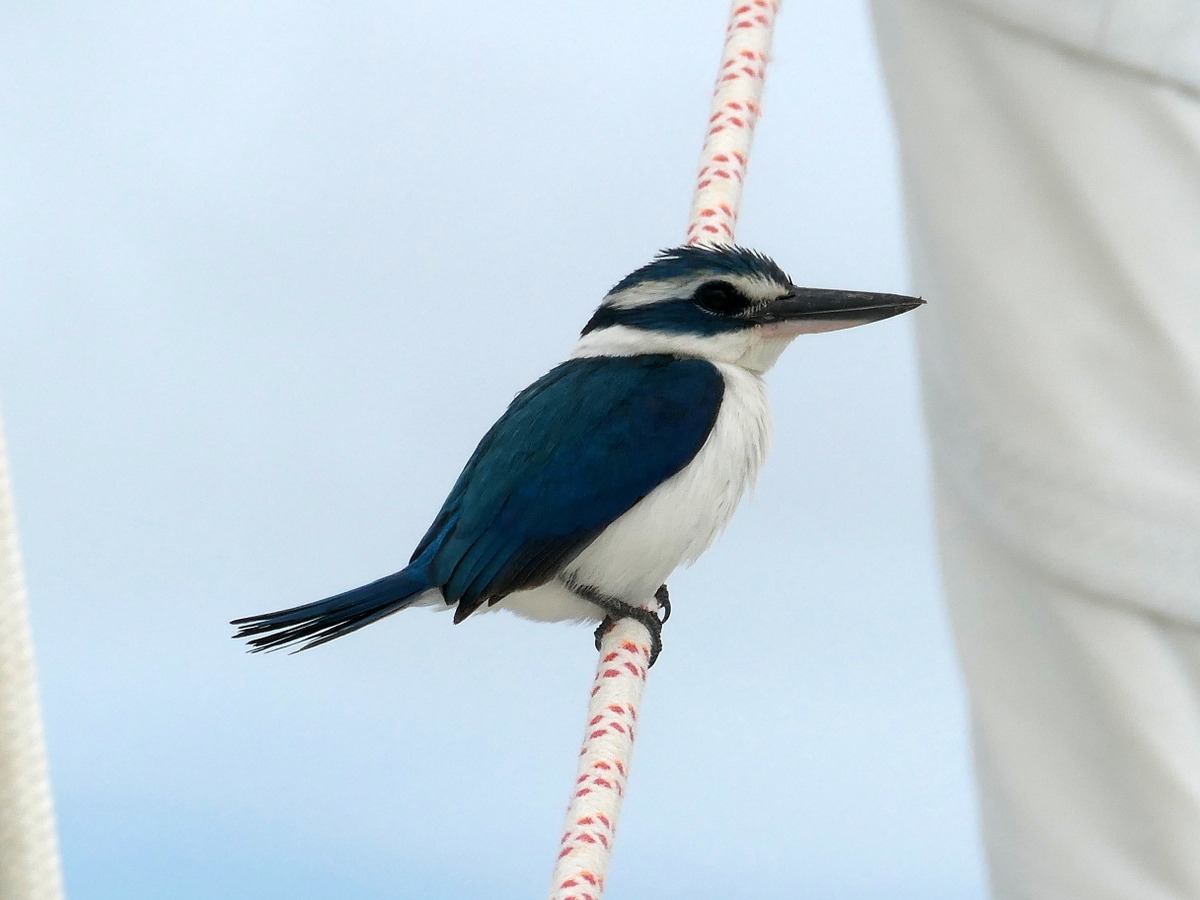
Just one mile across the channel from Nomuka is tiny Nomuka Iki island. It was devasted by the tsunami.
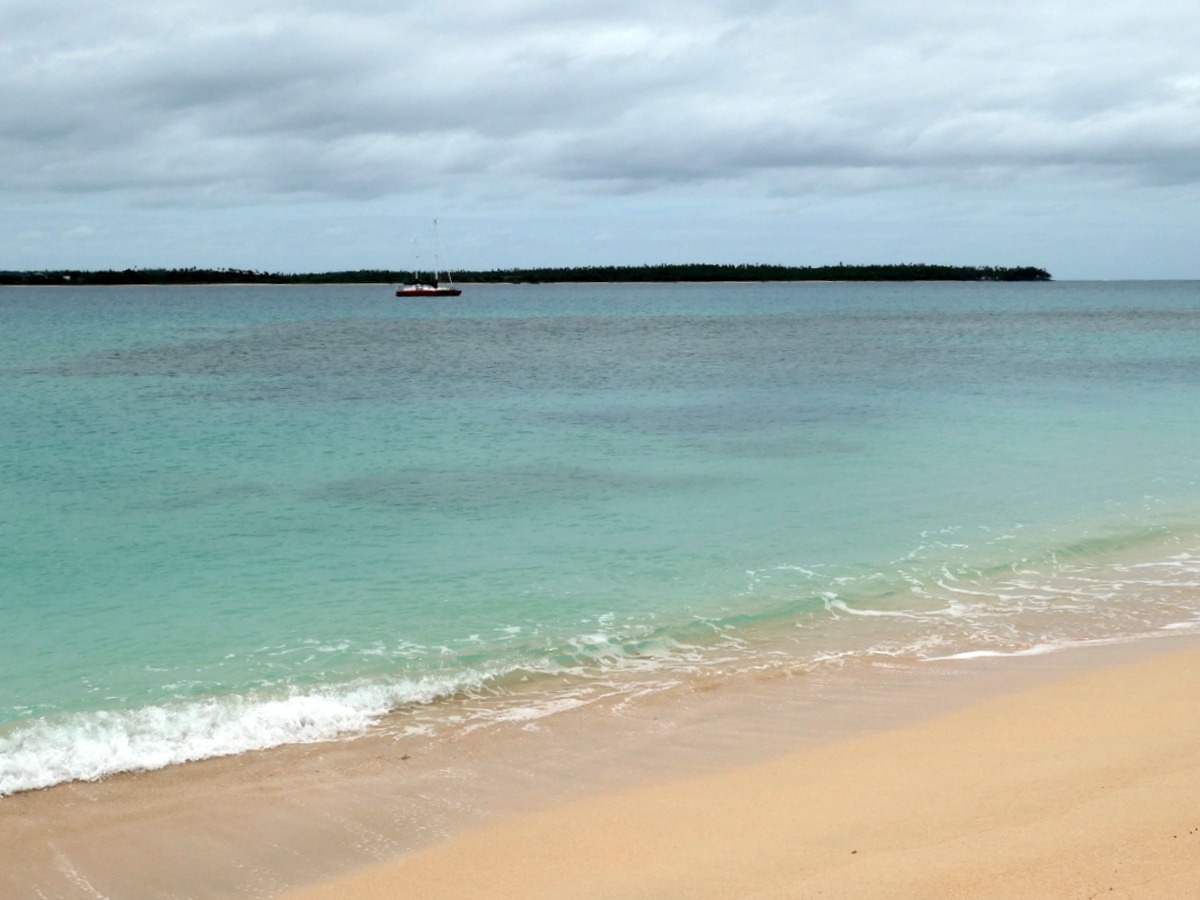
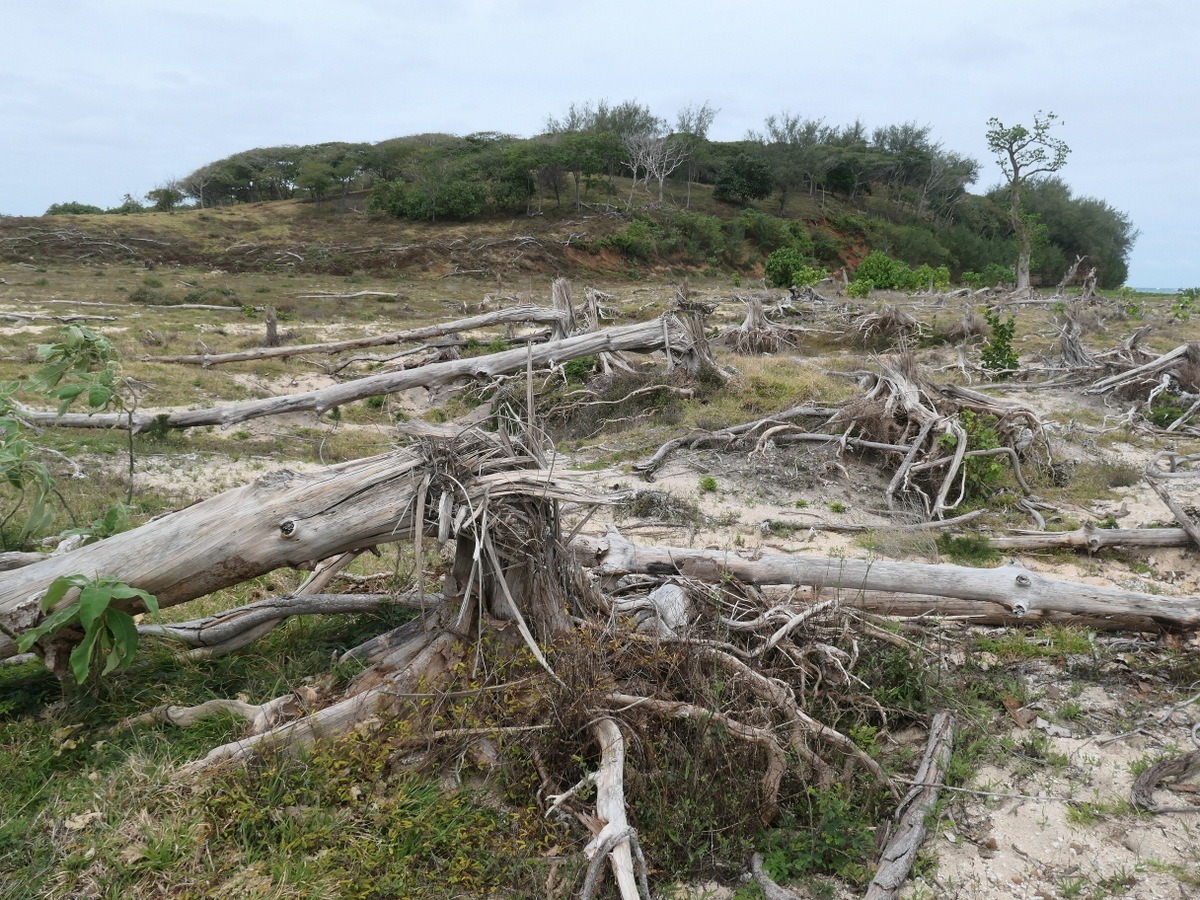
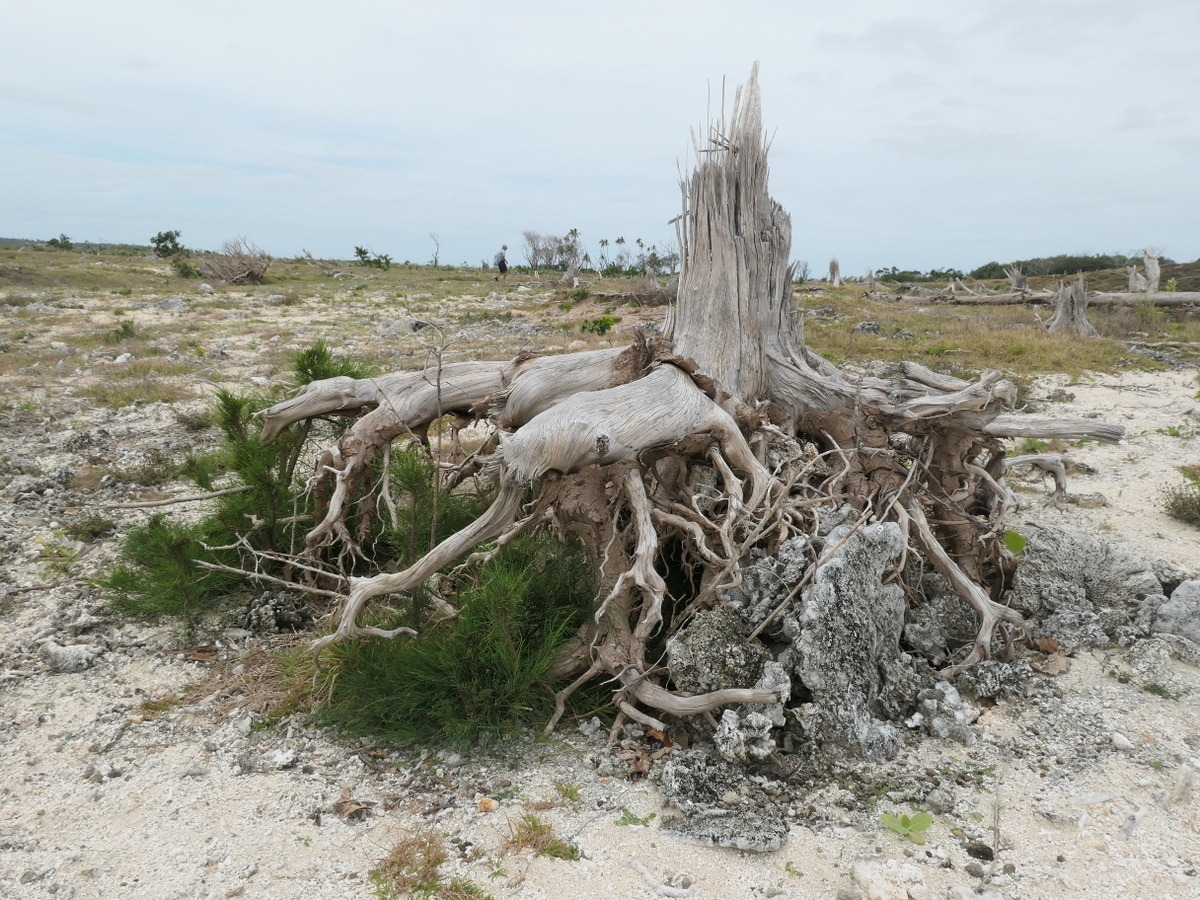
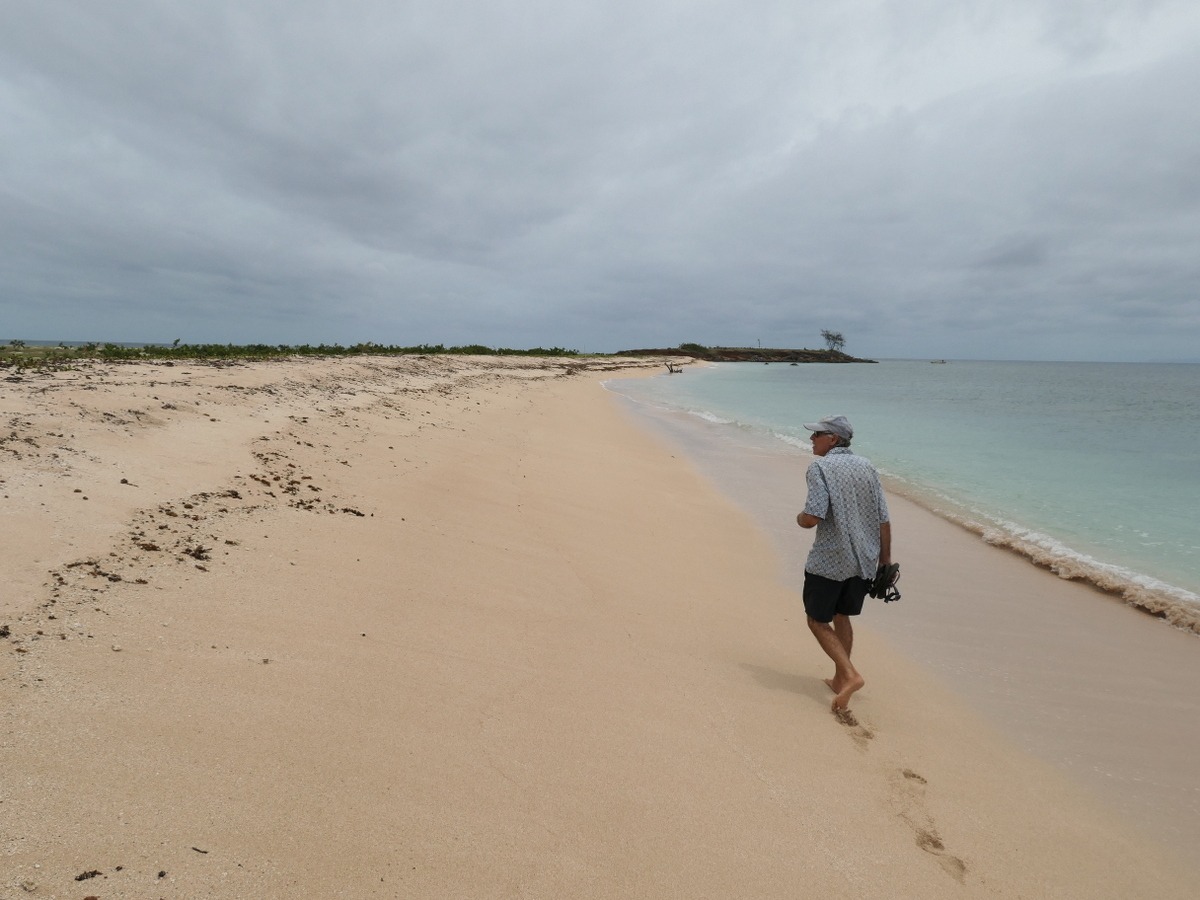
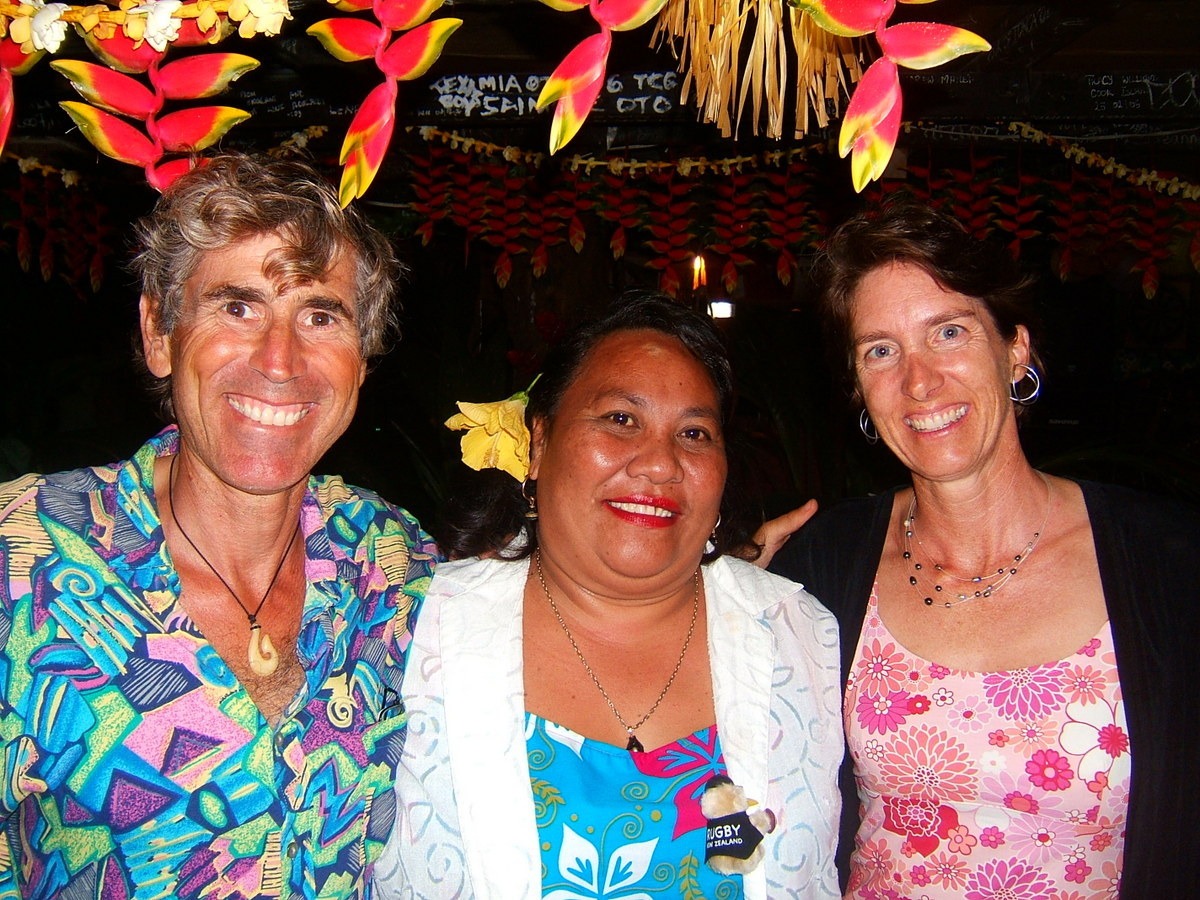
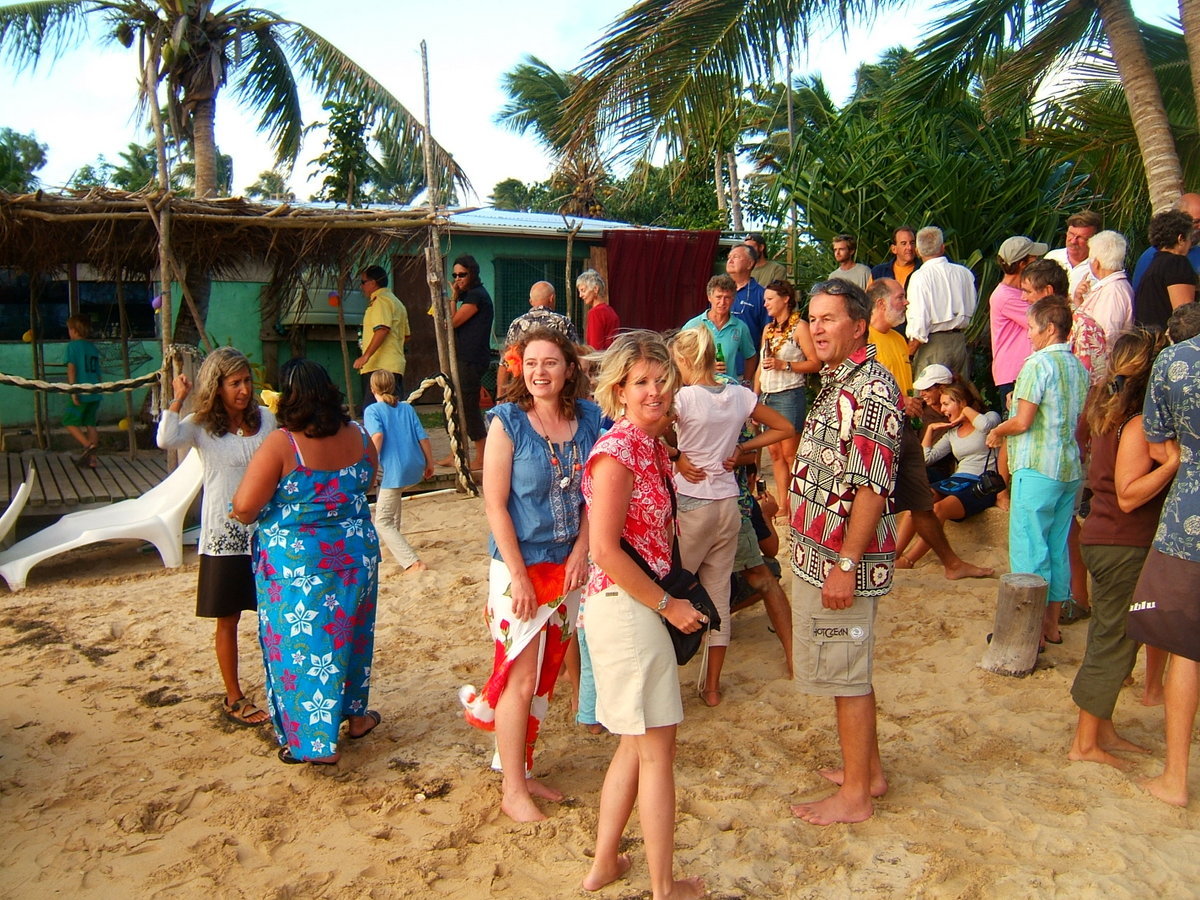
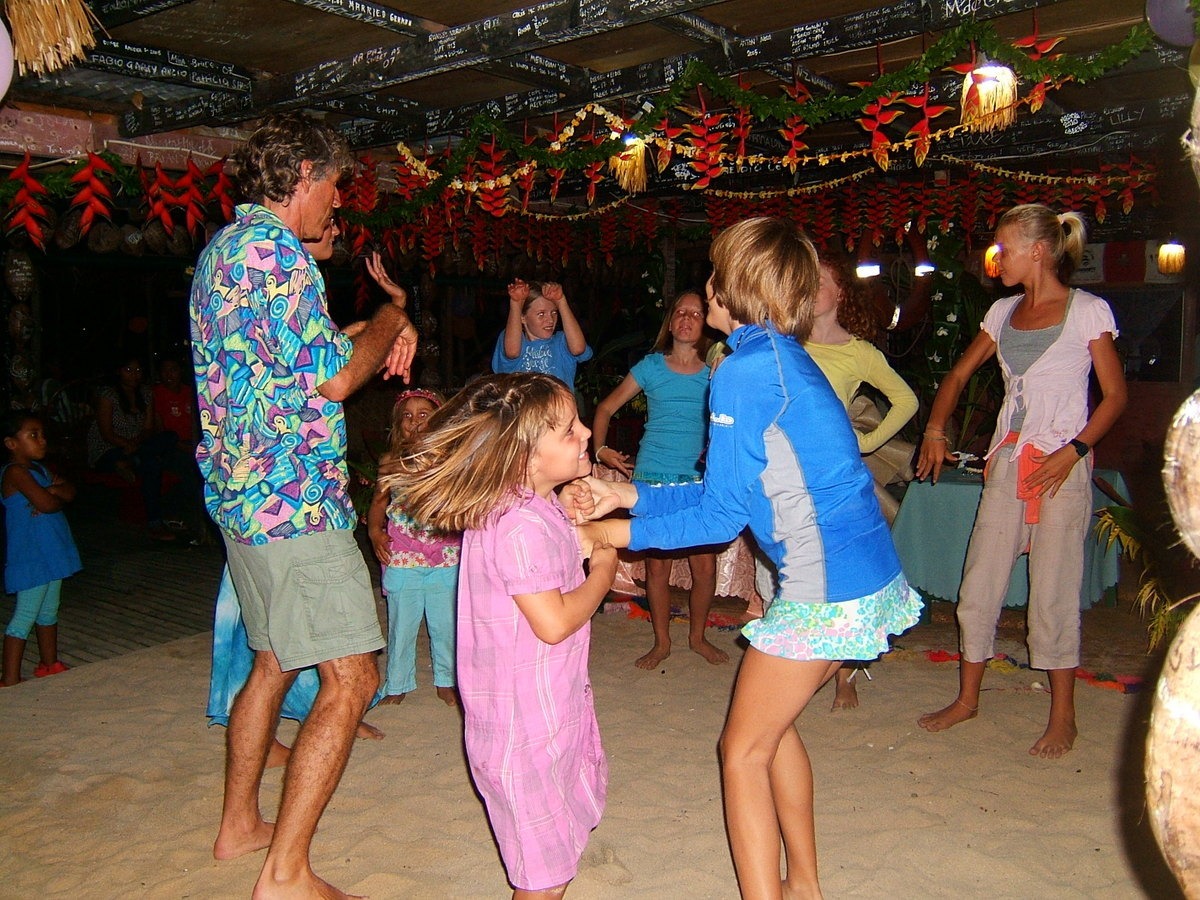
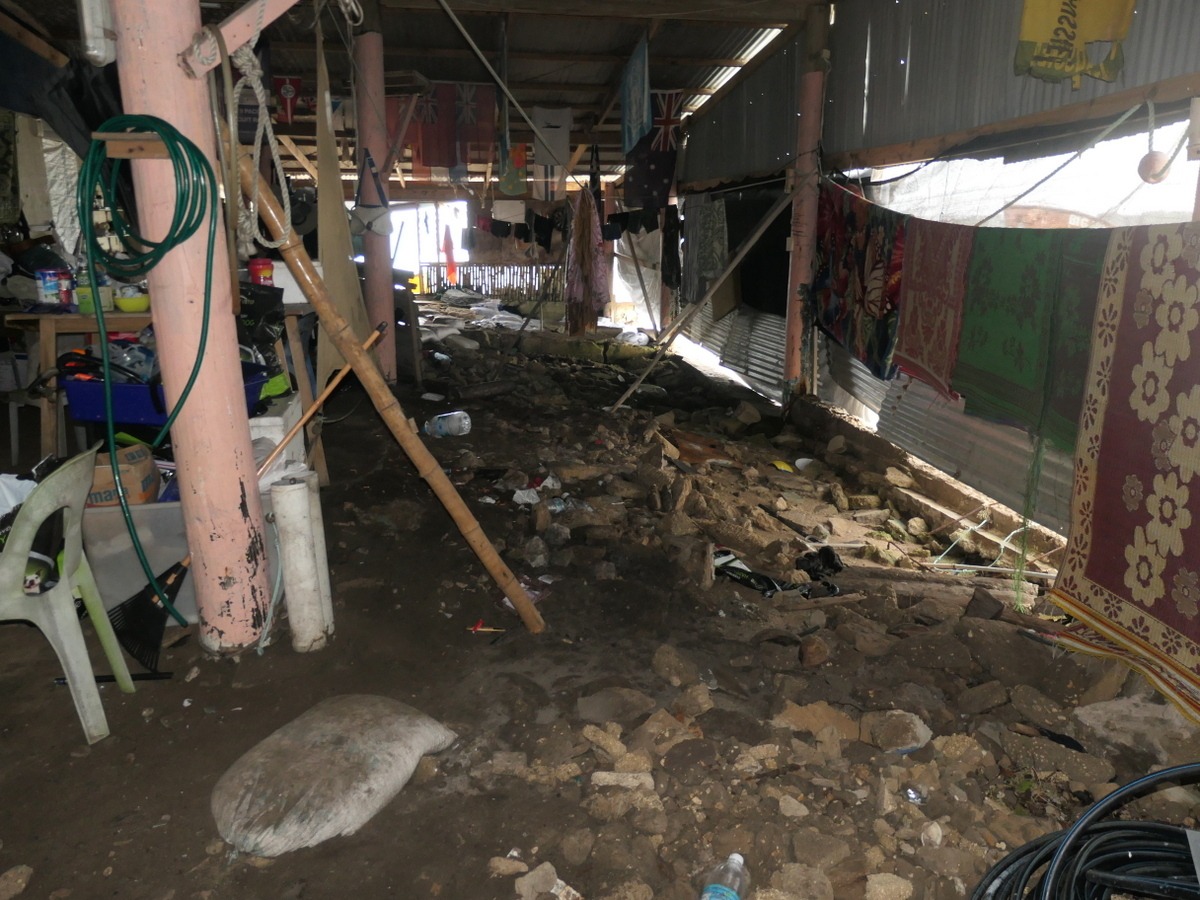
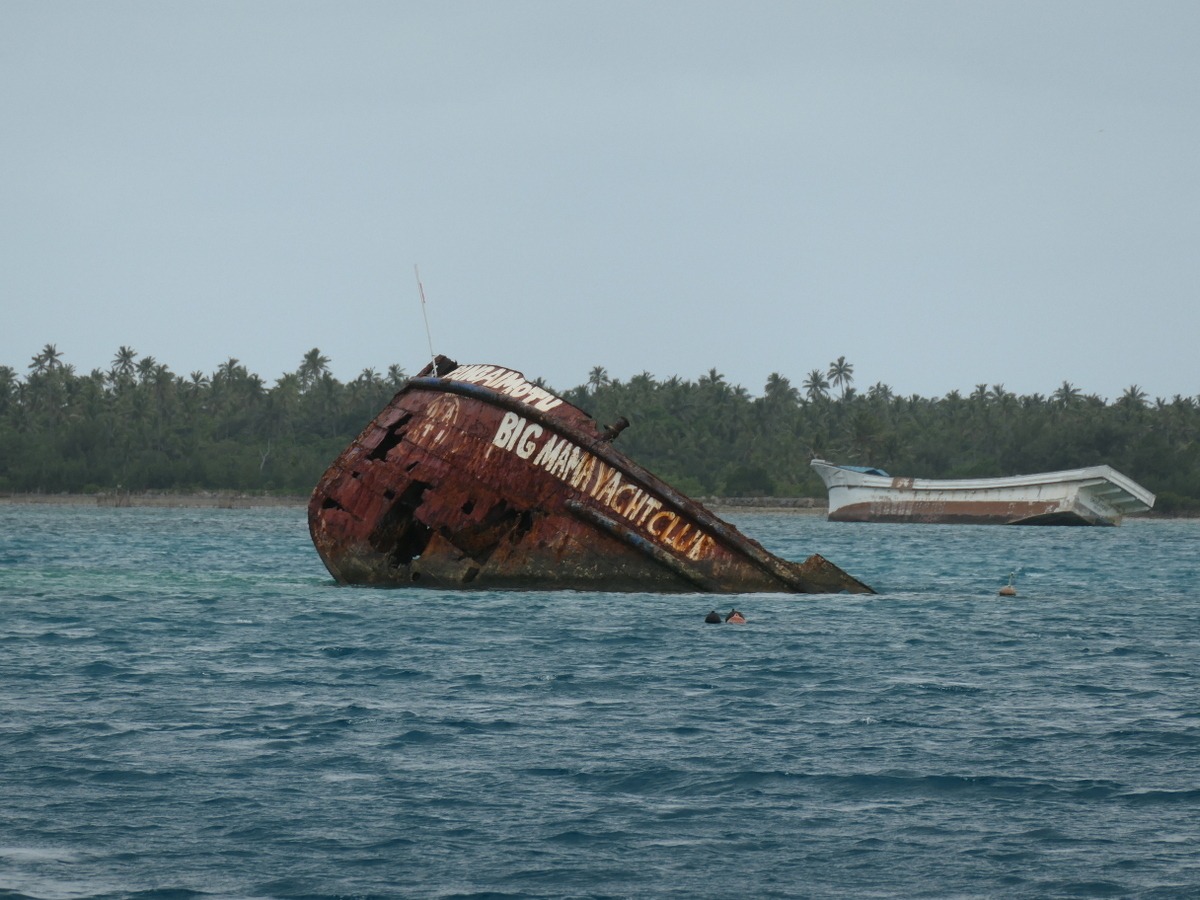
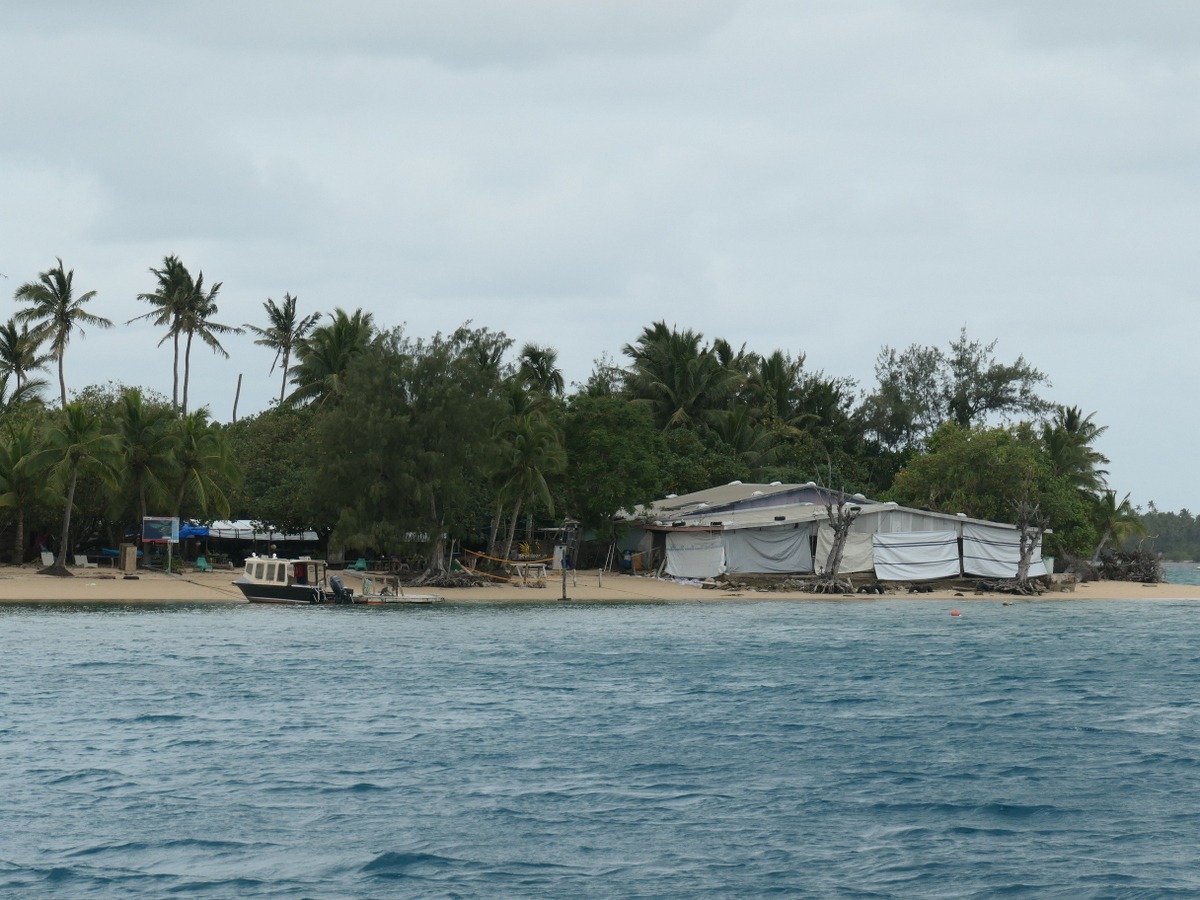
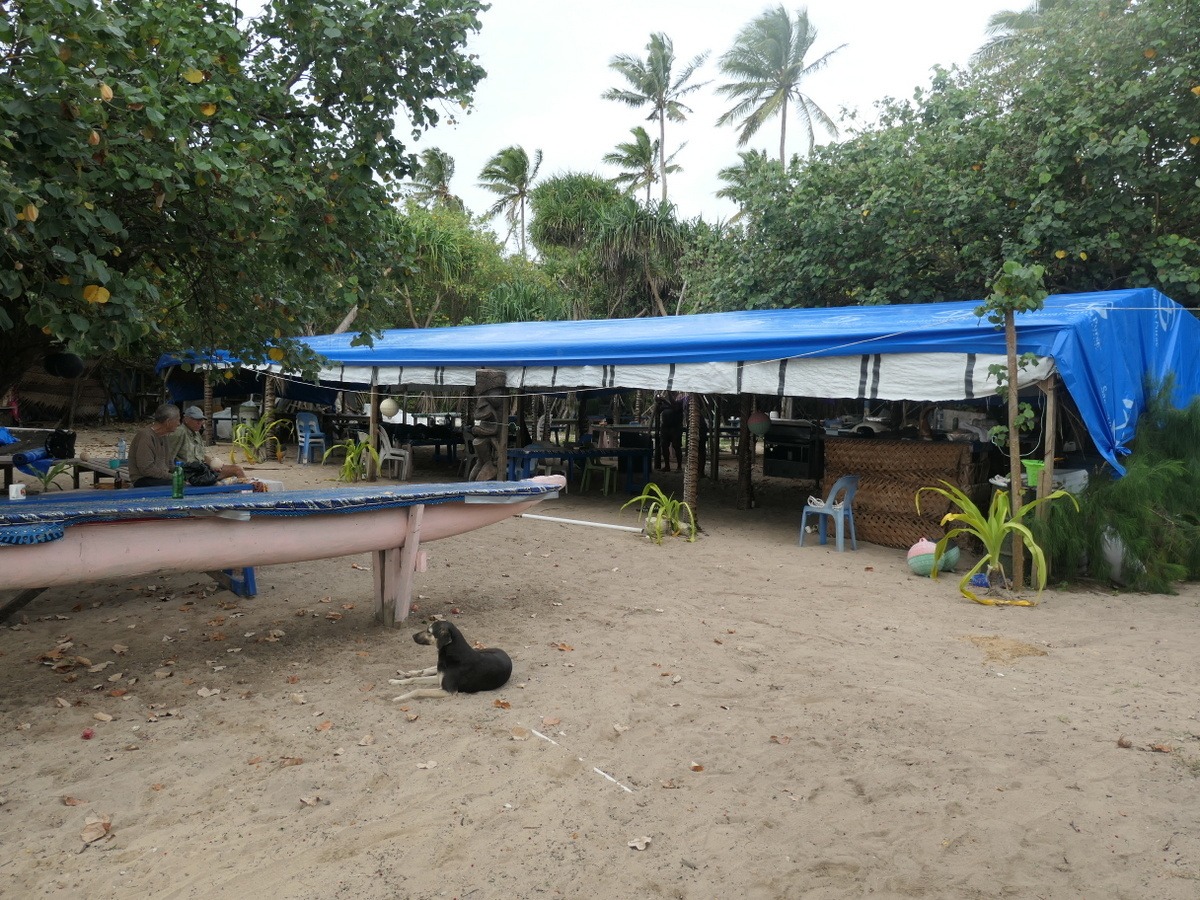
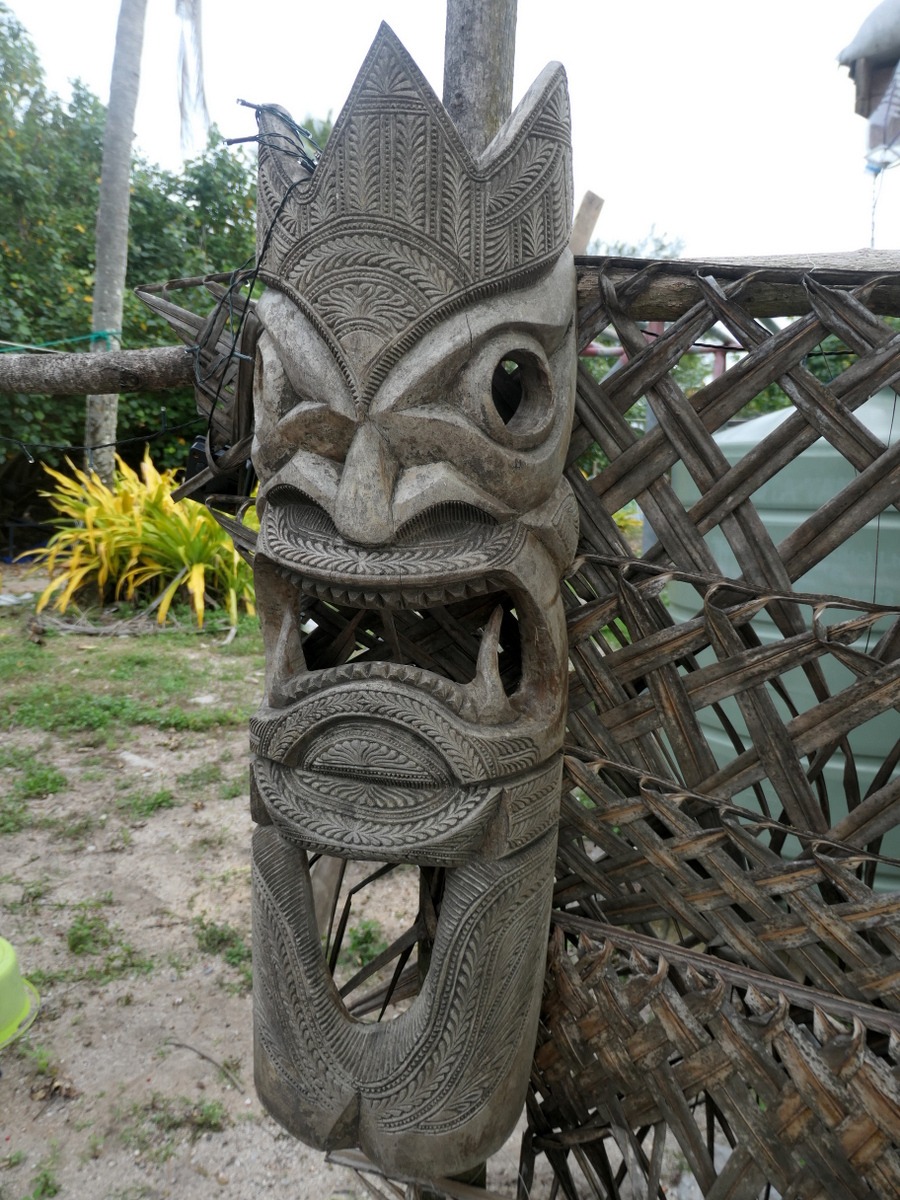
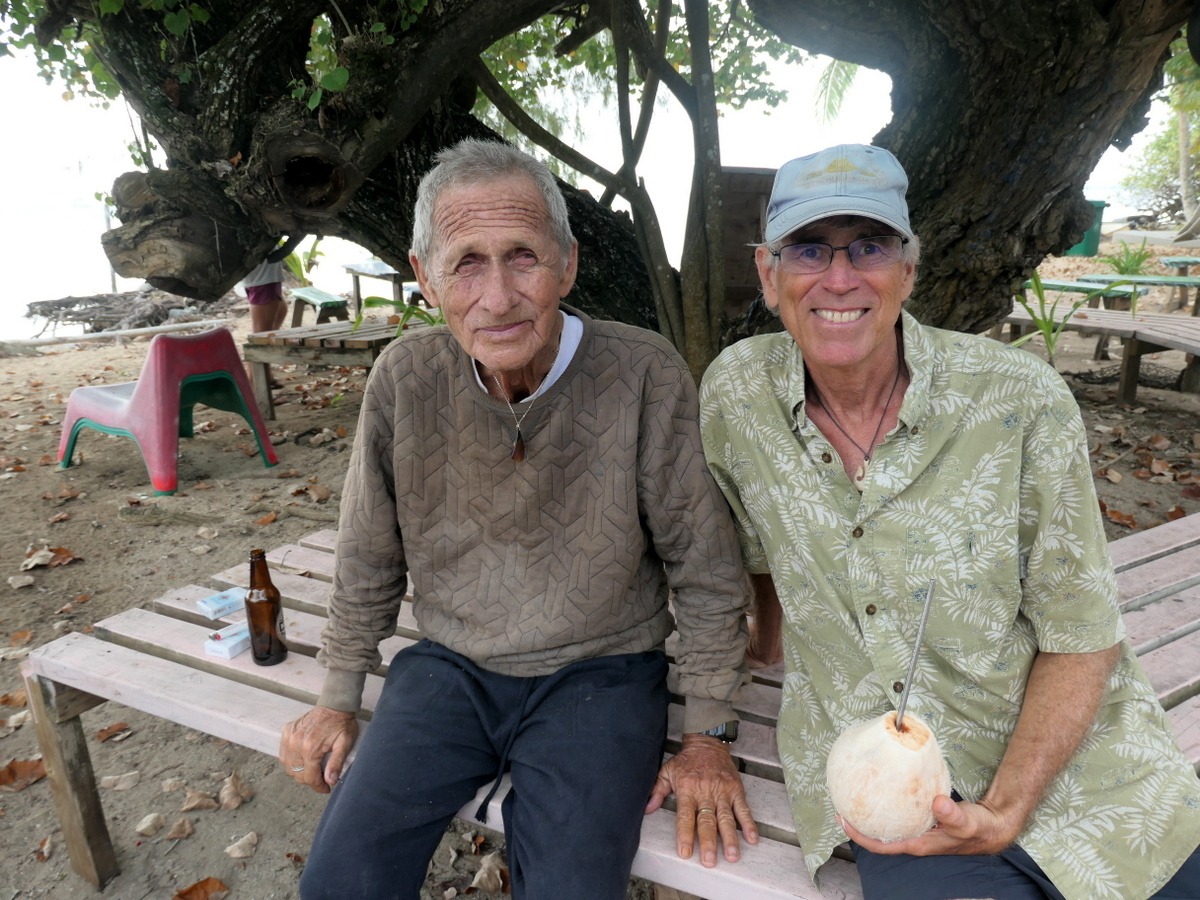
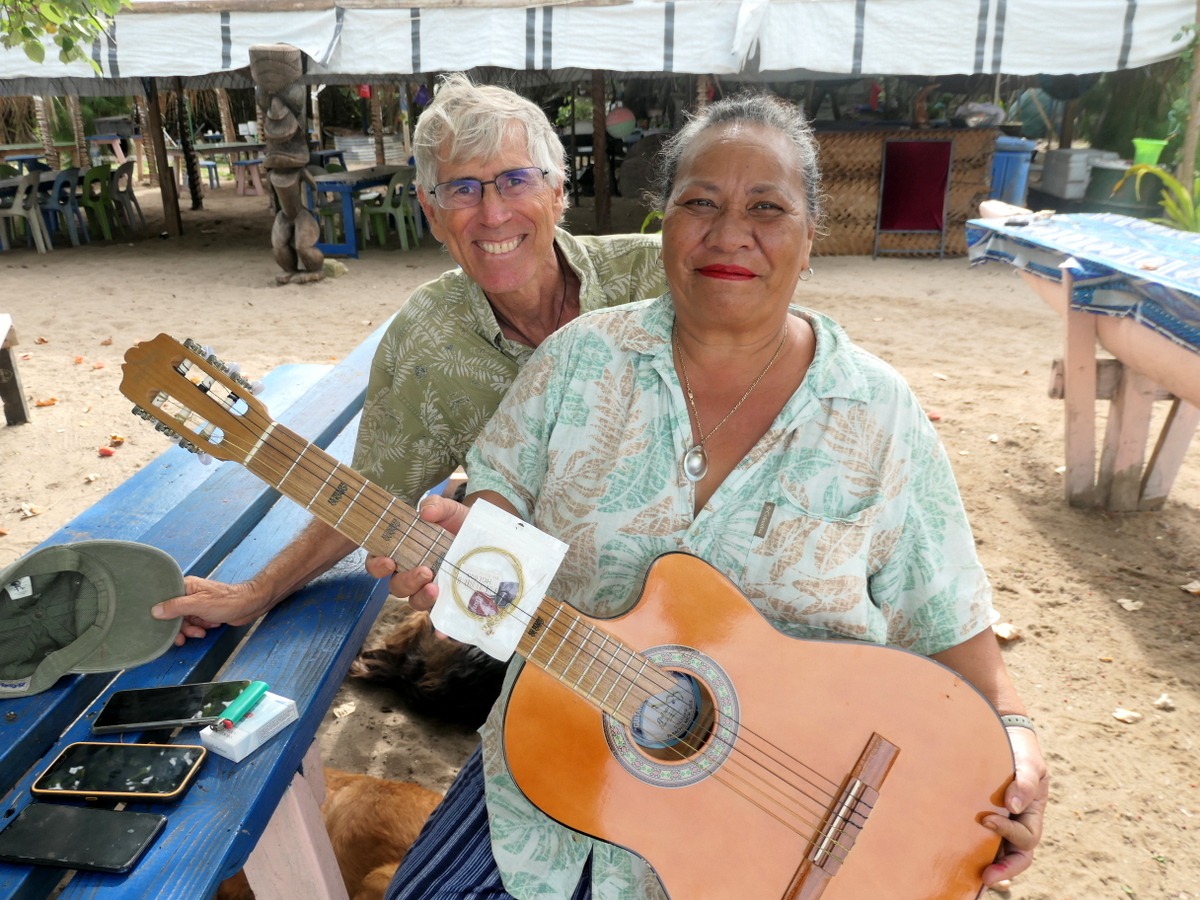
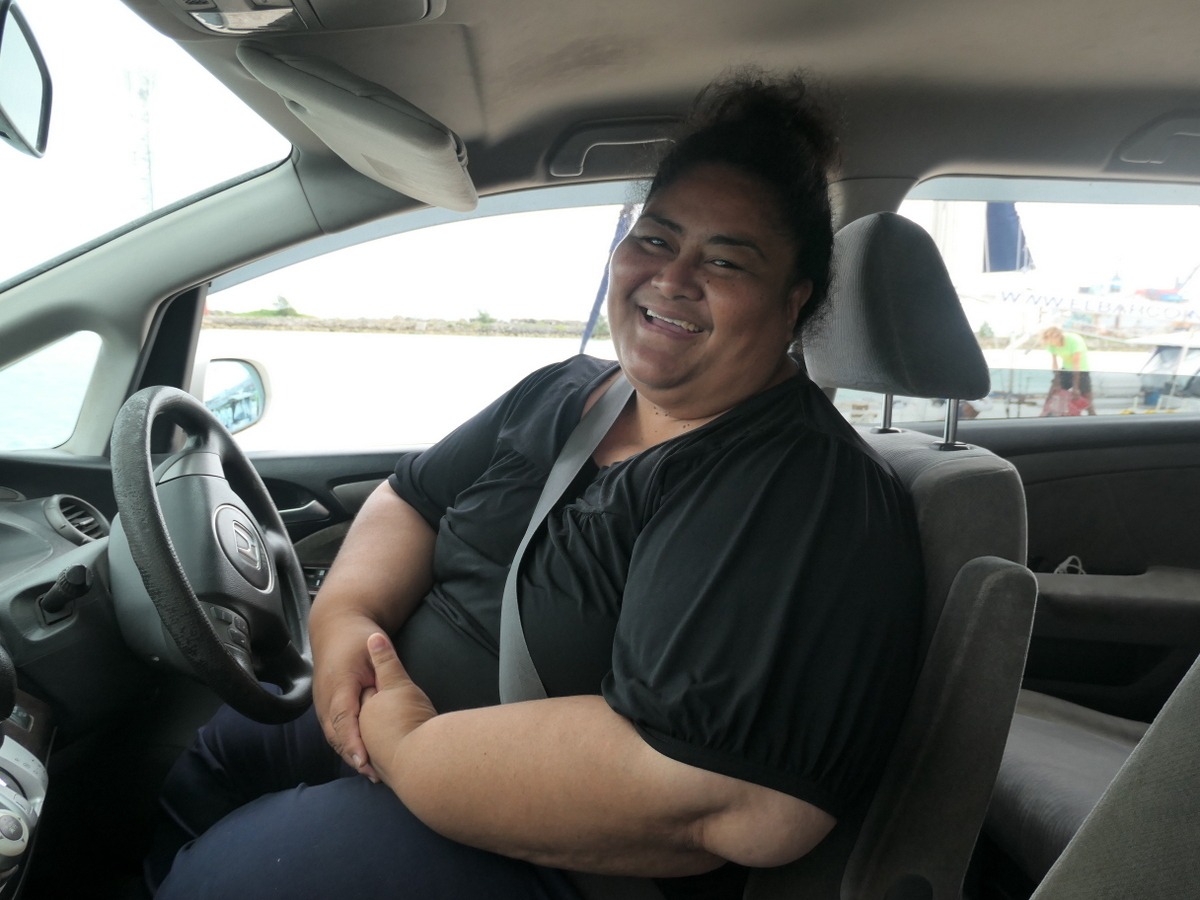
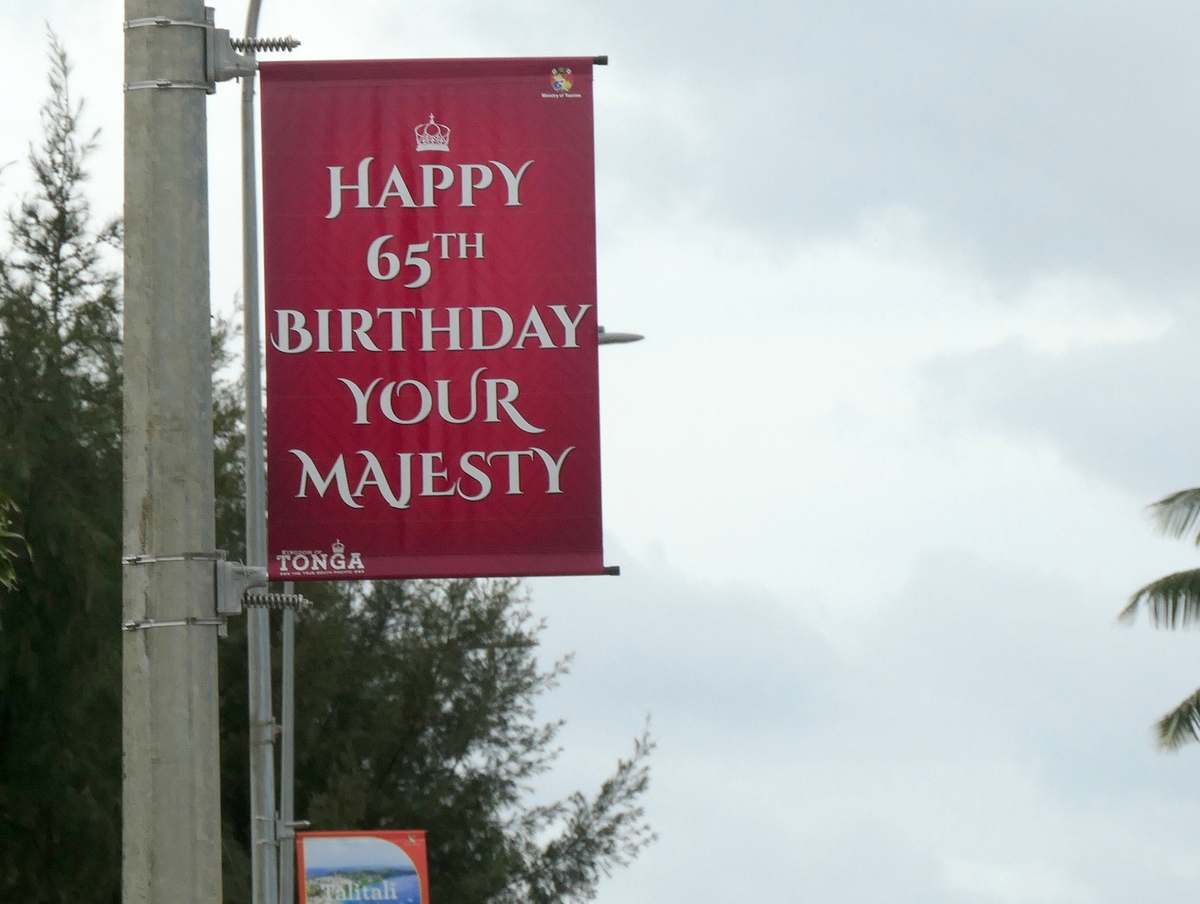
It’s only 60NM from the south of the Ha’apai group to Tonga’s capital of Nuku’alofa, so we left very early in the morning for the easy sail and arrived just after lunch at Big Mama’s Yacht Club on the island of Pangaimotu. We had some good times with Big Mama in 2010 — she threw a huge birthday party to celebrate 40 years of the yacht club with over a hundred cruisers in attendance. Unfortunately, the club has been affected by several cyclones and was also hit hard by the 2022 tsunami. Nevertheless, Big Mama and husband Earl still warmly welcome cruisers and, though not as happening as it once was, the Big Mama Yacht Club is still a social hub for visiting sailors.
Return to Minerva
After four days in Tongatapu, the forecast looked good for our jump to New Zealand via Minerva Reef. The weather gods were kind and it was a beautiful sail in light air with the spinnaker up for much of the way.
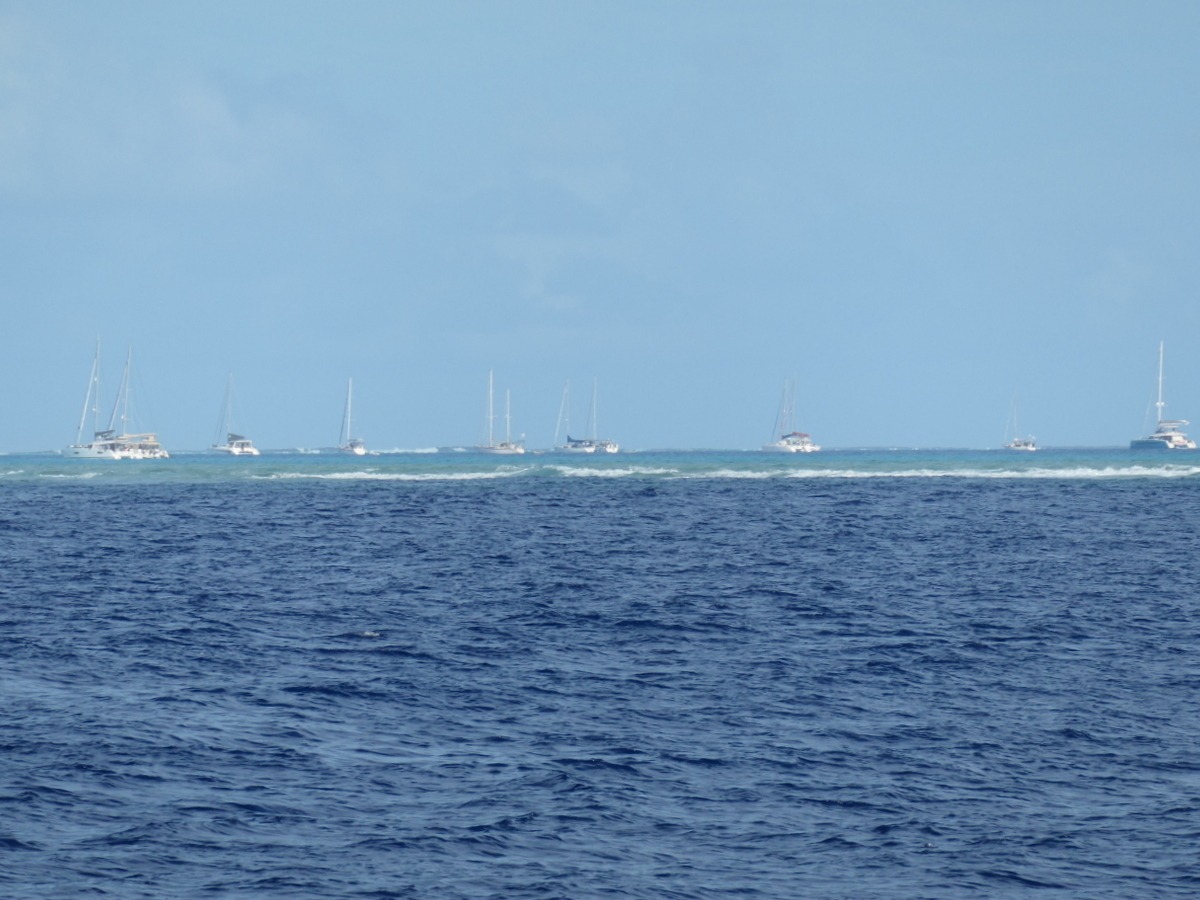
There were 16 boats anchored in Minerva when we arrived. Because of Bruce’s good passage planning we arrived just before a weather system moved in. Soon the wind was blowing in the steady 20’s, gusting over 30. Since it was rainy and unsettled weather, we spent time reading my journal from our previous visits. It was nice to have the time to re-read about our engagement and marriage at Minerva in 2009 and look at the photos again.
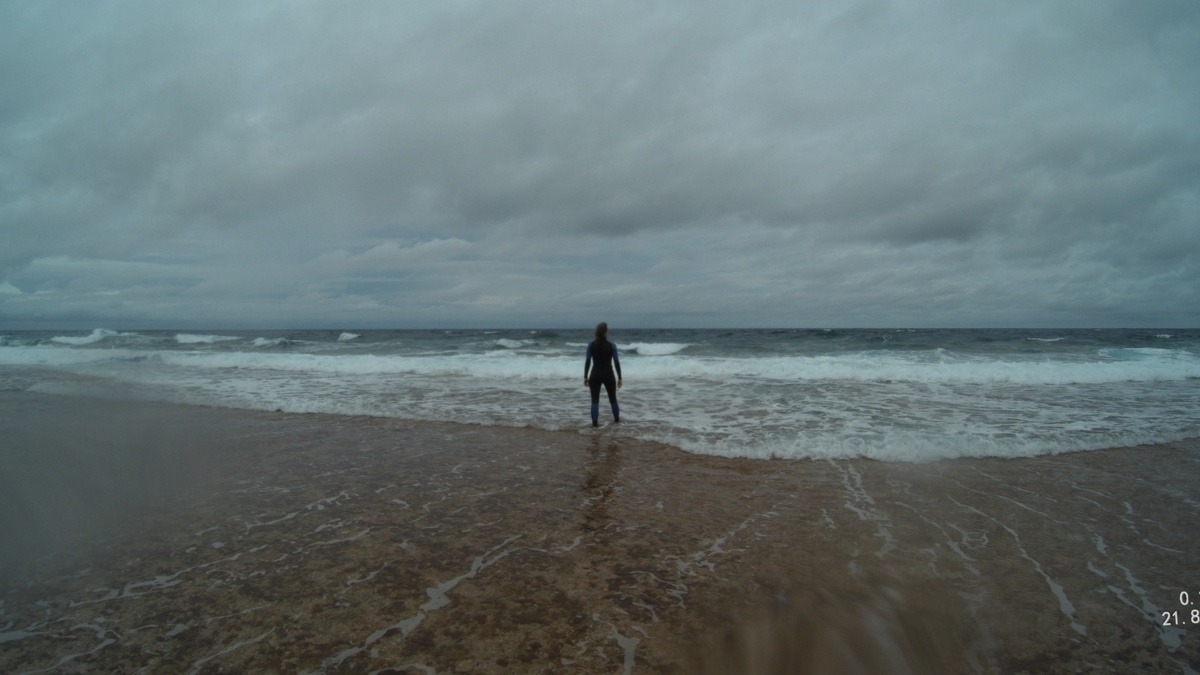
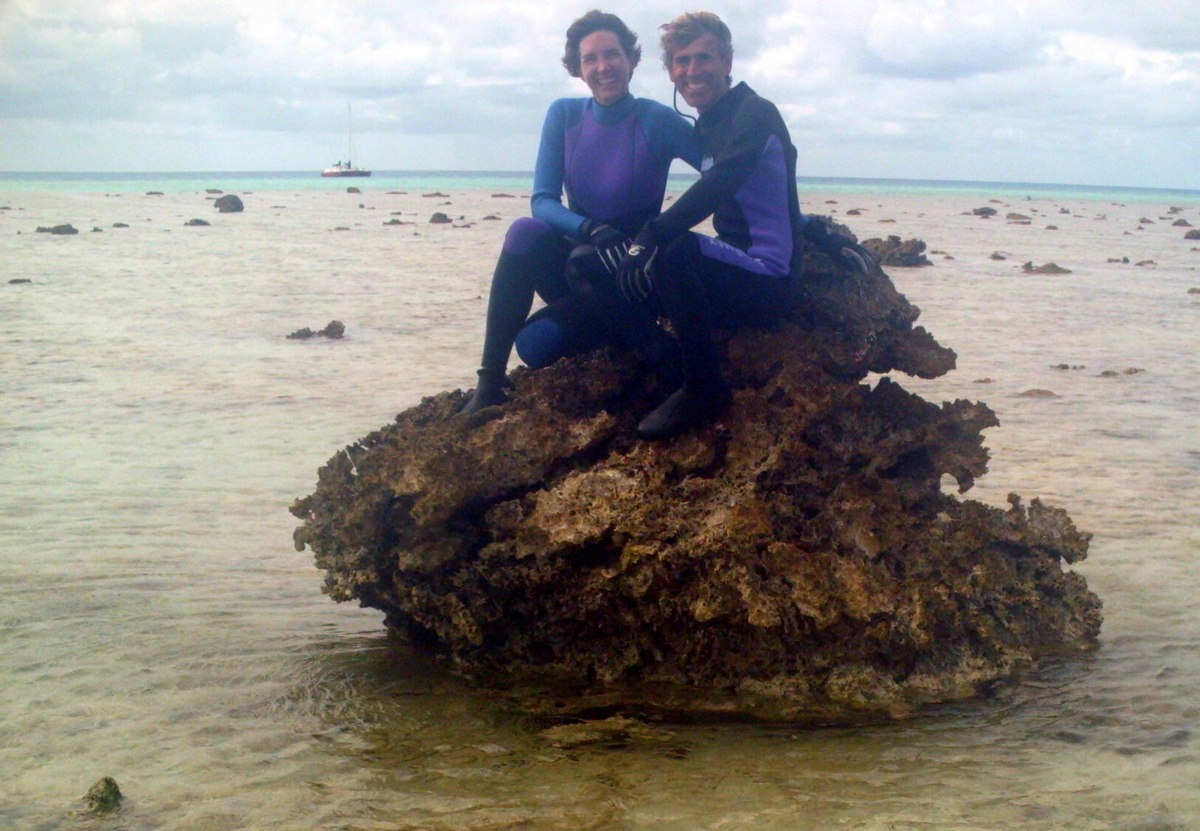
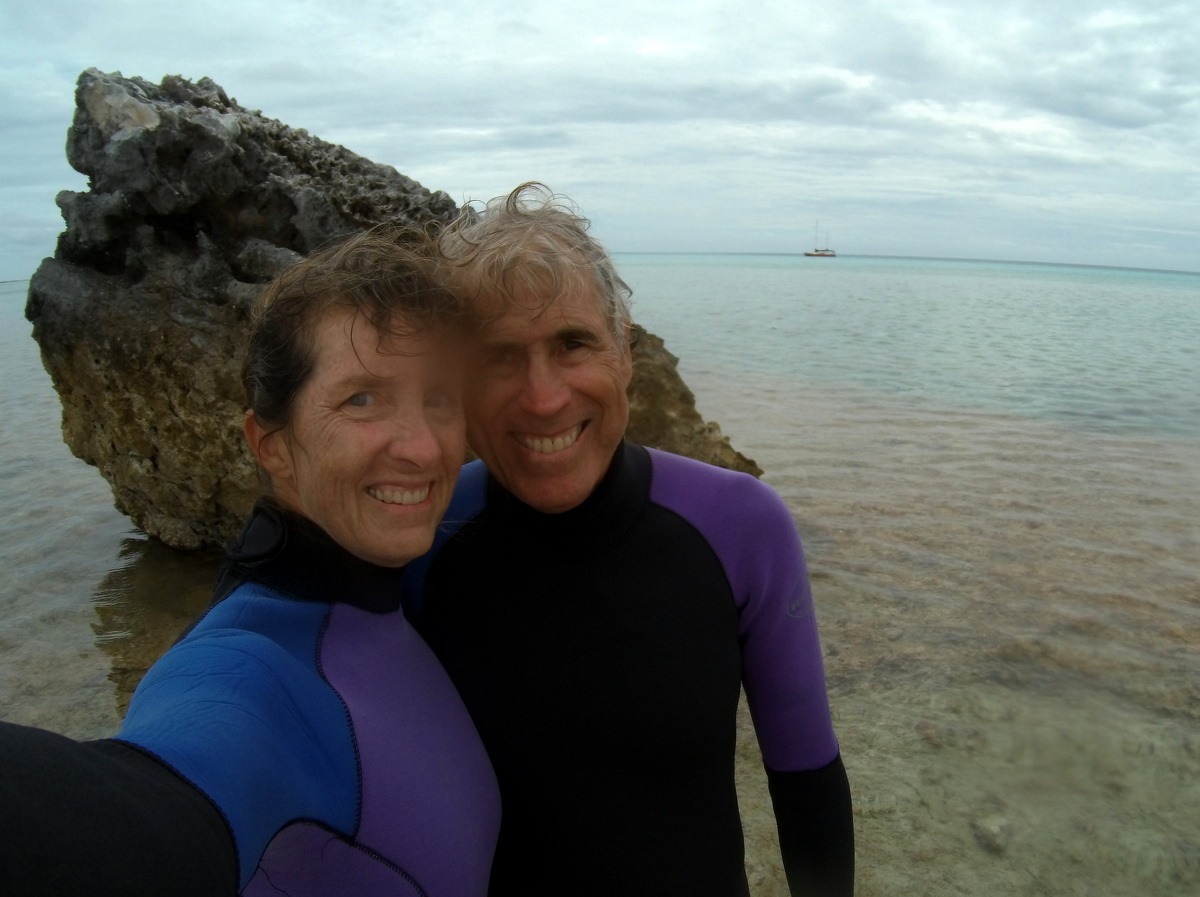
After 4 days of hunkering down, the weather cleared, and we got busy enjoying all that Minerva Reef has to offer.
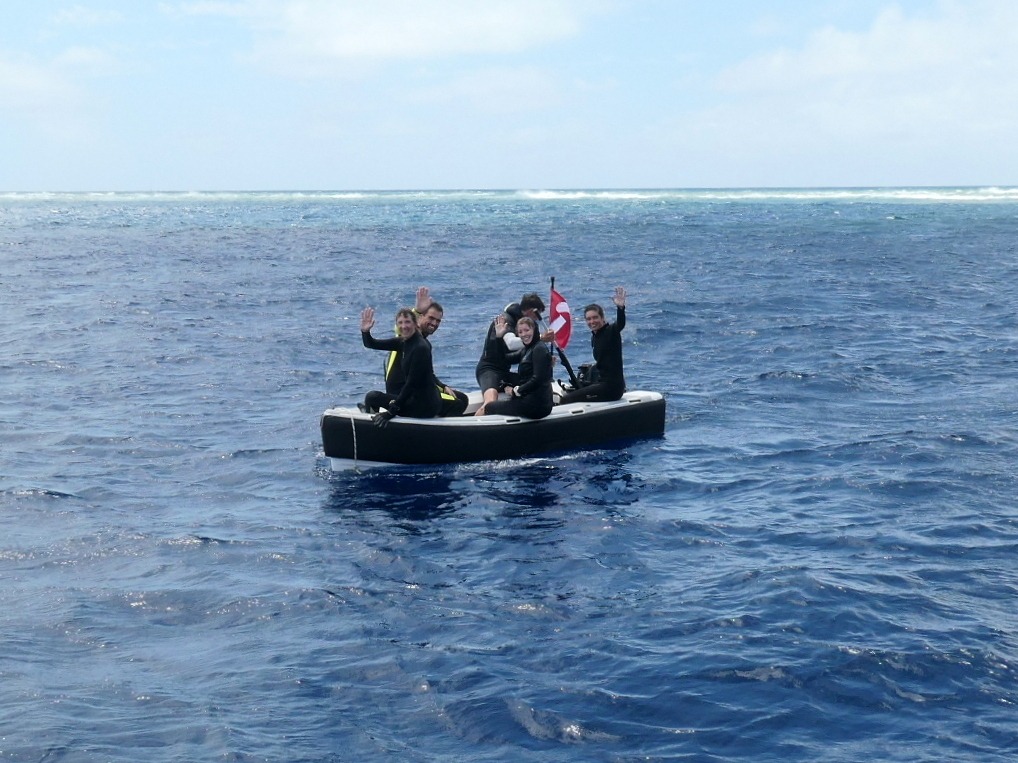
We called all the boats (6 were still there) on the VHF and offered Migration as a dive platform as we had 15 years ago. Two of the boats wanted to join us, so we piled the two couples and their gear aboard and sailed across the reef and out the pass to the spot where we had our wedding reception; an area sailors call the Blue Hole.
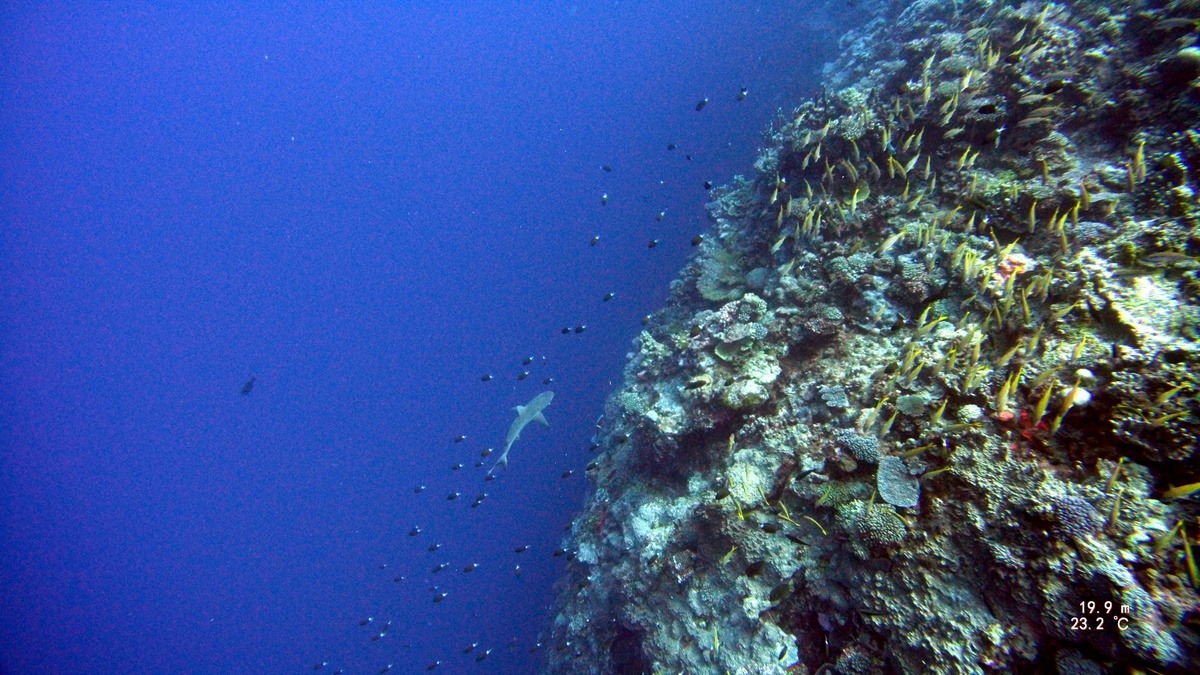
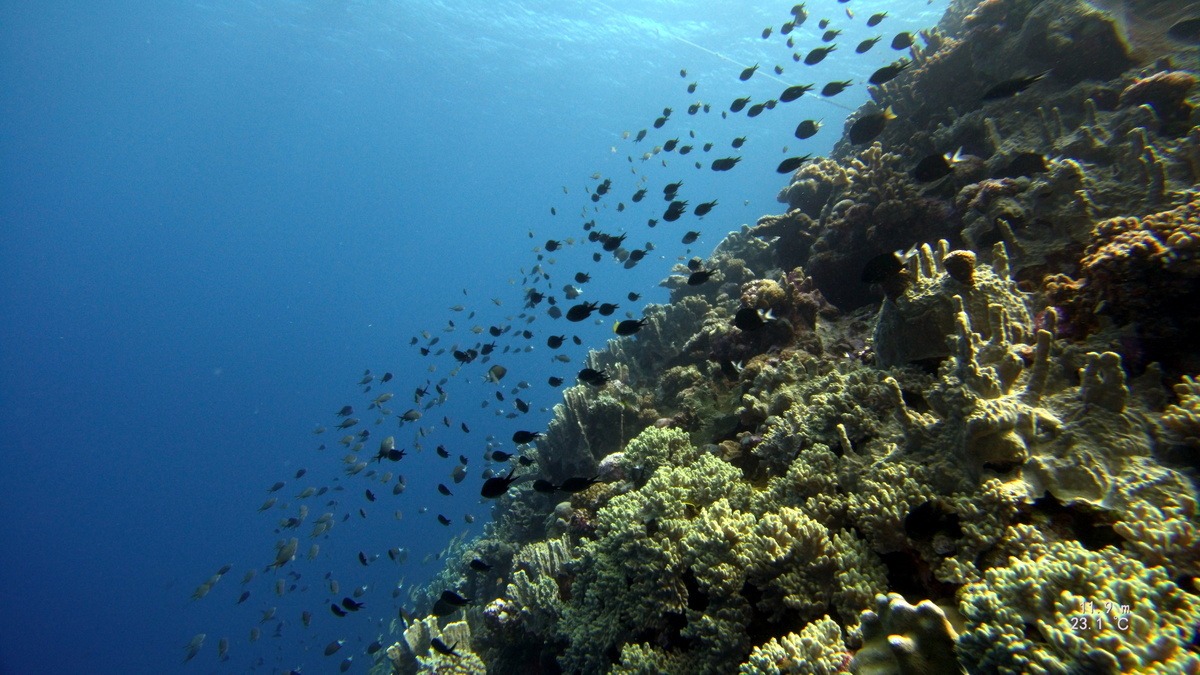
Bruce manned Migration — drifting offshore as there is nowhere to anchor — while I dove together with Rich of Pogeyan. The others snorkeled above us. The outer wall was beautiful with many, many small reef fish, a couple of sharks, a turtle, and some curious trevally who followed us around. Rich and I swam along the wall with pretty green fans and over a ridge to the blue hole. Because of the stunning blue corals, I easily recognized the area where the photos were taken of Bruce and I free diving on our wedding day. Such a nice memory and fun to see it again, still looking very much the same.
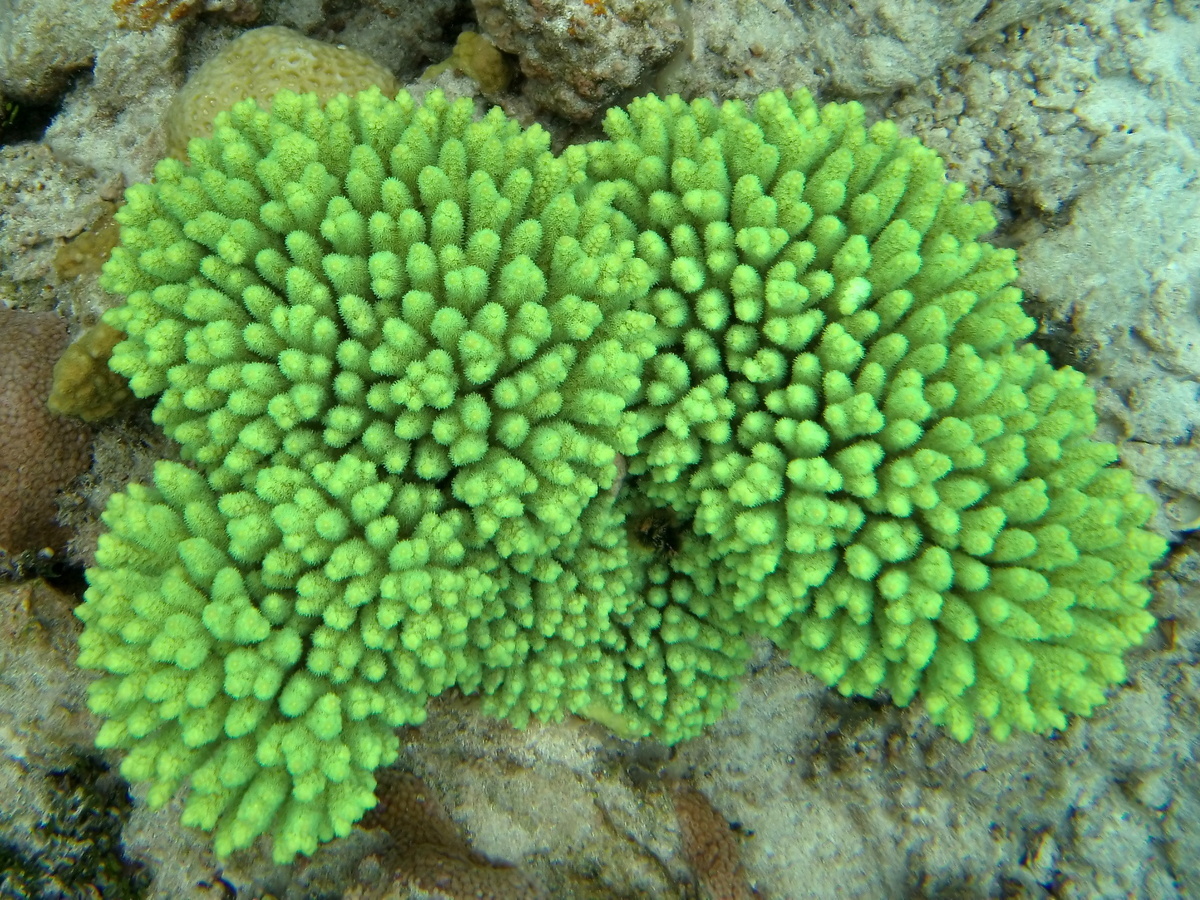
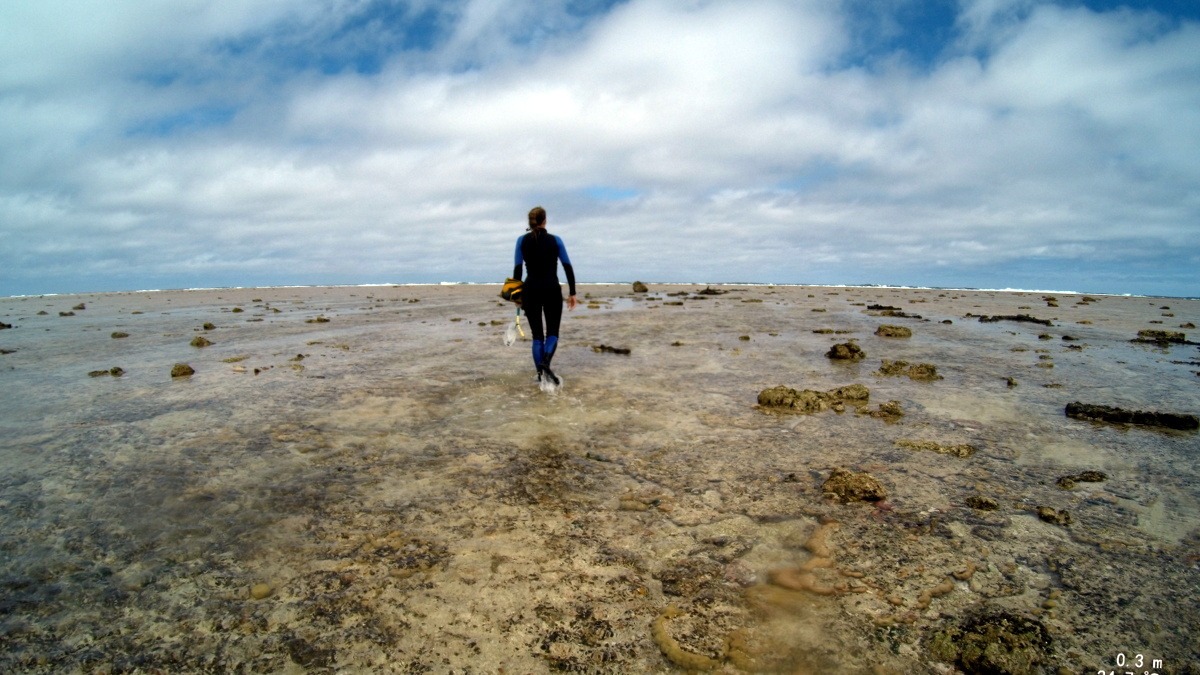
For a sunken atoll with only small patches of sand at low tide, it’s surprising how we continue to discover new and wonderful things each time we visit Minerva. This time we learned about the Parrotfish Paradise Pool. We joined Rich and Michelle on Pogeyan and sailed to the west side of the reef, then dinghied in and walked about a quarter mile to the outer reef edge. The coral was gorgeous, of course, but the best part was the school of 20 adult male parrotfish inhabiting the pool. They were big and healthy and their colors seemed super-saturated: the teal and purple hues were eye-poppingly beautiful. The pool is close to the reef edge so we would get tossed about when a big set of waves came through, then we’d have to hold position and wait until the bubbles settled before we could see again. It was very exciting!
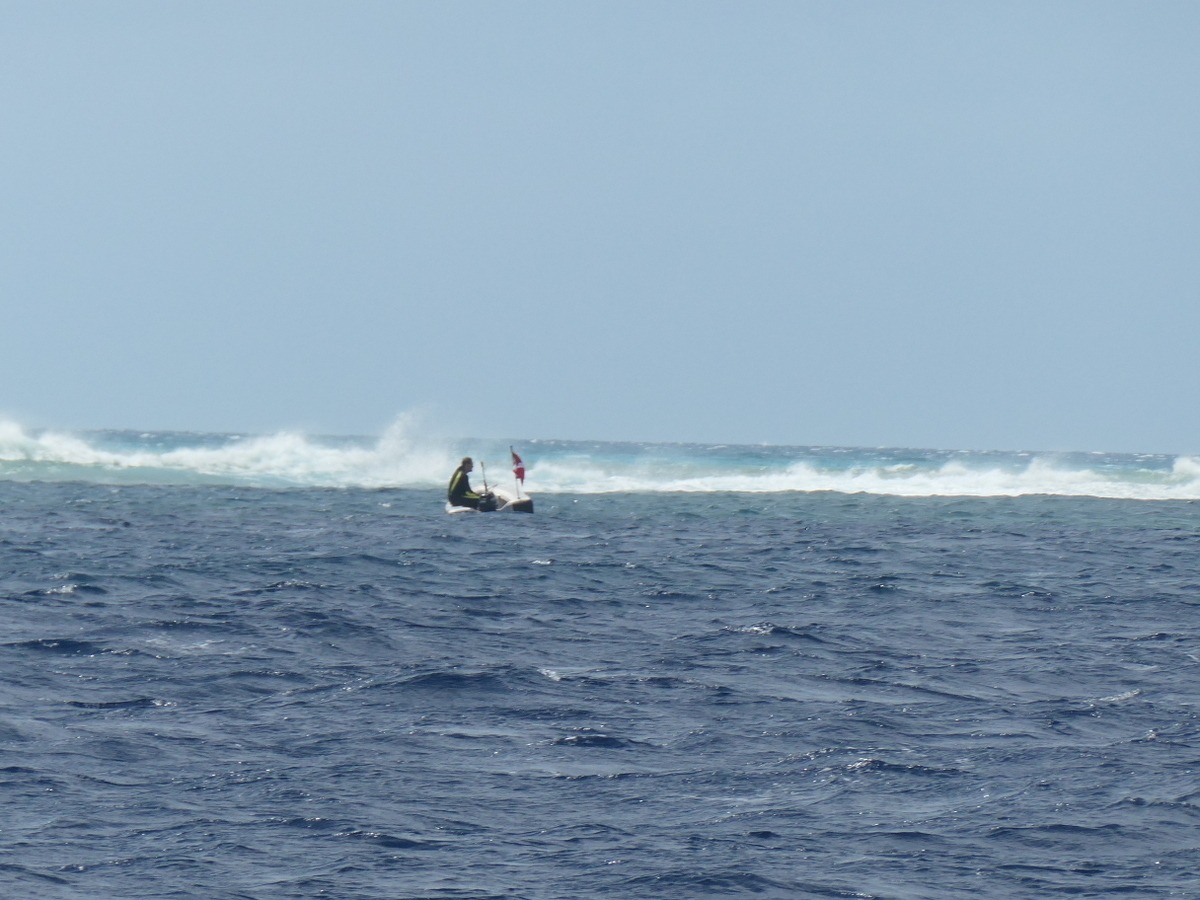
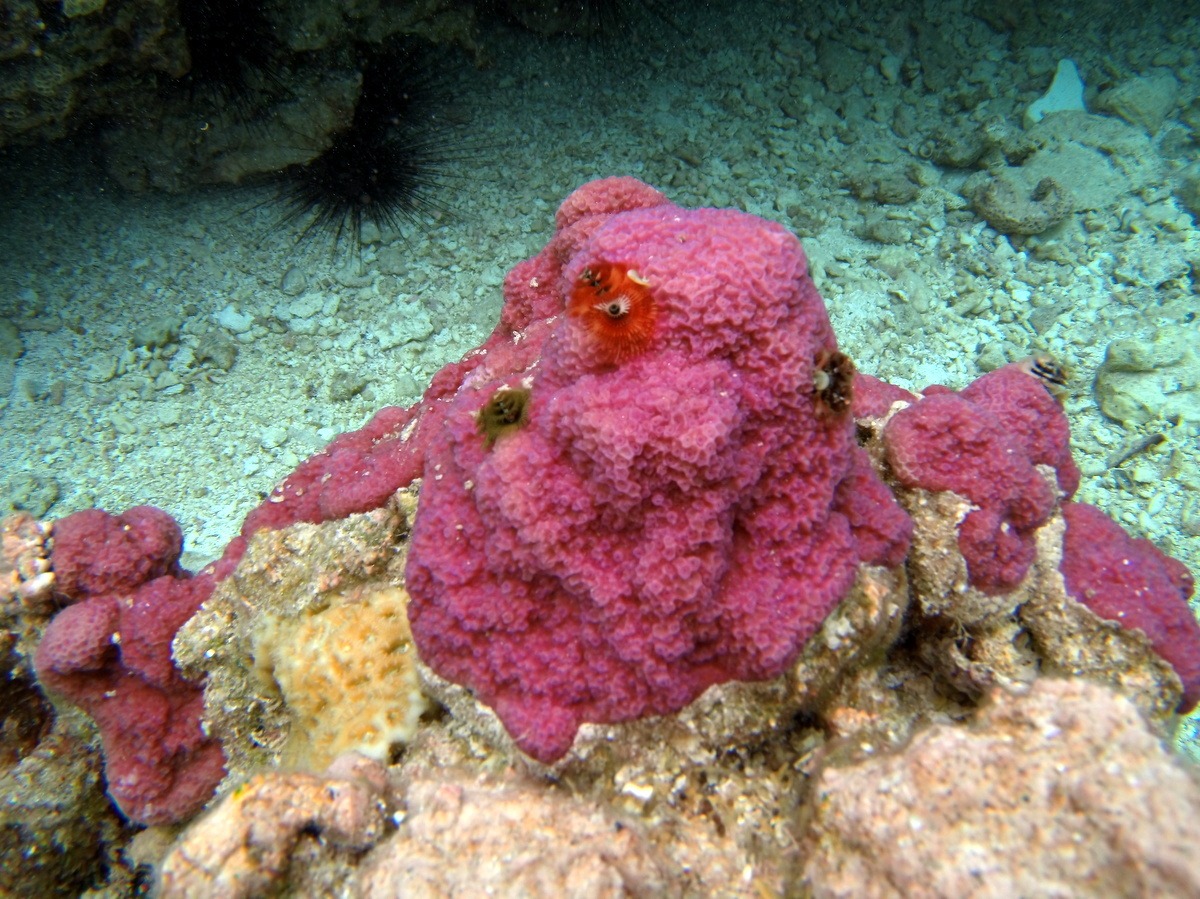
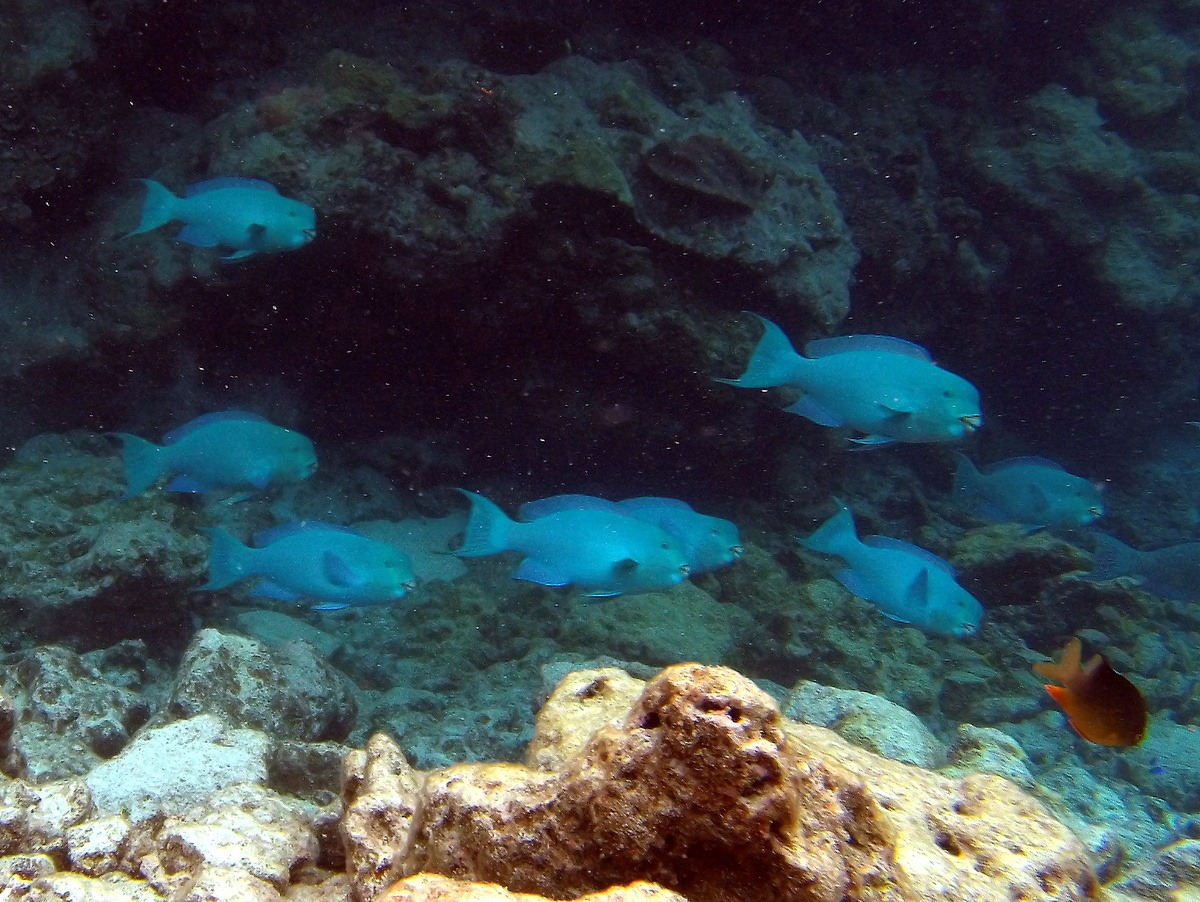
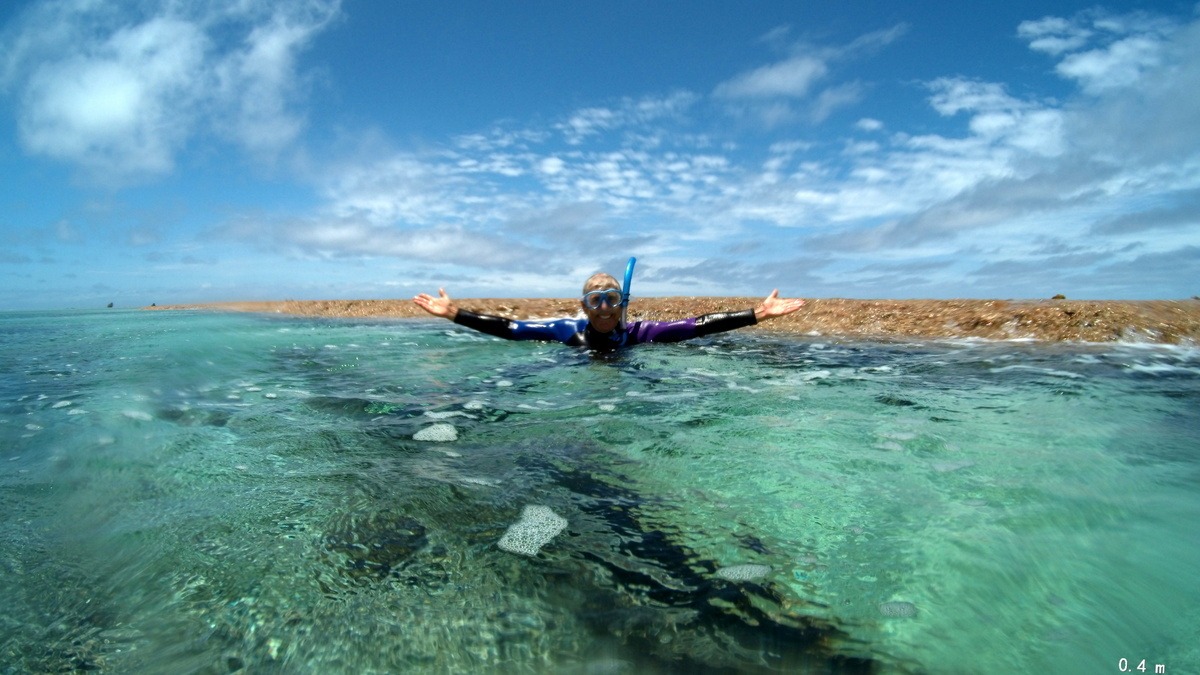
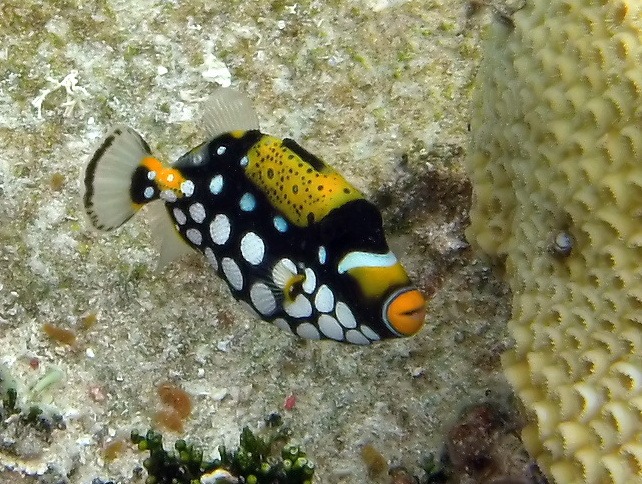
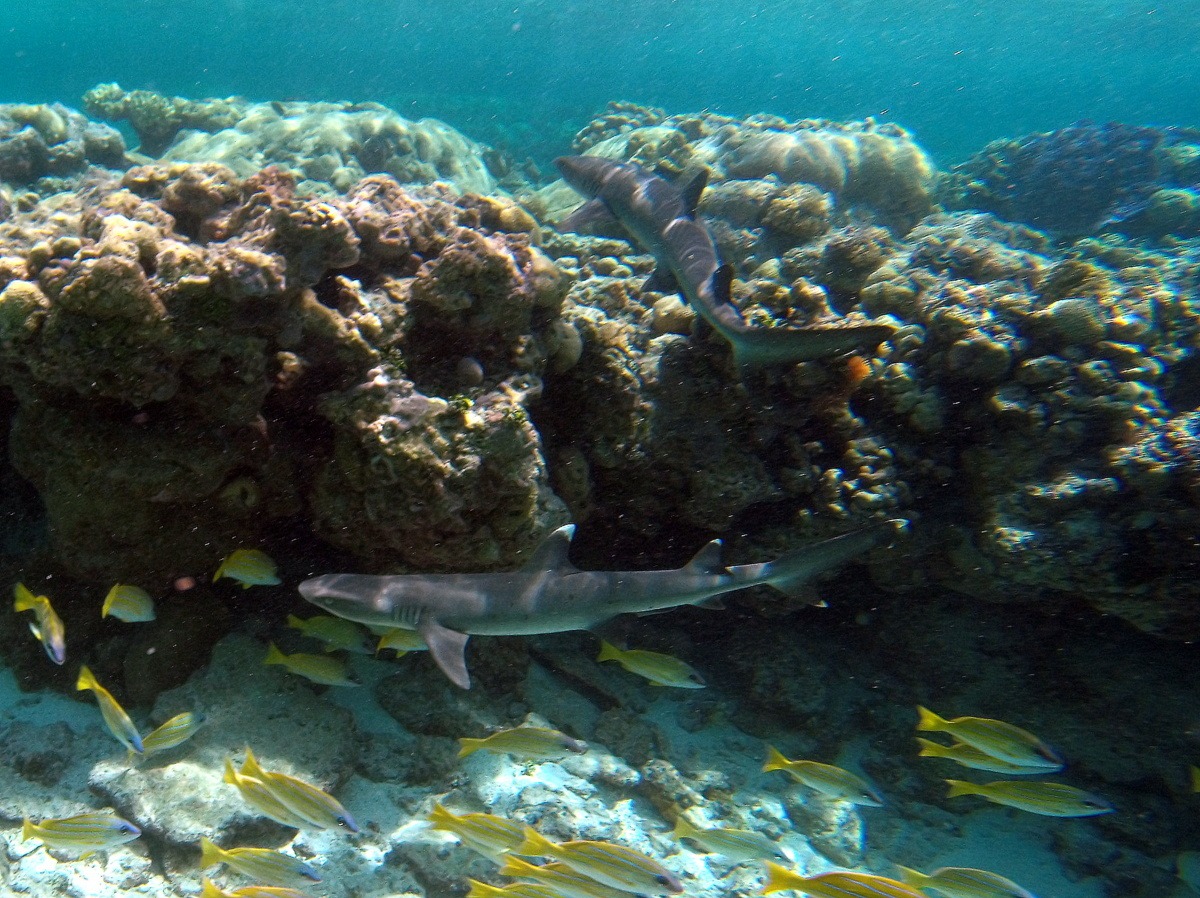
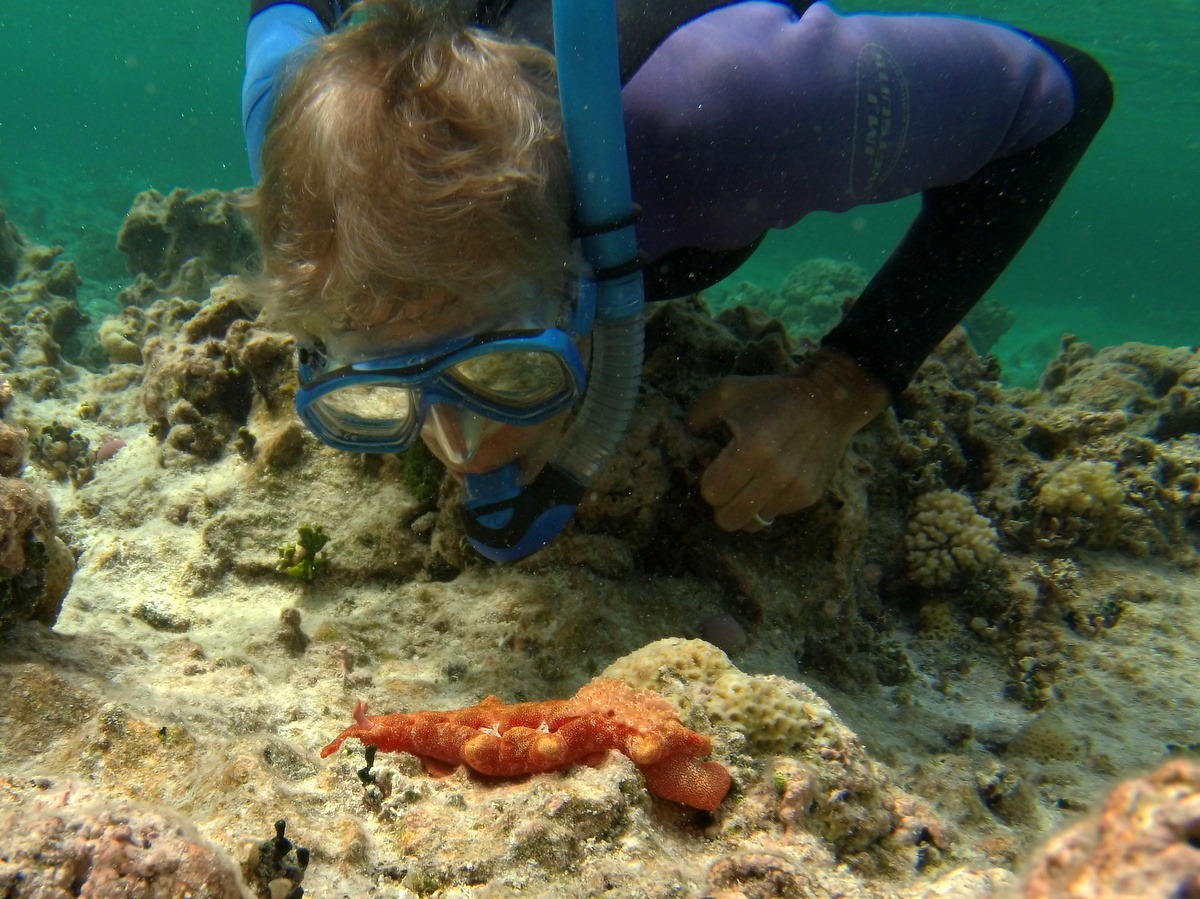
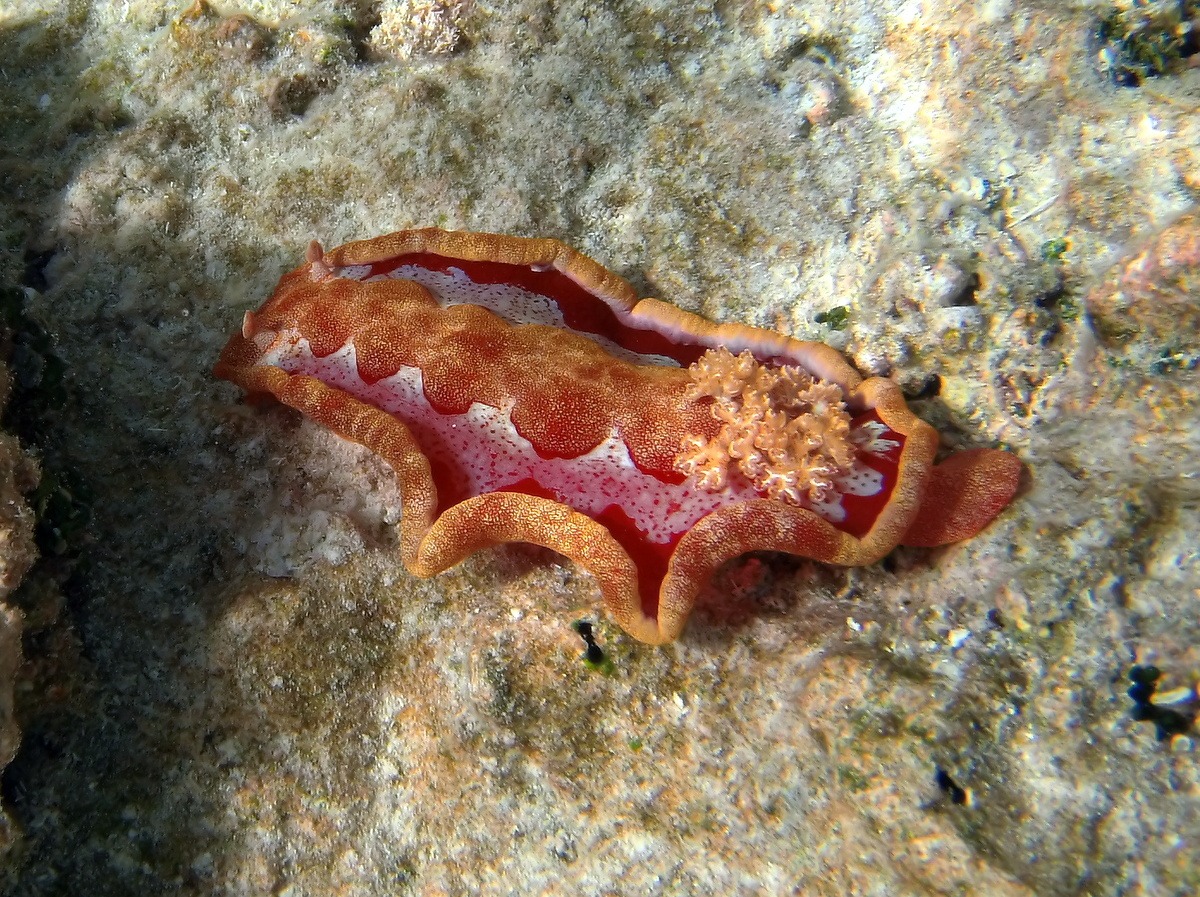
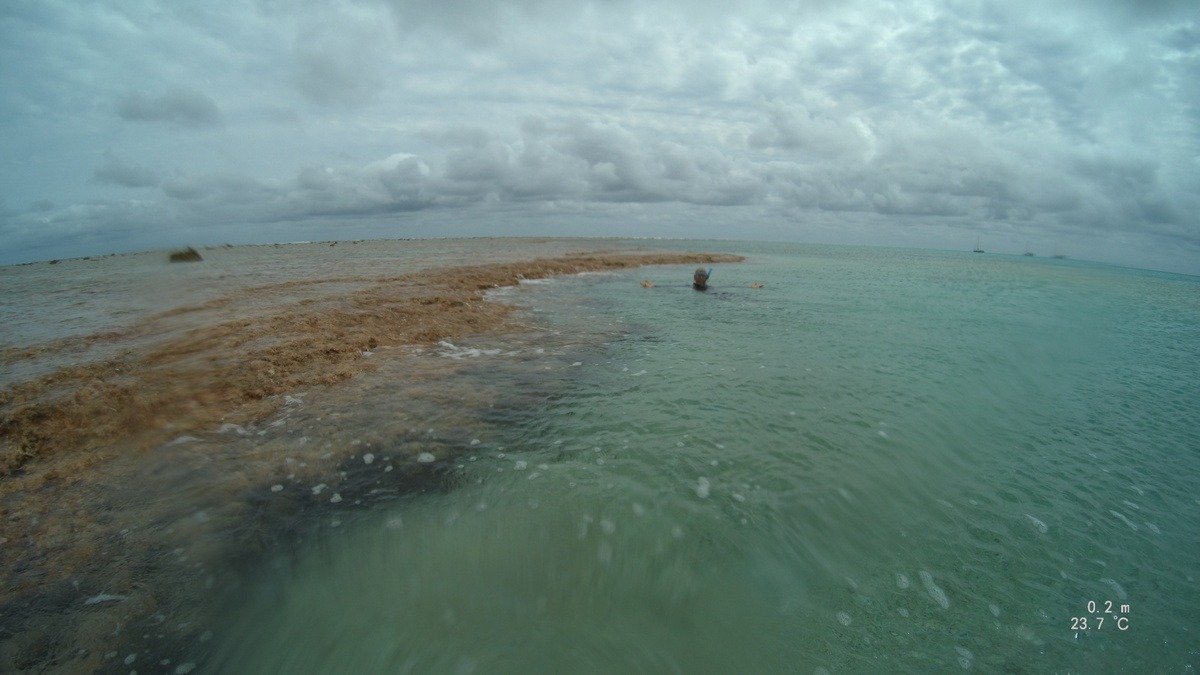
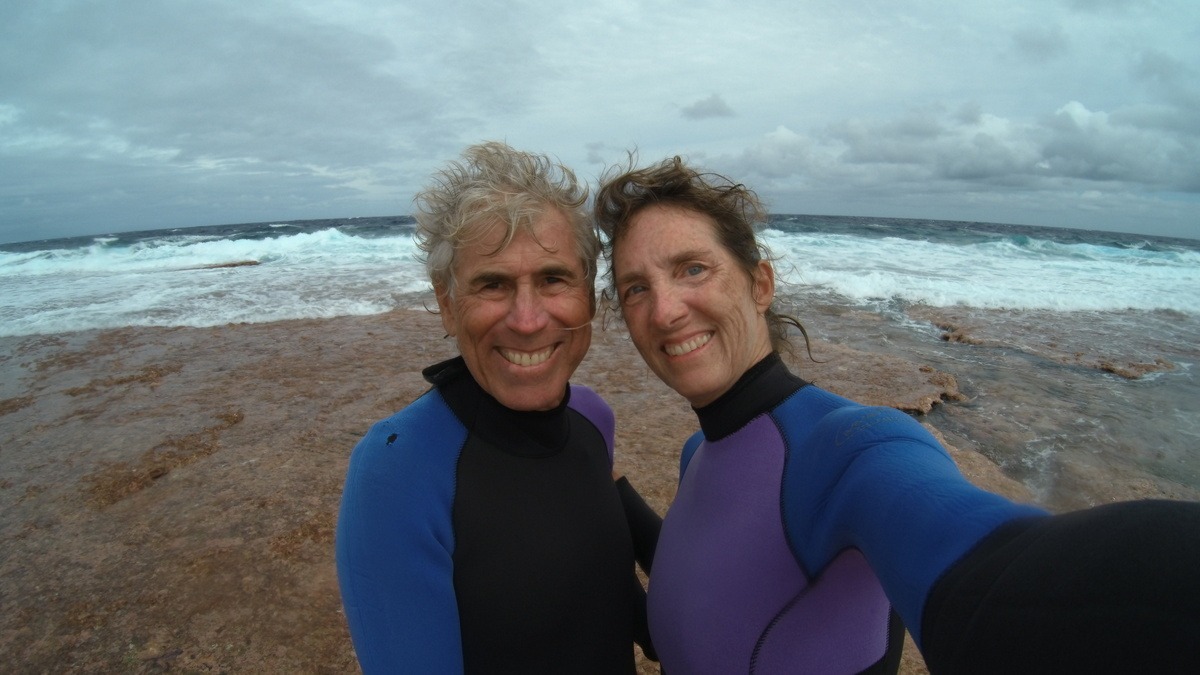
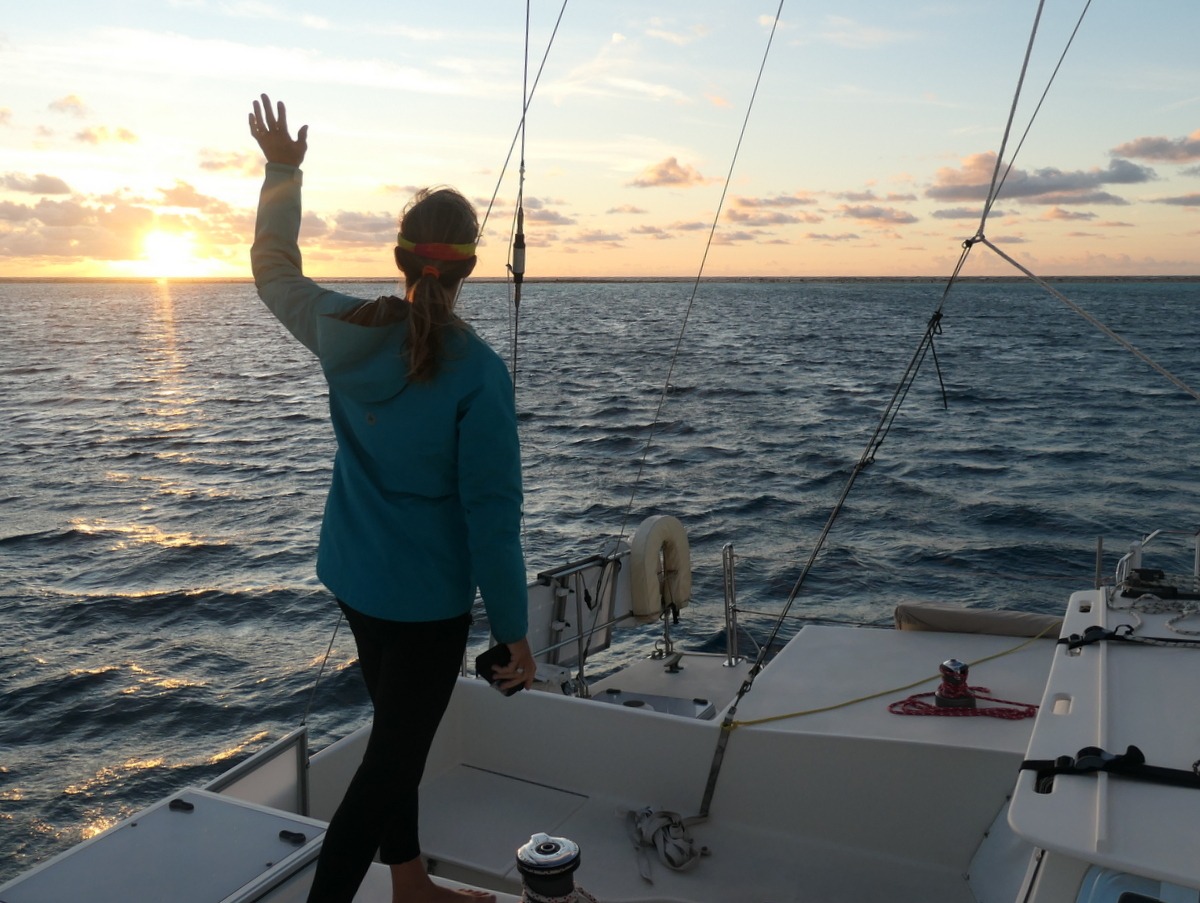
Continuing our theme of weather making decisions for us… We’d hoped to stay at Minerva long enough to celebrate our anniversary, but it turned out to be a good thing we drank that bottle of champagne after visiting Parrotfish Paradise, because an excellent weather window suddenly opened up; and the passage to New Zealand is one that is much nicer in benign conditions. So it’s not always bad weather that causes us to change our plans — sometimes it’s good weather!
South to NZ
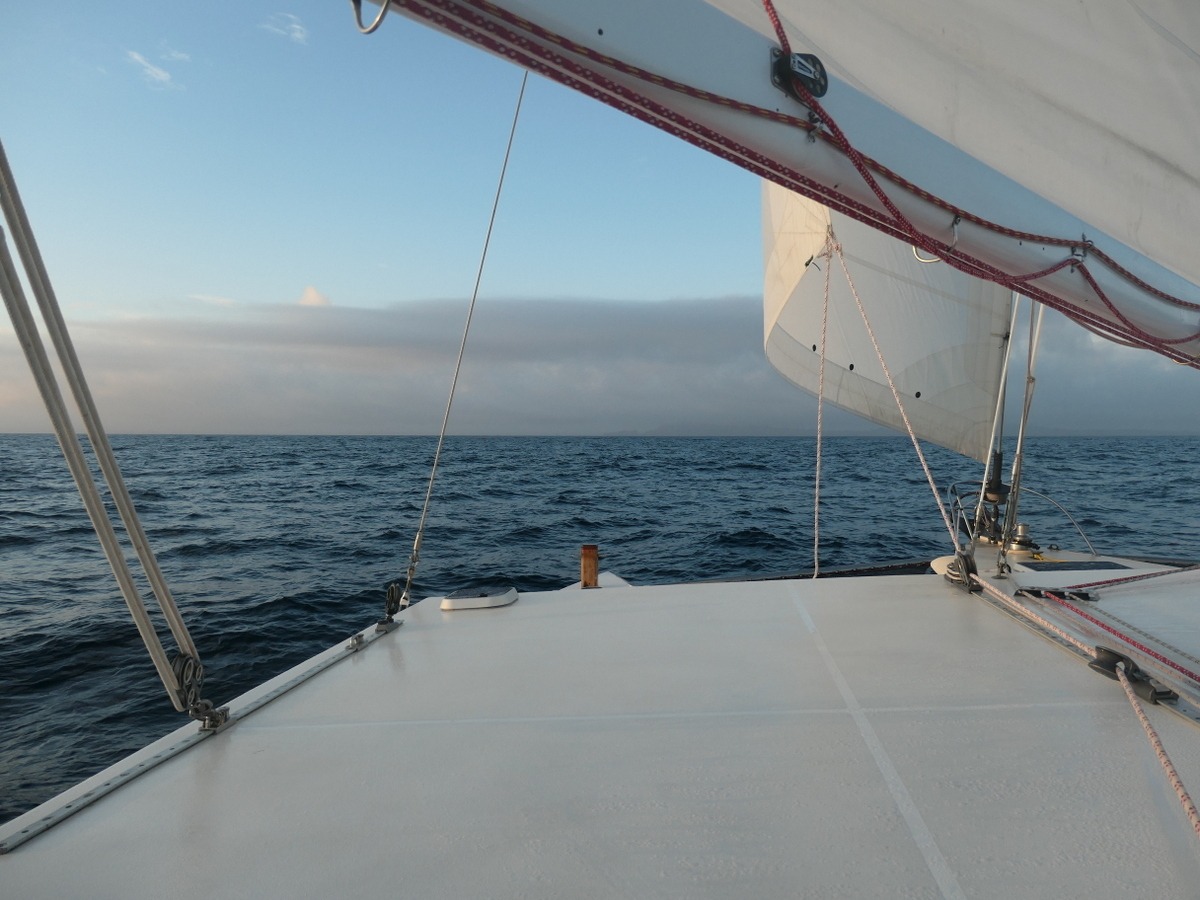
The beginning of the 6-day passage from Minerva to New Zealand started out quite rambunctious and wet in a sloppy sea with 15-20 knots of wind, but the forecast was for conditions to smooth out in the next day or so. Bruce was diligent, closely examining the weather predictions for this long and sometimes difficult passage, even contacting his cousin Loren who works in the weather industry for his esteemed opinion. The challenge is to avoid getting hit by the lows that move regularly through this area.
The seas finally settled on our 3rd day out, and we whizzed along at 7-8 knots with the wind abeam. Fun!
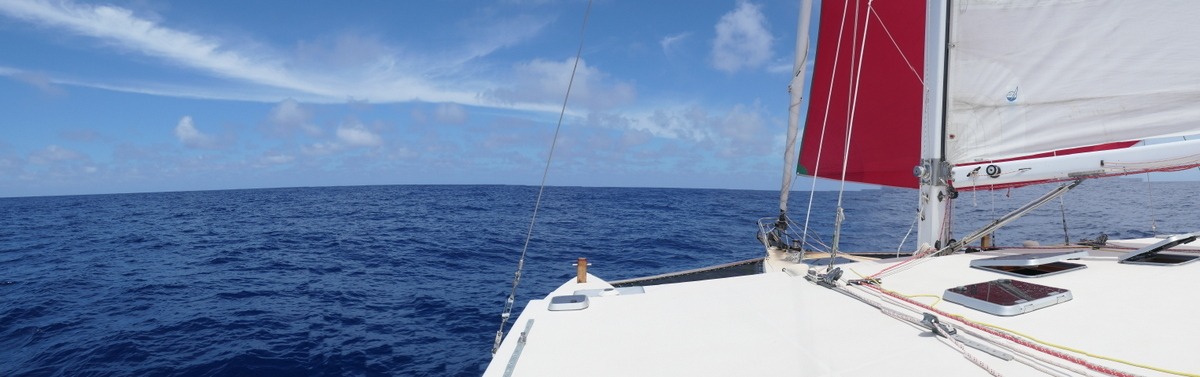
For our anniversary at sea, we were privileged to enjoy a perfect day of sailing under blue skies. We were still in fleece for much of the day but the sun was warm and it was great to be able to sit outside in the cockpit all night and all day with no spray. We can’t remember the last time we’ve been able to do that underway! Frankly, we feel as though we’ve had a lot of uncomfortable sailing since we departed Mexico over two years ago.
Near the end of the passage, we poked along at 3-5 knots since there was no point in arriving on a weekend. We have to admit that it’s not always weather dictating our movements — making sure we arrive in a new country during working hours is also a consideration. It’s surprising how many times we’ve arrived only to learn it’s a holiday. In that case, we must stay aboard the boat until the government offices are open to check in. But it’s often after a long passage, so a day of rest is not unwelcome.
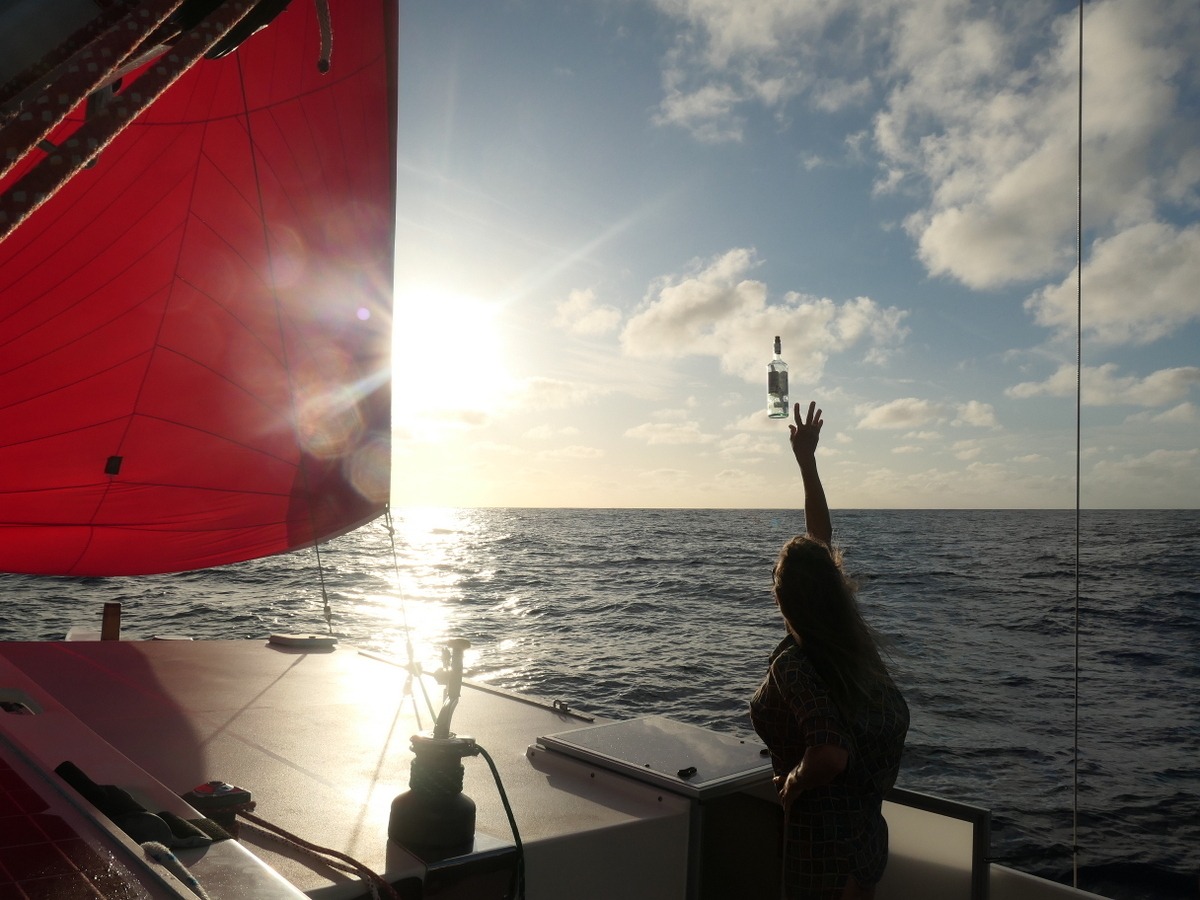
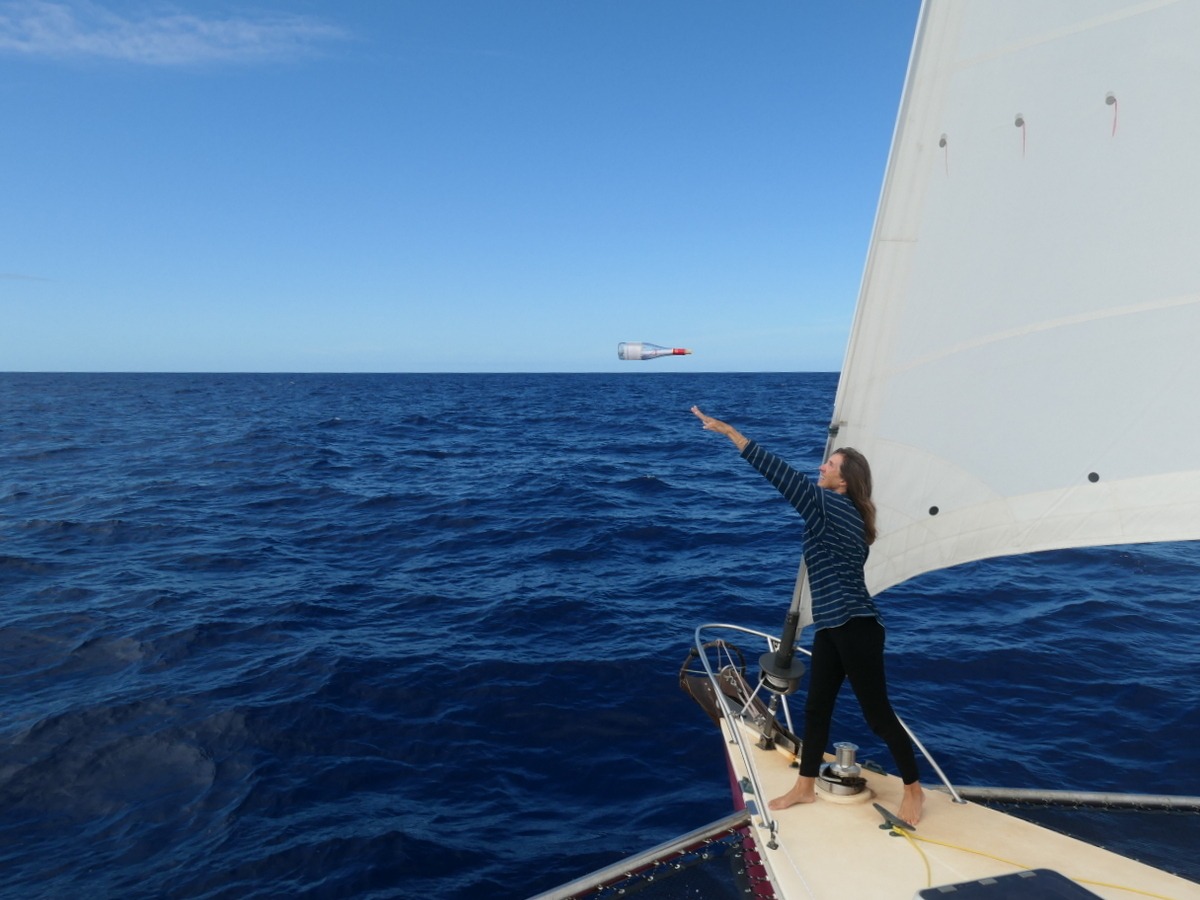
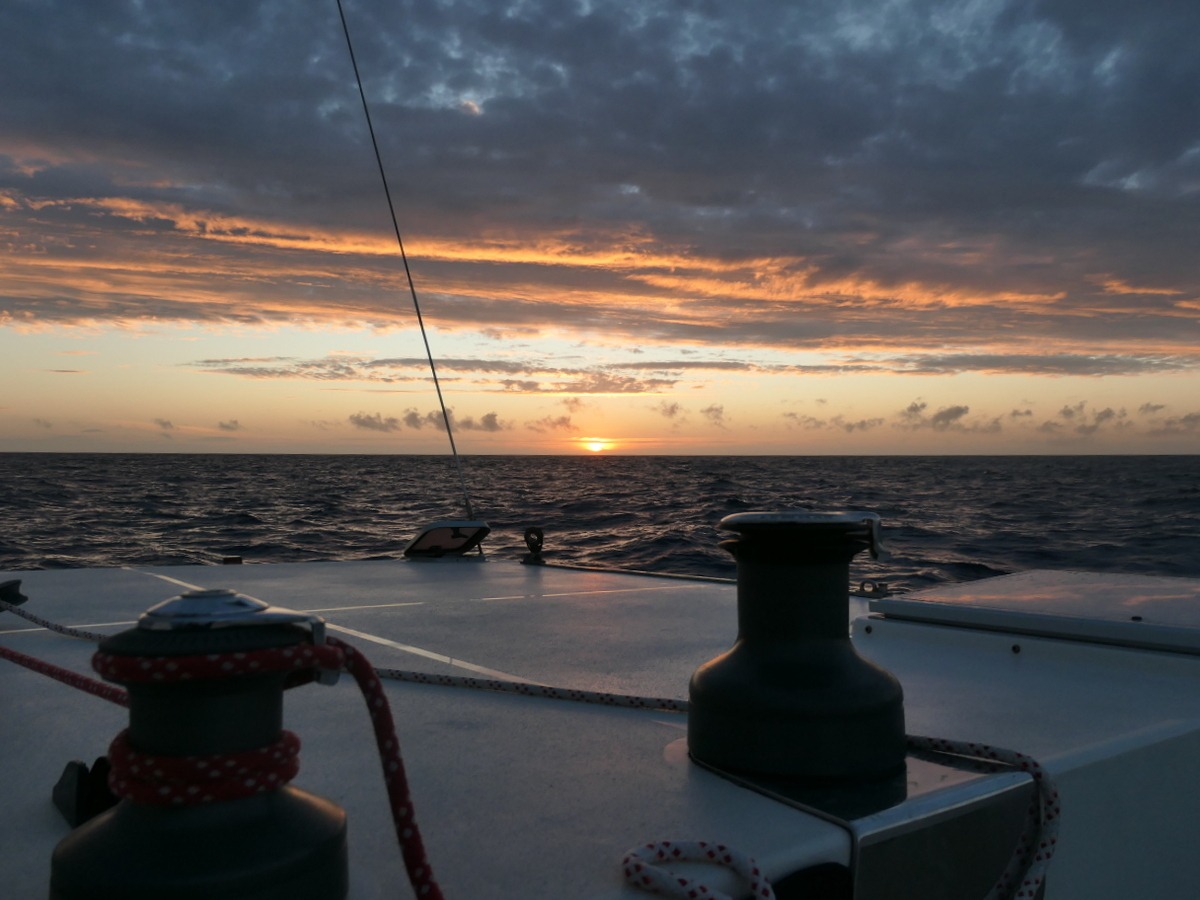
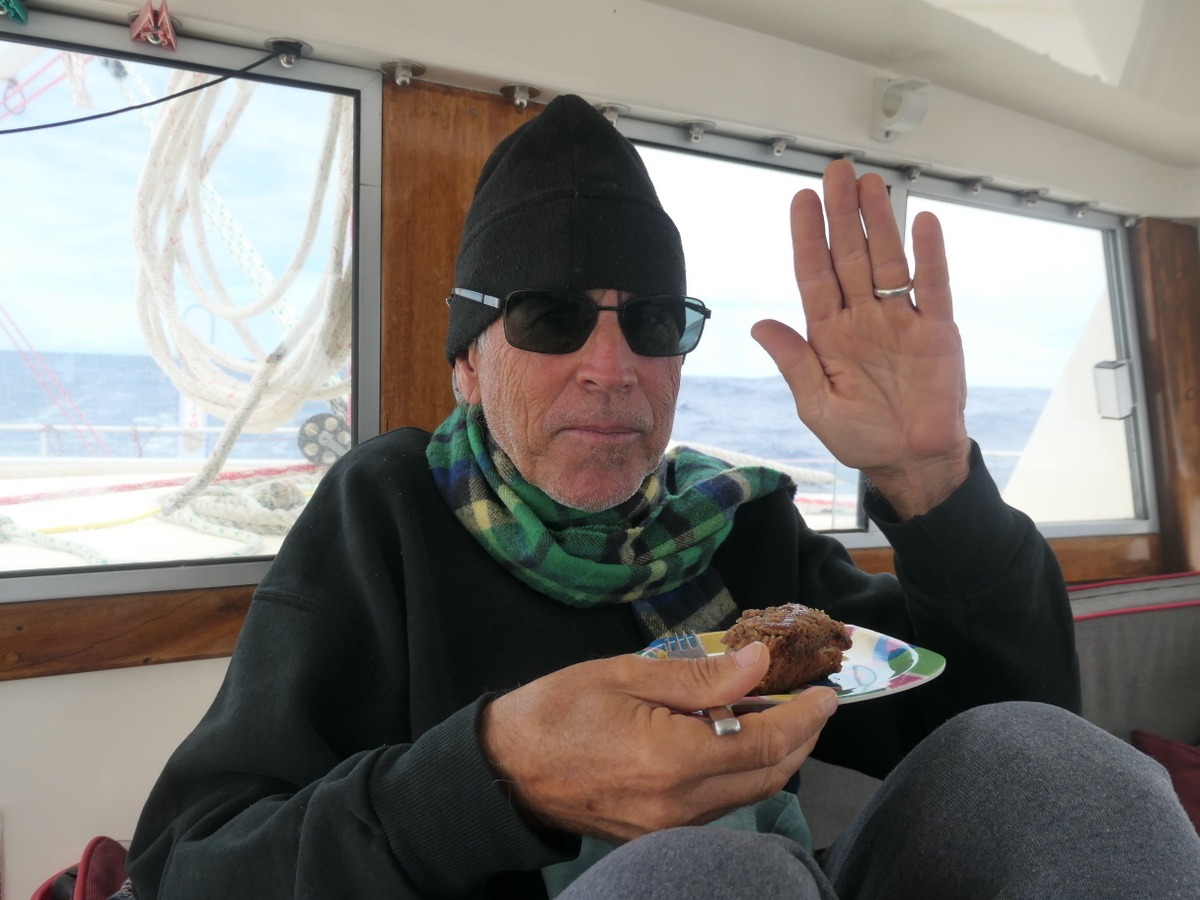
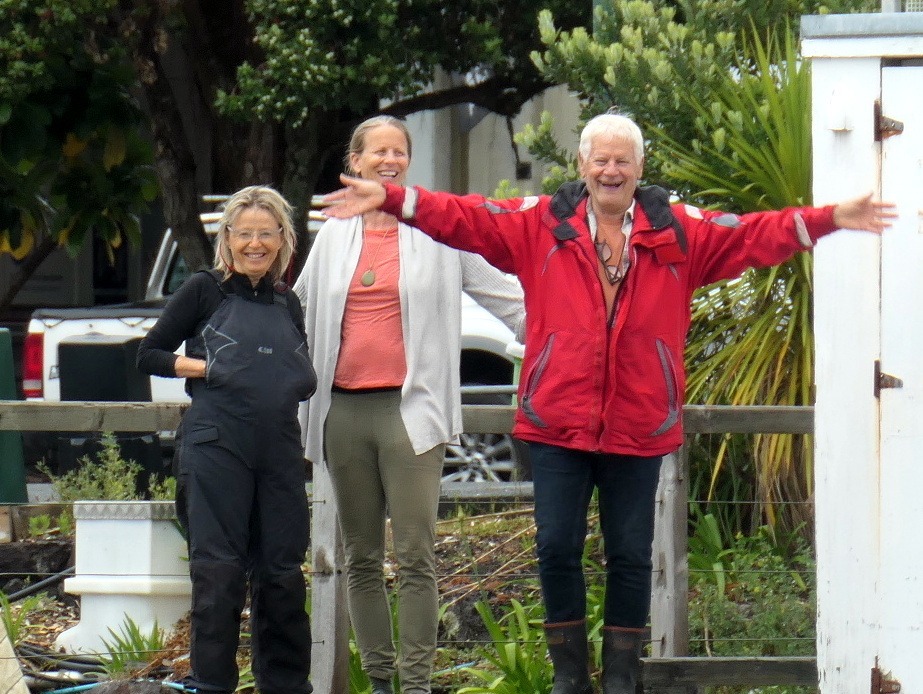
Our good friends Ella, David, and Janet met us at Opua. It took many hours to clear in but Ella waited in the pouring rain (nice to have a free desalinating boat wash after a long passage) for our clearance to be completed as she had a dock cart full of gifts for us, including berries, fresh milk, veggies, herbs from her garden, and Mint Slice cookies. So thoughtful!
When we consider how many tools we have available today for weather forecasting, we feel quite fortunate. For centuries, sailing has been far more challenging due to the lack of clear information about what’s developing over the horizon. We are conservative sailors, trying never to be under pressure to make a passage with a deadline, as that’s how many boats get into trouble. Whether the weather will cooperate with our plans is the unknown and the determining factor in our decision-making, but it is also what makes our life so rewarding, particularly when we are able to accurately forecast for a long passage and we get pleasant sailing conditions!
As we write this in Noumea, New Caledonia (two years after the events of this update… for shame!), we are acutely aware of how weather has affected our life and continues to alter our plans. Due to the seasonal reversing winds in the Torres Strait, we delayed our voyage westward this year. And because we weren’t keen on making a passage to New Zealand with the enhanced trades of this season, we’ve decided to stay here in New Caledonia for the summer which wasn’t even a possibility in our thoughts just a month ago. Whether the weather will cooperate with this decision remains to be seen!
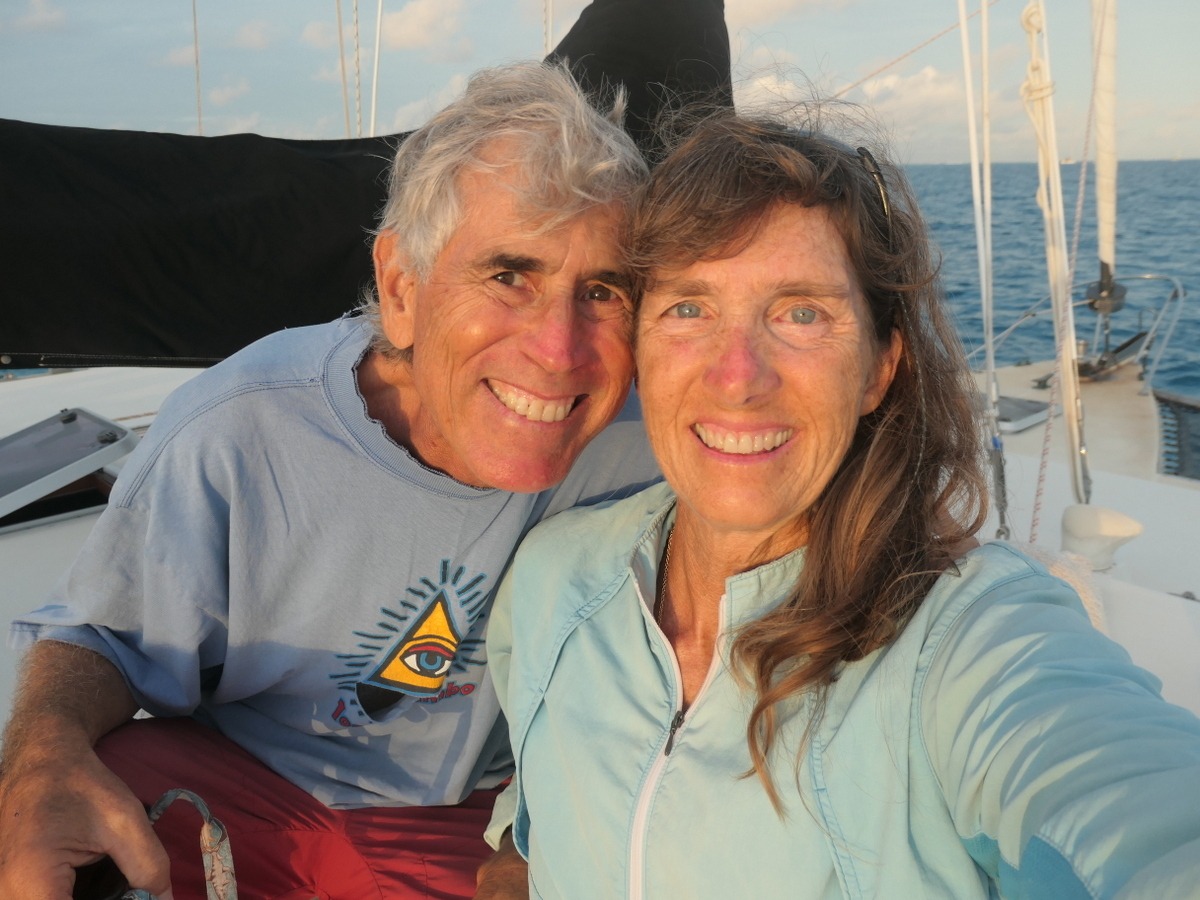
Until next time,
Be safe. Have fun.
says ADR
Do Good
(by Bruce)

STOP THE STEAL
They’ve stolen and destroyed the reputation of our country. They’ve stolen Medicare or Medicaid from 12 million people. They’ve stolen our health with a measles epidemic. They’ve stolen and destroyed the dignity of the office of the President. They’ve stolen housing aid. They’ve stolen and sold out our environment for the profit of oil countries. The list goes on and on.
But worse, they’ve stolen the lives of countless people: in Iran, in Gaza & the West Bank, in Africa, in Venezuelan boats, and in our own country where jack-booted thugs have murdered U.S. citizens in the name of… what? People overstaying their visas? Since when does illegal immigration deserve capital punishment?
HOWEVER…. WE BANDED TOGETHER, VOTED, AND WON! But now, OUR VOICES MUST BE HEARD. If your representatives in Congress are Democrats, let them know you expect the party to work together to stop the destruction of our nation. If your representatives are Republicans, tell them they need to read the writing on the wall and start supporting policies that honor their constituents and not a lame duck president. If you are someone who still believes this administration is doing the right thing for the United States, please take a look at where you are getting your news and expand your reading horizons. You must, someday, face the fact that you have made a mistake. Be courageous. Do you really want a country where customs agents shoot American citizens? The world will move toward kindness with or without you. The people you voted for will not change… but you can. Call your congressional representatives.